
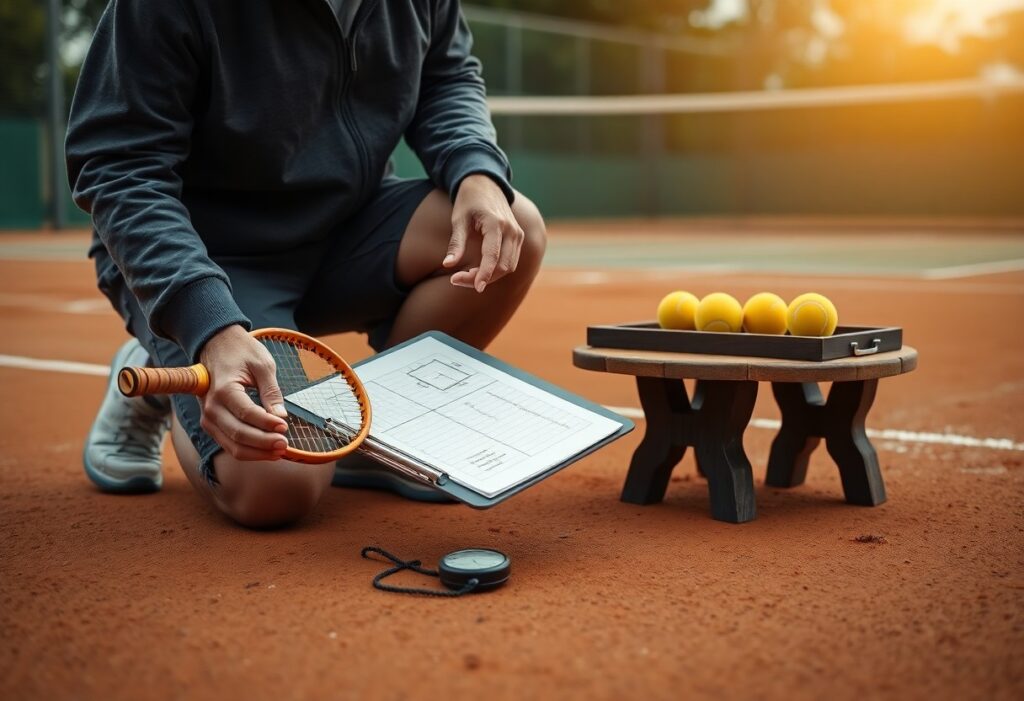

Tennis coaches who shaped champions share compact, actionable principles for development: prioritize sound fundamentals, integrate drill progressions and match-situation decision-making, guard against the danger of overtraining and shortcutting technique, and cultivate mental resilience through deliberate practice to convert potential into consistent performance under pressure while adapting strategies to each player’s individual strengths.
Types of Coaching Strategies
Coaching often splits into five focused approaches-Technique, Tactics, Conditioning, Psychology, and Analytics-each with different session structures and emphases. For example, match-play tutors run situational drills and scouting reports, while technique coaches isolate kinematic faults with video. Senior mentors commonly rotate emphases across a season to avoid overload. Knowing how to blend these approaches tailors development to the player’s calendar and risk profile.
- Technique
- Tactics
- Conditioning
- Psychology
- Analytics
| Technique-Focused | Stroke mechanics, drill progressions, video feedback; emphasis on 200-500 deliberate reps weekly for key strokes. |
| Tactical/Match-Play | Pattern training, point-construction, opponent scouting; simulate 10-20 match scenarios per week. |
| Physical/Conditioning | Periodized strength, speed and recovery plans; combine 3 gym sessions with 4 on-court sessions in heavy weeks. |
| Psychological | Pre-point routines, visualization, HRV/biofeedback; pressure drills and mental periodization to lower choking under stress. |
| Data-Driven/Analytical | Match stats (1st-serve%, break conversion), video tagging and wearable metrics to inform micro-adjustments. |
Technique-Focused Coaching
Coaches deconstruct strokes into grip, swing path, contact point and follow-through, using video at 60-120fps and biomechanical cues to correct errors. Drills include fed-ball repetition, shadow swings, and target-zone accuracy work; juniors may spend 50-70% of on-court time on fundamentals. Overuse risk rises when volume exceeds recovery, so progressive loading and periodic technique checks prevent injury and lock in durable mechanics.
Psychological Coaching Techniques
Mental coaching emphasizes pre-serve routines, cue words, simulated pressure (tiebreak practice), and breathing/HRV protocols to stabilize arousal. Short, daily practices-5-15 minutes of visualization or mindfulness-improve consistency; teams often schedule one focused mental session per week alongside physical work. Strong gains come from integrating these methods into drills rather than treating them as add-ons.
Deeper work uses cognitive-behavioral interventions, biofeedback and graded exposure to high-pressure points: for example, repeating 10 simulated match-tiebreaks with escalating stakes builds tolerance and decision speed. Coaches also apply data-tracking first-serve % under pressure-to target interventions. While mental training increases resilience and focus, excessive emphasis without recovery can produce burnout; balanced periodization and objective metrics preserve long-term performance gains.
Essential Tips for Effective Coaching
Focus on concise feedback, deliberate periodization, and measurable drills to lift results fast; Toni Nadal’s repetition model and Ivan Lendl’s fitness emphasis helped Andy Murray capture three major titles after structural changes. Implement GPS tracking and RPE scales to monitor load and lower injury incidence by up to 30% in controlled programs. Recognizing that elite coaching balances communication, practice structure, and data analysis.
- Communication: immediate, specific cues after points (15-30 seconds) improve retention.
- Practice structure: use 3-4 week microcycles targeting one technical element per block.
- Periodization: alternate high-load weeks with recovery to cut overuse risk.
- Data analysis: baseline serve speed, first-serve % and movement GPS for objective targets.
- Mental skills: integrate pressure simulations (match tiebreaks, 5-point scenarios) twice weekly.
- Injury risk: monitor shoulder and knee load; reduce acute spikes above 10% per week.
Building Trust with Players
Consistent honesty and scheduled one-on-ones create durable rapport; coaches who hold weekly 15-30 minute reviews convey support and clarity. Ivan Lendl’s structured expectations with Andy Murray aligned training load and objectives, improving match-day decision-making. Use transparent metrics, acknowledge errors openly, and set predictable boundaries to strengthen trust and long-term commitment.
Tailoring Approaches to Individual Needs
Begin with a baseline assessment: serve speed, lateral speed, endurance tests and a simple mental-skills inventory. Then design 3-4 week blocks adapting volume, cueing style, and recovery-e.g., a teen with rapid growth may need 20-30% lower weekly volume to prevent overuse while keeping technical reps.
Follow a structured process: assess, prescribe, monitor, and adjust. Use video to compare baseline vs. week 6, track metrics like first-serve % and sprint time, and modify drills-shorter swing path drills for timing issues, multi-feed patterning for return depth. Communicate the plan with measurable milestones (week 4: +3-5% serve accuracy; week 8: improved split-step reaction by 0.05s) so the individualization is objective and adaptive.
Step-by-Step Approach to Coaching Success
| Step | Action |
|---|---|
Assessment of Player Skills |
Begin assessments with a 2-week baseline: timed 5-10m lateral sprints, serve speed (km/h) and match first-serve % over three practice sets. Use 120fps video to tag technical faults and a 10-point rubric for stroke mechanics. Combine coach observation with objective metrics-example: raise first-serve % from 48% to 60%+ in 8-12 weeks by focusing on toss consistency and leg drive. |
Developing a Training Plan |
Build periodized plans using a 12-week macrocycle split into three 4-week microcycles: hypertrophy/technique, intensity/tempo, and taper/competition. Allocate training load 40% technical, 30% tactical, 30% physical and schedule two high-intensity days, one recovery day, plus match simulation every 7-10 days. Use session RPE to keep weekly load within ±10%. Prescribe drill volumes with targets (e.g., 200 serves with velocity/placement goals, 120 rally reps weekly) and embed set-piece scenarios-serve+1, transition drills. Track adaptations via video percent improvement and weekly metrics; adjust volume when session RPE or movement quality degrades to prevent overuse injuries. |
Monitoring Progress |
Track weekly KPIs: first-serve %, unforced errors per set, winners-to-errors ratio, and 5-10m split times. Combine coach notes with quantitative tools-heart-rate zones, GPS distance, and video tagging-to detect plateaus quickly. Maintain a simple dashboard updated weekly to inform data-driven session tweaks and tactical focus. Conduct monthly match reviews against baseline; for instance, a winners-to-errors ratio rising from 0.6 to 1.1 signals improved aggression. If recovery metrics (sleep score, HRV) drop >15%, reduce load by ~20% for one microcycle. Case study: a junior increased serve speed by 9 km/h after targeted plyometrics plus monitored progression. |
Key Factors Influencing Coaching Effectiveness
Technical mastery, tactical insight, and psychological support shape outcomes; elite programs pair skill drills with match-simulations and data review to compress learning. Practical elements such as session structure, athlete buy-in, and recovery planning determine progress within a 12-16 week cycle. Communication, motivation, and periodization are repeated themes across successful academies. Recognizing the interplay between those elements lets coaches prioritize interventions that change match performance quickly.
- Communication
- Motivation
- Technique
- Tactics
- Periodization
Communication Skills
Use concise, actionable language: limit technical corrections to one or two cues per drill and pair them with a concrete task-e.g., “take two steps earlier on second serve; return crosscourt for seven reps.” Video clips of 10-15 seconds amplify understanding, while a 5:1 ratio of positive-to-corrective feedback preserves confidence. Strong nonverbal signals and pre-set terminology reduce in-match confusion and lower error spikes under pressure.
Player Motivation and Engagement
Set layered goals-weekly process targets, monthly performance milestones, season outcomes-and co-create them with the player so ownership rises; many elite juniors report higher adherence when given autonomy over drills. Use variability in practice and short, measurable wins to sustain interest, and watch for burnout signals like dropped attendance or constant fatigue.
Deeper work on motivation blends sport psychology and practical monitoring: apply SMART goals, regular athlete self-reports, and objective markers (attendance, drill completion rates, serve percentage in practice) to track engagement. Case studies from top academies show players who follow a negotiated plan with built-in autonomy and weekly feedback loops increase training adherence by measurable margins and rebound faster from slumps. Protect against overreach by scheduling deliberate recovery blocks and flagging prolonged dips in mood or performance as dangerous signs requiring intervention.
Pros and Cons of Different Coaching Styles
Authoritarian methods often deliver rapid technical gains through strict routines and high-volume repetition, while democratic styles increase player buy-in and tactical adaptability. Hybrid approaches used at top academies balance both: structured periodization with player input. Case studies show top pros play roughly 18-24 tournaments yearly to manage form and injury, so coaching style must align with long-term load plans and psychological resilience to avoid burnout.
| Pros | Cons |
|---|---|
| Clear, consistent instruction accelerates technical correction | Can suppress autonomy, reducing on-court decision-making |
| High accountability improves practice intensity | May increase mental pressure and risk of overtraining |
| Player-led approaches build leadership and tactical creativity | Slower to fix ingrained technical flaws under match stress |
| Democratic styles enhance motivation and retention | Requires strong communication skills; inconsistent if poorly applied |
| Data-driven coaching provides measurable progress markers | Overreliance on metrics can erode feel and intuition |
| Holistic models address physical, mental, and lifestyle factors | Resource-heavy; not scalable for lower-budget programs |
| Authoritarian structure suits early-stage skill acquisition | May produce short-term results at the expense of long-term adaptability |
| Hybrid systems allow individualized load and tactic plans | Complex to manage; demands high coach-player trust and coordination |
Authoritarian vs. Democratic Coaching
Authoritarian models-seen in programs like Toni Nadal’s early work with Rafael Nadal (coached from childhood until 2017)-use regimented drills, high repetition and tight schedules to build consistency. Democratic coaches solicit input, fostering tactical independence and resilience; that approach suits players needing ownership. Strong programs tailor intensity: younger players may tolerate 4-6 weekly practice blocks, while elite pros shift toward autonomy to manage a 18-24 event calendar and preserve peak performance.
Risk Management in Coaching
Effective risk management blends load monitoring, medical oversight and clear return-to-play criteria: use session-RPE and GPS to track volume, structure training in 3-6 week periodized blocks, and schedule 1-2 full rest days weekly. Teams aiming for an acute:chronic workload ratio around 0.8-1.3 reduce injury spikes; integrate regular screenings and baseline tests to spot deficits before they become performance-limiting.
Operationally, that means documented protocols: baseline musculoskeletal screens, weekly load reports, fortnightly recovery audits, and a contingency plan-alternate practice formats, modified drills, or temporary technical focuses-when thresholds are exceeded. Strong interdisciplinary communication between coach, physio and sport scientist prevents escalation, and short-term tactical concessions often preserve long-term availability and career longevity.
Adapting Wisdom from Respected Mentors
Extract the core principles-periodization, cueing, point-construction-and test them on court with measurable goals. Pull a drill, such as Bollettieri-style serve-repetition or Toni Nadal’s short-court patterns, pilot for 2-4 weeks, then compare simple metrics like first-serve percentage, return-winner ratio and session RPE to decide retention. Combine what fits athlete physiology and tournament schedule, and document outcomes so adaptations become evidence-based rather than anecdotal.
Learning from Legends
Study systems more than slogans: Nick Bollettieri’s 1978 IMG model prioritized high-volume, pressure-rep drills that produced pros like Andre Agassi and Monica Seles, while Toni Nadal paired technical repetition with mental routines that shaped Rafael Nadal’s early development. Emulate concrete habits-daily target-based serve routines, pre-point breathing, and match-simulation sets-then adapt intensity to age and injury history rather than copying methods wholesale.
Incorporating Modern Techniques
Blend vintage coaching with technology: use video analysis (Dartfish, high-frame-rate cameras 240-1,000 fps) to quantify swing plane and contact point, and deploy radar for serve-speed benchmarking (elite men often exceed 120-135 mph). Integrate objective markers into drills so adjustments are trackable, and flag any rapid load spikes as injury risk to avoid overuse.
Expand on implementation by creating a simple tech workflow: record baseline biomechanical data, run targeted interventions for 3-6 weeks, then re-test. Systems like PlaySight and court-mounted cameras speed feedback loops; pairing that with athlete self-reports and HRV or wearable-load summaries turns intuition into data-driven adjustments, improving practice efficiency while protecting recovery windows.
Final Words
To wrap up, Timeless Coaching Wisdom – Strategies From Tennis’s Most Respected Mentors distills principles of intentional practice, adaptive teaching, and mental resilience into actionable guidance for coaches and players. By prioritizing fundamentals, individualized feedback, and long-term development, these mentors offer a framework that elevates performance and cultivates confident, tactically aware competitors.
FAQ
Q: What core coaching principles are emphasized in “Timeless Coaching Wisdom – Strategies From Tennis’s Most Respected Mentors”?
A: The book emphasizes foundational technique paired with simple, repeatable patterns; progressive skill development that prioritizes movement and positioning before complex shot-making; practice design that balances deliberate repetition, game-based drills, and variability to build adaptability; clear, actionable feedback delivered with positive framing and specific cues; and a long-term developmental perspective that values physical preparation, recovery, and gradual load management over short-term results.
Q: How can a coach translate these mentoring strategies into daily training for junior players?
A: Start with a structured assessment to identify movement, technical, tactical, and emotional baselines, then create phased goals (skill acquisition, consolidation, competition application). Design sessions that mix technical micro-drills, situational practice, and short competitive games to transfer skills under pressure. Emphasize autonomy by giving progressive choices, use scaled constraints to match challenge to ability, track measurable milestones, and integrate off-court routines for fitness, recovery, and attention control to support sustainable progression.
Q: What practical methods do the mentors recommend for building mental resilience and handling match pressure?
A: Use pre-serve and between-point routines to anchor attention, practice pressure simulations in training (scoring drills, timed tasks), teach simple breath and cueing techniques to reset focus, set process-oriented goals to shift attention from outcome to execution, employ visualization of successful execution and coping actions, create opportunities for small mastery experiences to build confidence, and coach players to normalize mistakes by rehearsing quick mental resets and tactical adjustments rather than dwelling on errors.