
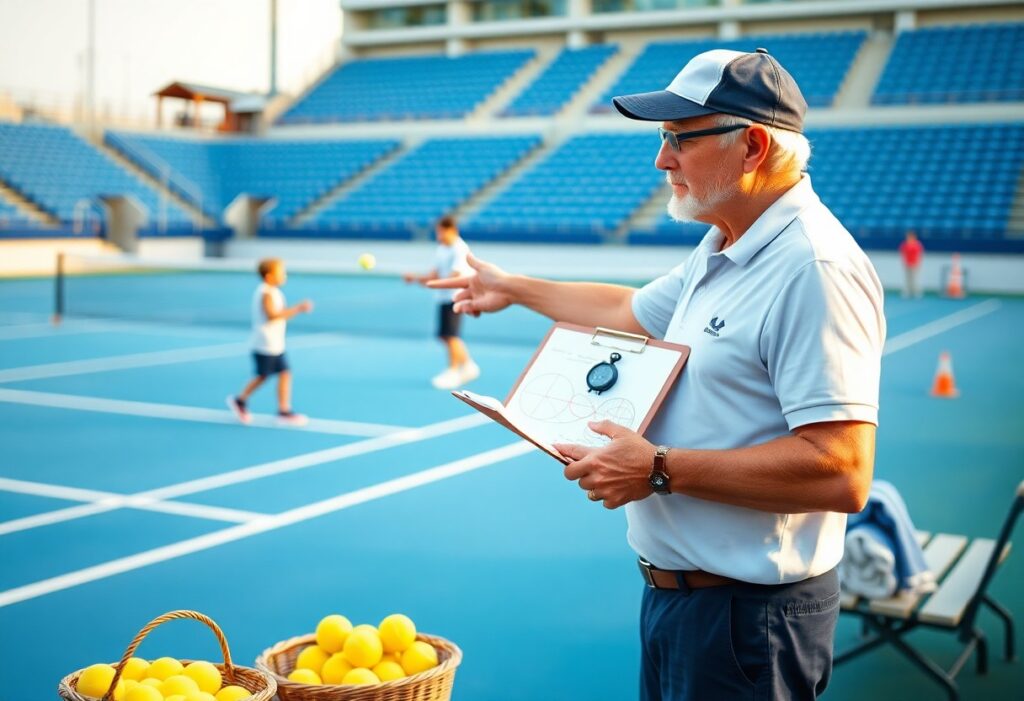

You will explore how elite coaches translate discipline into peak performance, combining biomechanics, matchcraft and emotional coaching to sculpt champions. Their emphasis on mental resilience and deliberate practice elevates talent; awareness of the risk of burnout forces careful load management, while mentorship creates lifelong confidence and strategic thinking that wins matches and careers.
Types of Legendary Coaching Styles
| Traditional / Authoritarian | Emphasizes repetition, drill-based technique and hierarchical instruction; example: long-term academy models producing technically reliable baselines but with elevated overuse injury risk. |
| Player-centered / Collaborative | Focuses on athlete autonomy, individualized strategy and shared decision-making; practical case: tailored planning has guided top pros to peak at Slams with targeted match plans. |
| Analytical / Data-driven | Relies on Hawk-Eye, wearables and match analytics to tweak tactics and training load; teams now monitor 100+ session metrics to refine serves, returns and movement patterns. |
| Holistic / Mental-first | Integrates sports psychology, breathwork and routines to boost mental resilience under pressure; widely used in finals where decision-making separates winners. |
| Fitness / Performance-focused | Prioritizes strength & conditioning, periodization and recovery protocols to sustain five-set performance and reduce soft-tissue injuries across long seasons. |
- Traditional
- Player-centered
- Analytical
- Holistic
- Knowing Fitness & Performance often decides outcomes in late sets at Grand Slams
Traditional Coaching
Many legendary coaches used a regimented pathway: daily stroke repetitions, fixed footwork drills and early specialization that built rock-solid mechanics; Toni Nadal-style routines illustrate how sustained discipline and high-volume practice produce consistent winners, while concentrated repetition can increase the chance of overuse injuries if load and recovery are ignored.
Modern Coaching Techniques
Today’s top teams combine biomechanics, video breakdowns and match analytics-collecting 100+ data points per session-to optimize serve toss, court position and recovery; common tools include wearable GPS, force-plate assessments and Hawk-Eye-derived shot maps that translate directly into practice interventions and tactical shifts.
Further detail: coaches now program 7-14 day microcycles for peaking, use biomechanical labs to reduce joint torque, and apply individualized load caps to cut soft-tissue injuries; case studies from elite academies show these integrations shorten return-to-peak timelines and improve consistency across five-set matches.
Essential Tips for Effective Coaching
Target measurable metrics-track first-serve%, winners-to-errors and weekly load to shape sessions; pair that data with video analysis and deliberate periodization to lower injury risk and sharpen tactics. Blend technical correction with timed match-sims and a 3:1 praise-to-correction feedback ratio to keep players engaged. After reviewing objective metrics, reassign practice emphasis to recovery, tactical reps and mental-skills work.
- Video analysis – 60-90s clips for serve and swing adjustments
- Periodization – 3-6 week microcycles with load deloads
- Process goals – set 1-2 match-level performance targets per week
- Recovery – schedule 48-72 hour reduced load after peak weeks
Building Trust and Rapport
Spend predictable one-on-one time-20-30 minutes weekly-to foster trust, set clear expectations and use open-ended questions that reveal motivation; Toni Nadal’s long-term structure with a single athlete shows how consistent boundaries and honest feedback create elite commitment. Combine transparency about selection and performance metrics with small wins to build buy-in and reduce anxiety during competition.
Developing a Winning Mindset
Incorporate daily mental skills: 10-15 minutes of visualization, pre-point breathing drills and pressure simulations twice weekly to train resilience and decision-making under fatigue. Use process-oriented language, short-term benchmarks and frequent rehearsals of clutch scenarios to convert practice confidence into match results.
Expand mental training with structured exercises: start sessions with a 5-minute pre-match checklist, run post-match debriefs focused on controllables, and use biofeedback or heart-rate variability tools to teach arousal control; athletes who systematically practice these elements report faster recovery and more consistent performance under stress, while neglecting them raises the risk of performance collapse in key moments.
Step-by-Step Guide to Coaching Champions
Coaching Actions vs. Outcomes
| Action | Outcome / Example |
|---|---|
| Baseline assessments | On-court battery: serve speed, 5-10-5 agility, 20m shuttle VO2 test; flag asymmetries > 10%. |
| Technical drills | Serve-placement and rally patterns; aim for > 80% first-serve accuracy in target-zone practice. |
| Physical training | Strength/power prescription: 3 sessions/week, power sets 3-5 reps, plyometrics twice weekly. |
| Tactical planning | Match-simulation and scouting: weekly best-of-3 scenarios, video review of top-10 opponents for patterns. |
| Mental & recovery | Mental skills 2×/week, HRV and sleep monitoring; cut load by 20% after load spikes to lower injury risk. |
Assessing Player Potential
Start with objective metrics: serve velocity, 5-10-5 agility, and a 20m shuttle for endurance, then compare to benchmarks-elite male servers often exceed 200 km/h (~125 mph) and top juniors hit under 4.5s on agility tests. Combine these numbers with match IQ (pattern recognition, error control) and growth-window data (ages 14-18 often show rapid neuromuscular gains) to grade short- and long-term potential.
Crafting Individual Training Plans
Periodize around key events using a 12-week macrocycle with microcycles of 7 days: 3 on-court technical sessions, 2 strength sessions, 1 high-intensity interval day, and 1 recovery day. Emphasize power (3-5 reps) and on-court specificity while tapering 10-14 days before majors; monitor workload to avoid spikes that increase injury probability.
Implement a weekly template: Monday-speed + technical (90-120 min), Tuesday-strength/power (45-60 min), Wednesday-tactics + active recovery (60 min), Thursday-interval endurance + serve practice (90 min), Friday-match-play simulation (2-3 sets best-of-3) and mobility, Saturday-strength maintenance or plyometrics (30-40 min), Sunday-full rest or light mobility. Track acute:chronic workload ratio (ACWR) and keep it between 0.8-1.3, use HRV and session-RPE for internal load, and adjust volume immediately when values exceed thresholds to protect against overuse injuries.
Key Factors in Developing a Champion
Coaches blend technical refinement, tactical IQ, physical conditioning and psychological training into a clear development path; for instance, systematic serve improvement often increases win percentages on serve by 8-12% over a season. Data from academy programs shows players with structured periodization reduce injury rates by roughly 30%. Assume that targeted daily feedback and deliberate practice convert potential into consistent performance.
- Technical Skills
- Tactical Intelligence
- Physical Conditioning
- Mental Toughness
- Coach‑Athlete Relationship
- Competition Experience
Technical Skills
Precision in stroke mechanics-serve, return, and baseline consistency-drives match outcomes; elite juniors often spend 30-60 minutes daily on targeted ball‑machine drills to improve first‑serve placement and reduce unforced errors by 15-25%. Coaches isolate elements like racquet path and contact point, then layer situational reps (e.g., 3‑shot rally drills) so technique becomes automatic under fatigue.
Mental Toughness
High‑level players use routines, pressure simulations and cognitive cues to manage momentum swings; studies show 10 minutes of daily visualization plus a 60‑second breathing reset cut perceived anxiety in competition by about 20%. Emphasizing controlled arousal and focus during tight games distinguishes winners from good players, and drills should mimic end‑of‑set intensity.
Deeper work on mental resilience includes scenario training (down‑break, tiebreaker) with quantified outcomes, plus post‑match cognitive debriefs: measure response times to errors, track decision patterns, and assign micro‑goals like hitting 5 consecutive first serves under simulated pressure. Incorporating sports psychologists and using biofeedback-heart‑rate variability during clutch points-gives coaches objective data to sculpt individualized mental plans.
Pros and Cons of Different Coaching Methods
| Pros | Cons |
|---|---|
| Personalized feedback accelerates technical fixes and biomechanical efficiency. | Can create dependency on a single voice, hindering independent problem-solving. |
| Technical drilling builds repeatable strokes and muscle memory under pressure. | Excessive repetition raises risk of overuse injuries and movement rigidity. |
| Tactical periodization times peak fitness for Grand Slams across a 12-month season. | Rigid calendars can ignore rapid growth or emergent weaknesses in juniors. |
| Data-driven analytics sharpen opponent scouting and match planning. | Overreliance on stats may miss player creativity and in-match adaptability. |
| Group sessions simulate competitive points and situational play efficiently. | Less one-on-one attention can leave subtle technical flaws uncorrected. |
| Mental skills coaching strengthens resilience under high-stakes matches. | Generic mental drills sometimes fail to address individual psychological triggers. |
| Long-term planning supports career longevity with load management. | Strict timelines can force early specialization and increase burnout risk. |
| High-intensity conditioning raises physical ceiling for serve speed and court coverage. | Inadequate recovery protocols increase acute injury incidence and chronic pain. |
Pros of Individualized Coaching
Tailored coaching adjusts biomechanics, tactics, and periodization to a player’s body and schedule; for example, individual programs that incorporate technical video analysis, targeted strength work, and match simulations often shorten error correction time by weeks and help players peak for specific events within a 12-month cycle. Coaches who map growth spurts and tailor load management produce measurable performance gains while reducing injury exposure.
Cons of Rigid Coaching Styles
Rigid methods can suppress on-court creativity and lead to predictable shot patterns opponents exploit; historical accounts from elite academies show players sometimes exit the system with mental burnout and limited tactical flexibility despite technical proficiency.
Andre Agassi’s memoir “Open” and other accounts highlight how intense, prescriptive environments can damage motivation and well-being; moreover, repetitive, drill-heavy regimens correlate with higher rates of tendon and shoulder issues in adolescents, so coaches must balance structure with individualized variation and recovery to avoid long-term harm.
The Role of Communication in Coaching
Effective coaching hinges on precise exchanges during practice and matches: top mentors limit on-court verbal cues to one or two concise instructions per point, shifting detailed technical corrections to changeovers or video review. Case in point: Toni Nadal favored blunt, immediate cues to correct footwork, while Brad Gilbert emphasized tactical reframes after points. Overloading players with nonstop instruction disrupts timing; concise cues and deliberate silence accelerate decision-making and preserve rhythm.
Verbal Communication Techniques
Favor short, actionable language tied to measurable targets-use cue words like “shorten,” “attack,” or “split-step” linked to stat lines such as first-serve % or unforced-error counts. Implement a three-step feedback loop: observation, one corrective point, then immediate repetition. During changeovers give no more than 2 corrective phrases and anchor them with video clips or stopwatch-timed drills so players can translate words into reproducible actions.
Non-Verbal Communication in Training
Gestures, demonstrations and coach positioning deliver timing and spatial cues without interrupting play: shadowing a serve, physically guiding foot placement during a drill, or using hand signals at the net can adjust mechanics instantly. Slow-motion playback plus light tactile cues-gentle taps on shoulder or waist to cue rotation-help form new motor patterns. For many athletes, physical demonstration produces faster motor learning than extended verbal correction.
Use mirror drills, colored court markers and cones to create visual anchors-place cones at a set 1.5m recovery radius and pair that with 60-120 fps slow-motion clips for side-by-side comparison. Add wearable haptics or vibrating wristbands that indicate early racquet drop and ball-tracking overlays that show contact deviations within tens of milliseconds. Combining these tools reduces verbal overload and speeds technical consolidation.
Final Words
With these considerations, “The Power Of Guidance – How Legendary Tennis Coaches Build Champions” underscores that deliberate mentorship, tactical insight, and psychological support shape enduring excellence; it highlights methods for developing resilience, individualized training, and ethical leadership, offering coaches and players an actionable framework to elevate performance and sustain competitive growth.
FAQ
Q: What is the central idea of “The Power Of Guidance – How Legendary Tennis Coaches Build Champions”?
A: The book argues that championship-level performance is shaped more by deliberate, sustained mentorship than by talent alone. It explores how coaches blend technical instruction, tactical thinking, mental preparation, physical conditioning and long-term planning to create environments where players can progress steadily. Emphasis is placed on individualized coaching – adapting drills, feedback style and competition schedules to each athlete’s learning profile – and on cultivating habits that support peak performance under pressure.
Q: What methods and practices do legendary coaches use to develop elite players?
A: The text catalogs concrete practices: structured progressions for stroke mechanics, periodized training cycles, simulated-match scenarios to sharpen decision-making, and data-informed video analysis to identify patterns. Equally important are psychological techniques – goal-setting, routines for anxiety management, and exercises that build competitive resilience – and interpersonal strategies such as clear communication, consistent expectations and calibrated praise and critique. The book pairs these methods with case studies showing how small adjustments in practice design or messaging produced outsized improvements in match outcomes.
Q: Which specific, actionable steps can coaches and players take from the book to improve faster?
A: Start with a diagnostic assessment of strengths, weaknesses and learning preferences, then build a periodized plan that sets measurable short-, mid- and long-term goals. Structure practices around high-quality reps with progressive difficulty, include regular match simulations and use objective feedback (video, stats) to guide corrections. Prioritize recovery and physical conditioning tied to on-court demands, and develop mental routines for focus and pressure moments. Finally, foster a trusting coach-player relationship grounded in clear expectations, consistent feedback and gradual increases in autonomy so players internalize decision-making and sustain improvement beyond any single training block.