


How the 2026 WTA season is shaping the player landscape and what you should watch
As you follow the 2026 WTA season, you’ll notice that rankings alone don’t tell the whole story. Injuries, coaching changes, equipment tweaks, and evolving playstyles have reset expectations for several players. In this part, you’ll get a clear snapshot of the early-season landscape: which veterans remain pillars of consistency, which young players are breaking through, and which match indicators will help you predict momentum shifts across the year.
You’ll still see familiar powerhouses at the top, but the margins between the top 10 and the chasing pack are tighter than ever. That means small improvements in serve percentage, return efficiency, or tactical variety can translate into big ranking gains. Understanding the early-season signals will help you spot breakout runs and evaluate which contenders are likely to sustain success through Grand Slams and the year-end championships.
Early 2026 contenders: established elites, hopeful breakouts, and surface specialists
To make sense of who will matter this year, you can sort players into three practical categories: established elites who anchor the tour, breakout candidates who are primed to climb quickly, and surface specialists whose results fluctuate but who can still upset contenders at key events. Below you’ll find short profiles and the metrics you should track when assessing each group.
Established elites: reliability, adaptability, and what you should measure
- What defines them: Consistent deep runs at majors, adaptability across surfaces, and a strong support team (coach, physio, analytics).
- Key metrics to watch: First-serve percentage, break-point conversion rate, and three-set match win percentage. Those figures reveal whether an elite player is maintaining baseline stability and closing out tight matches.
- Why they matter: Elites set the pace for the tour; when they dip, it opens opportunities for multiple challengers. You should track tournament scheduling choices—skipping a warm-up event or changing surfaces sooner can indicate a strategic shift aimed at peaking at a major.
Examples in this category typically include players with multiple Slam finals or long stretches in the top 10. Even if names change year to year, the underlying qualities—mental resilience, shot selection, and injury management—remain the best predictors of sustained success.
Breakout candidates: the players who can change the top-10 picture quickly
- What defines them: Young players or late bloomers showing sharp gains in power, serving consistency, or tactical variety. They often string together a handful of big wins that propel them up the rankings.
- Key metrics to watch: Return games won, winners-to-unforced-error ratio, and week-to-week ranking momentum. Rapid improvements in these areas usually precede extended climbs into higher seeds at majors.
- Early 2026 names to monitor:
- Players who reached multiple late-rounds in 2025 and started 2026 with strong warm-up series results.
- Young pros who added physical strength or served significantly more aces, often a trigger for immediate ranking jumps.
- Switch-coach cases where the new coaching duo improves tactical consistency and match preparation.
When you evaluate breakouts, pay attention to the draw difficulty they faced in breakthrough weeks. A run through a stacked field signals readiness for higher-level events, while wins against weaker draws may be less predictive.
Surface specialists and event-based contenders you should not ignore
- What defines them: Players who dominate on clay, grass, or hard courts and can string together deep runs at surface-specific stretches (e.g., clay-court season or grass swing).
- Key metrics to watch: Breaks saved on slow courts for clay specialists, service hold percentage on fast grass for big servers, and transition win rate when moving between surfaces.
- How to use this information: If you follow event-by-event trends, you can predict late-season ranking impacts from short but decisive stretches—for example, a clay specialist who wins multiple 500-level events may crack the top 20 even without deep hard-court results.
By the end of the early season you should be able to identify which players are trending upward, which veterans are stabilizing, and which specialists will target specific events to maximize ranking points. Next, you’ll dive deeper into individual player profiles, head-to-head matchups, and the statistical thresholds that separate transient success from long-term ascension.
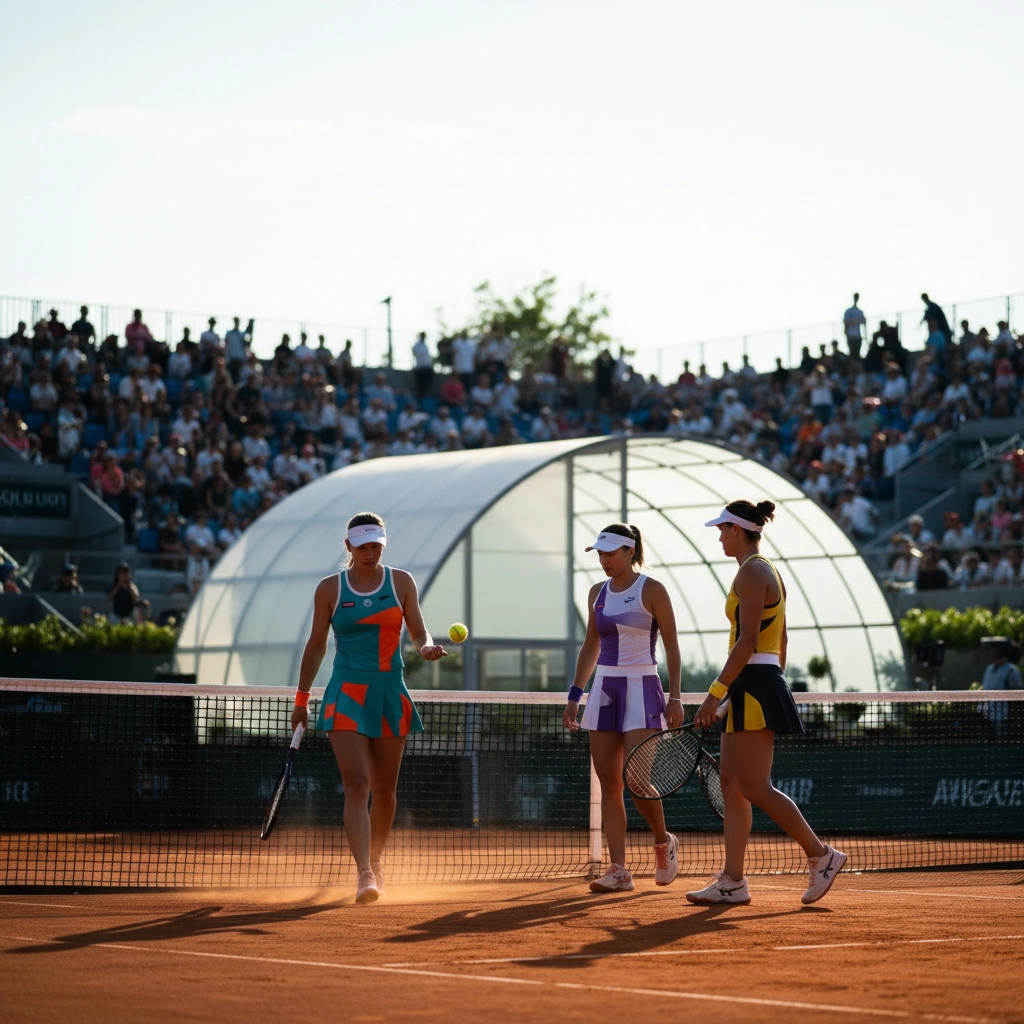
Player profiles to watch: archetypes most likely to disrupt the top 10
When scanning for players who can legitimately force their way into the top 10 this year, think in terms of archetypes rather than just names. Each archetype brings a different path to sustained success—and a different set of metrics that indicate whether a run is transient or durable.
– The power baseline breakout
– Profile: Big hitters who suddenly pair improved serve consistency with cleaner decision-making from the backcourt.
– Signals to watch: First-serve percentage rising above ~62%, winners-to-unforced-error ratio improving week-to-week, and an uptick in return games won against top-20 opponents.
– Why it’s believable: Power alone is noisy; sustained top-10 ascension requires cutting down free points lost and converting more break opportunities.
– The all-court reinvention
– Profile: A previously one-dimensional player who adds a reliable net game, more slice variety, or greater court positioning savvy.
– Signals to watch: Net points won >70% on approached points, transition win rate improving, and fewer three-shot rallies ending in errors.
– Why it’s believable: Versatility neutralizes matchup problems and helps across surfaces—key for consistent Slam results.
– The mental-edges grinder
– Profile: A baseline grinder who wins tight matches through resilience—clutch return games, strong three-set records, few lapses in tie-breaks.
– Signals to watch: Three-set match win percentage >60%, break-point conversion above tour average in deciding sets, and positive record when trailing by a set.
– Why it’s believable: Mental toughness converts narrow chances into ranking points; these players often accumulate deep runs at slams and 1000-level events.
– The elite-surface specialist turned all-season threat
– Profile: A clay or grass specialist who begins to translate surface dominance into hard-court results via serve improvements or adjusted footwork.
– Signals to watch: Service hold percentage jumps on faster surfaces, and transition-win rate between surface blocks exceeds 55%.
– Why it’s believable: Surface specialists who expand their toolkits can string point-heavy runs into significant ranking climbs, not just seasonal spikes.
For each archetype, cross-check their results against strength-of-schedule. A week of wins against depleted draws is weightless compared with beating top-10 opponents and surviving three-set battles. The combination of match-quality (opponent rank, closeness of scorelines) and stability in the above metrics separates promising flashes from genuine contenders.
Head-to-head dynamics and the tactical signs of a real contender
Head-to-head records are more than tallies; they reveal tactical advantages and recurring matchup problems. When evaluating contenders, look beyond win-loss and parse how they won.
– Which patterns matter most
– Serve-Return splits: If a player consistently neutralizes big servers by returning high-percentage second serves (return points won >45%), that’s a transferable weapon across draws.
– Rally-length dominance: Winners in the 4–8 shot window indicate control in baseline exchanges. Players who win a high share of medium-length rallies are less vulnerable to momentum swings.
– Late-set resilience: Check break points saved and converted in decisive sets. A contender who flips the script in deciding sets is likelier to convert deep runs into ranking gains.
– Tactical mismatches to exploit
– Lefty spin vs. one-handed backhand: Repeated wins in these matchups suggest an exploitable directional bias—useful when projecting outcomes on draws with several one-handers.
– Aggressor vs. counterpuncher: Track how often the aggressor converts a 50/50 rally into a winner; if the counterpuncher consistently extends points and draws errors, they’re a stylistic foil regardless of ranking.
– Net-approach pressure: Players who successfully shorten points with high first-serve efficiency and net approaches force opponents into uncomfortable passing scenarios—crucial on grass and faster hard courts.
– Turnaround indicators in head-to-heads
– A previously losing player who begins to win bigger share of return games and tie-breaks against a specific opponent usually reflects a strategic adjustment, not just variance.
– Watch for consistent improvements across multiple matches versus similar styles—this signals a genuine tactical evolution that will hold up across a season.
Use head-to-head subtleties to predict vulnerability in draws. A contender who repeatedly loses to baseline grinders but handles aggressive returners may be a safe bet in fast draws and a risk in slow ones.

Reading draws, scheduling, and points windows: where upsets turn into ranking leaps
Not all ranking opportunities are equal—timing and draw composition matter as much as form. Understanding points windows and scheduling choices highlights the weeks when breakthroughs are most likely.
– Points-defense calendar
– Identify players defending large point totals early in the season; they are more vulnerable to ranking drops and less likely to expand their schedule aggressively.
– Conversely, players with light defenses or recent long layoffs often use smaller tournaments to build momentum; watch 250/500 events before majors as high-leverage weeks.
– Draw geometry and seeding luck
– A favorable draw (avoiding multiple top-10 matches before a quarterfinal) can create a low-resistance path that still grants valuable ranking points. Track projected seed paths and potential early clashes.
– Wildcards and protected rankings can temporarily complicate seeds—this creates pockets in draws where a rising player can accelerate gains.
– Strategic scheduling signs
– Skipping a warm-up event in favor of rest or targeted practice often signals a peak plan for a major; conversely, stacking match-play shows a player intent on building form quickly.
– Watch surface runs: a player who plans consecutive events on the same surface (clay swing or grass swing) is likely targeting a concentrated points haul rather than scattered defenses.
When you combine archetype fit, head-to-head strengths, and draw-scheduling analysis, you can spot the precise weeks where an upset run becomes a sustained ranking leap. That’s where breakouts stop being surprises and start reshaping the top 10.
Watching the season unfold
Tennis in 2026 will be decided as much by small adjustments as by headline results. Keep an eye on measurable shifts—serve percentages, return efficiency, net-approach success—and on scheduling cues that reveal a player’s intent. Those signals, combined with match-quality and draw geometry, are what separate a one-off headline from the start of a genuine top-10 run.
- Track form across consecutive events on the same surface to spot momentum accumulation.
- Prioritize wins over top opponents and resilience in deciding sets as stronger indicators than isolated dominant-scoreline victories.
- Use official resources to monitor rankings movement and entry lists: WTA Rankings.
Expect surprises, but let the data and tactical reads guide your judgments week to week. That’s where the true contenders separate themselves from the flash-in-the-pan moments.
Frequently Asked Questions
How can I spot a player likely to break into the top 10?
Look for players matching one of the breakout archetypes—power baseline improvements, all-court reinventions, grinders with late-set edge, or specialists expanding to other surfaces—plus rising key metrics (first-serve %, winners-to-errors, return games won) and quality wins against top opponents.
Do head-to-head records still matter when projecting future rankings?
Yes, but context is crucial. Head-to-heads reveal tactical advantages; focus on how matches were won (serve/return splits, rally-length dominance, tie-break performance) and whether a player has made consistent adjustments across meetings rather than isolated upsets.
When are the best weeks for lower-ranked players to gain significant ranking points?
High-leverage weeks include 250/500 events preceding majors, blocks where a player has a light points defense, and stretches of consecutive tournaments on the same surface. Favorable draws—avoiding multiple top-10 matchups early—also create opportunities for larger-than-expected ranking leaps.