

Why certain tennis players become immortalized as all-time greats
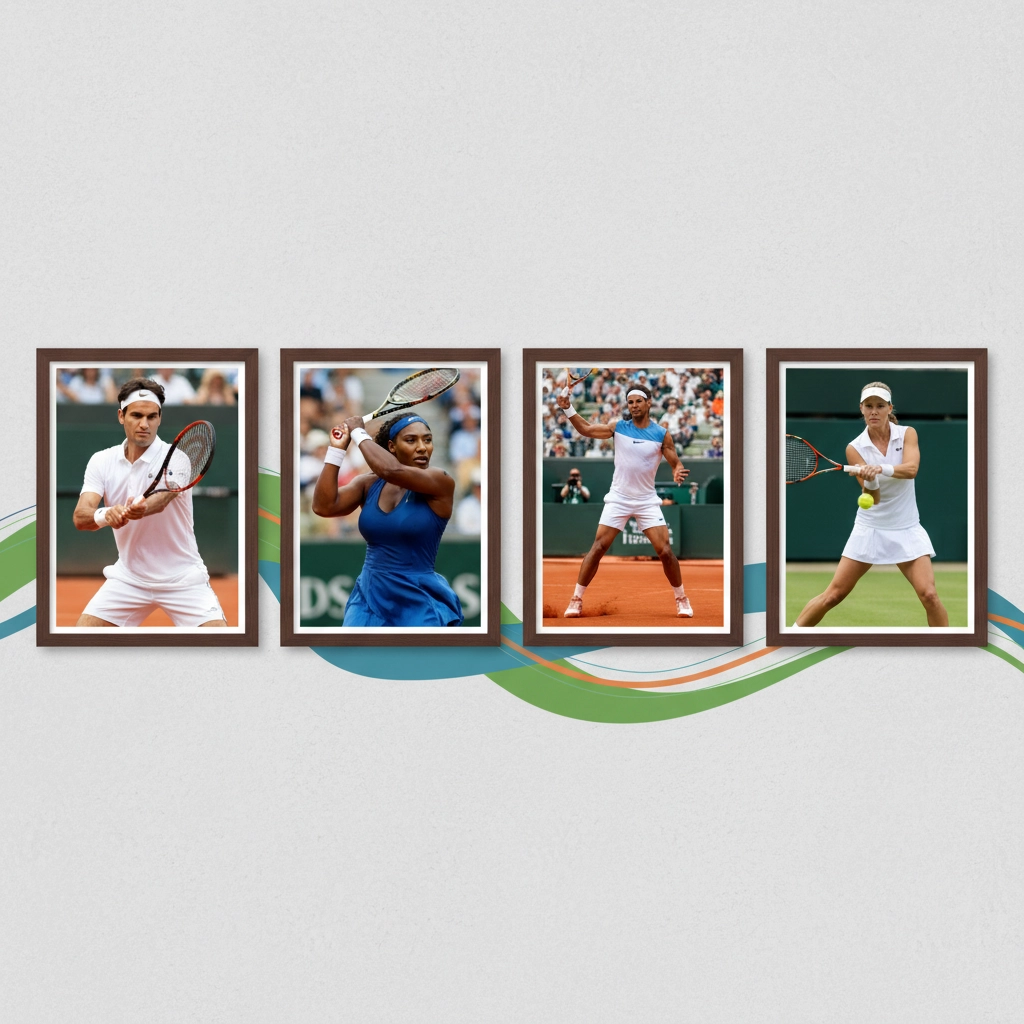
When you look at lists of the sport’s greatest players, you’ll notice the same names keep appearing. That repetition isn’t random: greatness in tennis is built from a combination of measurable achievement, stylistic innovation, cultural impact, and longevity. You can evaluate a career by counting Grand Slam titles and weeks at world No. 1, but you’ll also want to consider how a player changed how the game is played, inspired fans and future champions, and carried the sport through social and technological change.
As you read profiles of famous tennis players, use these criteria to guide your understanding:
- Competitive record: Grand Slam trophies, year-end championships, Davis or Billie Jean King Cup performances, and head-to-head results against other top players.
- Playing style and innovation: introductions of new tactics, technique, or training methods that influenced subsequent generations.
- Cultural and social influence: how a player expanded the sport’s audience, broke barriers, or became a symbol beyond tennis.
- Durability and adaptability: success across different surfaces, eras, and changes in equipment or rules.
How the sport’s structure affects comparisons
When you compare players across eras, you need to account for differences in equipment, surfaces, tournament schedules, and the amateur-professional divide that dominated early tennis. For instance, before the Open Era began in 1968, professionals were barred from Grand Slam tournaments, so some of the best players of the 1930s–1960s never had the same opportunities to accumulate official major titles. As you assess early champions, consider both on-court accomplishments and pro tour results from the pre-Open Era.
Foundations of tennis greatness: pioneers and pre-Open Era champions
If you want to understand the roots of modern greatness, begin with the pioneers whose achievements set benchmarks for their time. These early stars laid down stylistic and strategic foundations that still matter when you analyze technique and match play today.
Key figures to know from the early decades
- Bill Tilden (United States) — Dominant in the 1920s, Tilden combined powerful groundstrokes with strategic court sense. He won multiple Wimbledon and U.S. Championships and helped popularize tennis in America through both on-court success and writing about the sport.
- Suzanne Lenglen (France) — A transformative figure in women’s tennis during the 1910s and 1920s, Lenglen’s graceful athleticism and flair raised the sport’s visibility and challenged norms about female athleticism.
- Fred Perry (United Kingdom) — The late 1930s champion whose aggressive game and fitness made him a global star; Perry’s titles at Wimbledon, the U.S., and Australian Championships forged an early international legacy.
Why these players matter to you as a student of the game
Studying pioneers sharpens your appreciation for how tennis evolved. You’ll see how grip changes, footwork patterns, and tactical approaches—developed and refined by early champions—continue to influence coaching and player development. Even when statistics are incomplete or incomparable, the innovations and cultural reach of these figures explain why historians and fans call them all-time greats.
Mid-century champions who bridged amateur and professional eras
As you move forward in the sport’s timeline, you’ll encounter players who competed across the amateur-professional divide or dominated on the early professional tours. These figures often demonstrated adaptability and resilience, proving that greatness persisted despite changing competitive structures.
Standout names and their defining attributes
- Don Budge (United States) — First to complete a calendar-year Grand Slam in 1938, known for a precise backhand and mental toughness.
- Maureen Connolly (United States) — “Little Mo” captured a calendar Slam in 1953; her aggressive baseline game and iron will made her a benchmark for women’s excellence.
- Rod Laver (Australia) — Unique for winning the calendar Grand Slam twice (1962, 1969), Laver’s all-court mastery and left-handed shotmaking link the pre- and post-Open eras.
When you examine these mid-century champions, pay attention to how they handled transitions—the rise of professional tours, surface diversification, and equipment shifts. Those responses often define whether a player’s legacy is transient or truly enduring.
Next, you’ll explore the Open Era’s emergence and the modern players whose records and rivalries transformed tennis into the global spectacle it is today.
The Open Era revolution and the globalization of tennis
When the Open Era began in 1968, tennis moved from a fragmented mix of amateur and professional circuits into a unified, commercially viable global sport. That structural change did more than alter who could play in Grand Slams; it accelerated the professionalization of training, expanded international calendars, and created incentives for year-round excellence. As a result, comparing players before and after 1968 requires attention not only to titles but to the conditions under which those titles were won.
In practical terms, the Open Era introduced several dynamics you should track when judging greatness:
- Depth of field: Draws became deeper and more international, so sustained domination against varied opponents gained extra weight.
- Prize money and full-time professionalism: Players could afford year-round coaching, travel, and sports-science support, which raised baseline fitness and tactical sophistication.
- Surface specialization vs. versatility: With more hard-court events and the reinvention of grass and clay surfaces, success across surfaces became a clearer marker of all-court mastery.
Look at figures from the 1970s and 1980s—Borg, Connors, McEnroe, Navratilova, and later Sampras and Graf—not just for their Grand Slam hauls but for how they adapted to this new ecosystem. Borg’s cool baseline consistency, McEnroe’s artistry at net and fire on court, and Navratilova’s transformation into an athletic, serve-and-volley powerhouse all illustrate different ways champions exploited the opportunities of the Open Era to extend their dominance and reshape technique.
Rivalries that rewired expectations for excellence
One of the most distinctive features of modern tennis is the sustained rivalries that pushed players to higher peaks. Long-running head-to-head battles forced tactical innovation, mental fortitude, and remarkable durability—qualities that often define an all-time great more than a single peak season.
Consider a few archetypal rivalries and what they reveal about greatness:
- Björn Borg vs. John McEnroe: A clash of temperament and style—Borg’s relentless baseline rhythm against McEnroe’s touch and volleys—this rivalry highlighted how divergent games could meet repeatedly at the highest level, particularly at Wimbledon and the French Open.
- Pete Sampras vs. Andre Agassi: Sampras’s textbook serve-and-volley met Agassi’s return-based aggression, illustrating that contrasting pathways (dominant serve vs. return dominance) could both produce multiple majors and influence coaching priorities for a generation.
- Roger Federer, Rafael Nadal, Novak Djokovic (the Big Three): Their prolonged competition redefined records—Grand Slam totals, weeks at No. 1, and head-to-head duels—and set new standards for consistency across surfaces. Their rivalry also reshaped scheduling, broadcast attention, and the commercial profile of men’s tennis worldwide.
When you evaluate players from these eras, look beyond raw totals. Pay attention to the timing of peak performances (did the player sustain a run of dominance or peak briefly?), the quality of rivals, and how matchups exposed and then forced tactical refinement. Rivalries are living proof that greatness is partly comparative—players become immortalized because they were repeatedly measured against other exceptional opponents and prevailed or elevated their game in response.
Women’s modern evolution: power, longevity, and cultural impact
The women’s game underwent a similarly profound evolution through the Open Era, shifting from elegance and finesse toward increased power, athleticism, and baseline aggression. Key figures—Martina Navratilova, Chris Evert, Steffi Graf, Monica Seles, and later Serena Williams—each mark inflection points in how the women’s game was played, perceived, and commercialized.
Navratilova brought unparalleled athleticism and a serve-and-volley model to the women’s tour, complementing earlier baseline stalwarts like Evert and influencing coaching emphasis on fitness and net play. Steffi Graf’s combination of a penetrating forehand and exceptional footwork produced a rare blend of power and versatility; her Golden Slam year highlighted the possibility of absolute dominance across surfaces and events. Serena Williams’s later-era career pushed the game further: she combined brute power, tactical intelligence, and an ability to peak at crucial moments, while also becoming a global cultural icon and advocate on issues far beyond tennis.
Assessing women’s greatness means weighing titles and head-to-heads against cultural leadership and boundary-breaking: who expanded the audience, who changed expectations for athleticism, and who continued to win at the highest level despite changes in equipment and scheduling? In the women’s game, as in the men’s, greatness is a compound metric—statistical achievement married to stylistic innovation and social resonance.
The legacy and what comes next
Tennis greatness is never static; it’s a living dialogue between players, technology, culture, and audience expectation. Rather than anchoring the sport to a single definition of “great,” the healthiest view is to see greatness as a set of shifting standards—technical excellence, adaptability across surfaces, mental resilience, and cultural impact—that evolve as the sport does. Fans and historians will continue to debate who sits atop the all-time lists, but the deeper value lies in how each generation pushes the game forward and inspires the next.
For those who want to follow records and current rankings as the story continues, official resources such as the ATP Tour provide up-to-date data that help place performances in context. Watching how young talents adapt and how veterans refine their games will be the clearest indicator of where the next chapters of greatness will be written.
Frequently Asked Questions
How did the Open Era change how we evaluate tennis players?
The Open Era unified amateur and professional competition, increasing the depth of fields, the international calendar, and the professional support available to players. That shift means modern achievements are often judged not only by titles but by consistency against a deeper, year-round tour and success across multiple surfaces.
Why do rivalries matter when judging all-time greats?
Rivalries sharpen players’ games, force tactical innovation, and provide repeated high-stakes measurements of quality. Sustained head-to-head battles reveal durability, adaptability, and the ability to respond to exceptional opponents—traits that often define lasting greatness more than isolated achievements.
Can we fairly compare players from different eras?
Comparisons across eras require nuance: consider changes in equipment, training, surfaces, travel, and the competitive field. Rather than a single metric, fair comparisons balance statistical records with context—style, dominance relative to contemporaries, and obstacles each player faced in their time.