
How the Nadal–Federer Rivalry Reoriented Modern Tennis
You may already know this rivalry as a list of scores and Grand Slam trophies, but its importance goes deeper: it forced you to rethink how contrasting techniques and temperaments interact at the highest level. When two players so different in style and stance met repeatedly, every match became a laboratory for strategy, endurance and psychological warfare. In this section you’ll get a clear sense of the rivalry’s early arc and why those first encounters mattered beyond the win-loss columns.
What made their early meetings feel like a clash of tennis philosophies
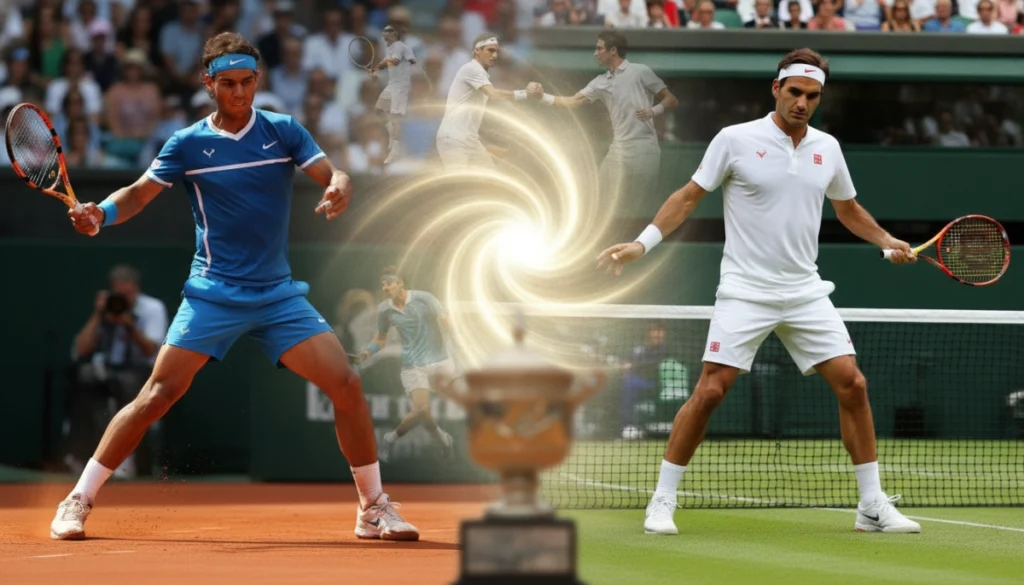
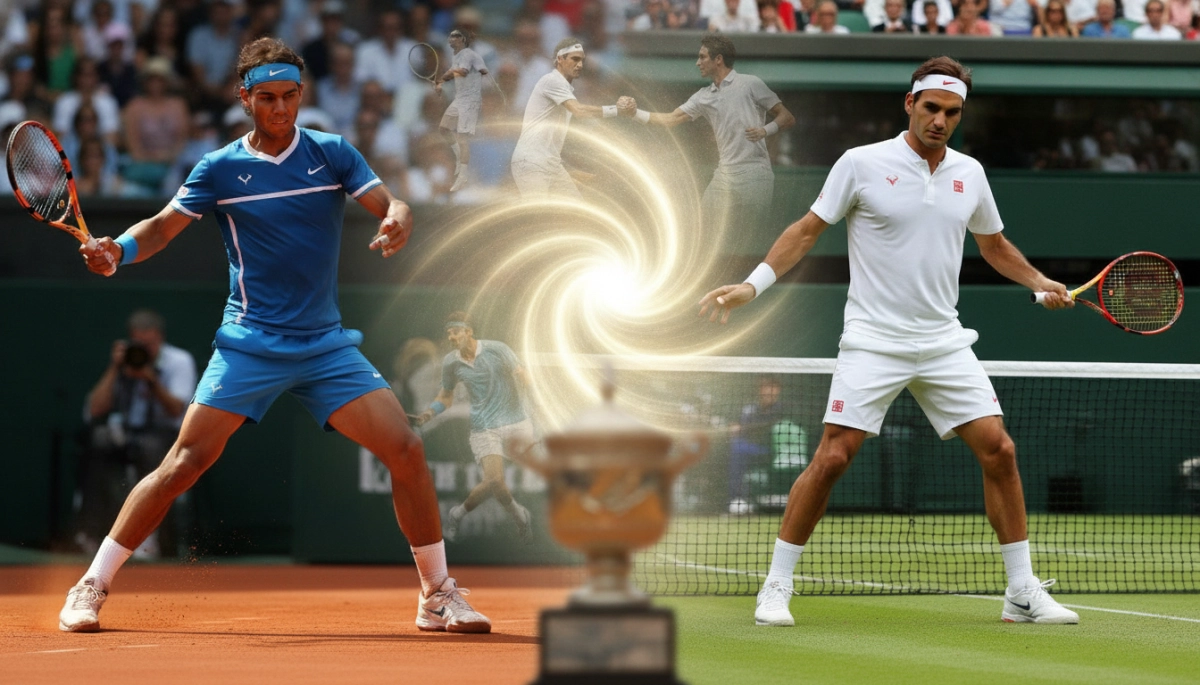
From the outset, you could pinpoint the contrast. One player combined fluid shot-making, an all-court repertoire, and a single-handed backhand that invited shorter rallies. The other relied on relentless left-handed topspin, physicality and an ability to manufacture higher-bouncing, heavy baseline exchanges. Those differences created a natural court-by-court narrative that shaped outcomes:
- Surface dynamics: Clay magnified heavy topspin and endurance; faster surfaces rewarded variety and quick point construction — you could almost predict where each would hold the edge.
- Tactical adjustments: Early matches forced each player to incorporate new patterns — changes in serve placement, depth control and court positioning became visible between matches.
- Mental templates: You began to see how confidence, crowd momentum and small tactical wins influenced long-term match strategies rather than just single points.
Key early moments that signalled a rivalry, not just competition
Rather than listing specific dates, focus on the types of early events that mattered for shaping your view of the rivalry:
- The first surprising upset that announced the younger player’s arrival and introduced a persistent new threat to the established champion.
- The initial Grand Slam meetings where stakes grew and both players revealed how they handle pressure against a familiar foe.
- Matches that shifted tactical precedent — after certain encounters, you could see clear changes in how either player approached the other’s strengths.
Each of these moments taught you something different: resilience, the value of variation, and how adaptation becomes a competitive edge when two elite players meet repeatedly.
How early patterns predicted longer-term narratives
As the early head-to-head encounters accumulated, patterns emerged that would define much of the rivalry’s future arc. You began to appreciate recurring themes: surface specialization, the increasing importance of strategic patience, and how marginal gains in serve and return could swing entire matches. These formative meetings also set up the emotional storyline — shifting momentum between two rivals who pushed each other to evolve.
With the early dynamics established, you’ll next explore the watershed Grand Slam clashes and iconic matches that crystallized this rivalry on the biggest stages.
Watershed Grand Slam Clashes That Defined Public Memory
If the rivalry needed a stage it was the Grand Slam final — everything was magnified: the crowd, the history, the pressure. On clay, those showdowns turned into something close to inevitability. The French Open meetings repeatedly confirmed what practice sessions hinted at: one player’s topspin and physicality could turn the baseline into a furnace, forcing the other to reinvent rhythm and patience. Those finals weren’t just about trophies; they were proofs of method. They established a hierarchy on a surface where spin, endurance and court positioning mattered most, and they did so in a way that became part of both players’ identities.
Then there was the match that entered sporting mythology: a Wimbledon final played across late daylight and rain delays that people still call one of the greatest matches ever. It wasn’t merely the length or the quality of points; it was how the encounter reshaped public perception. Suddenly the rivalry transcended technique and statistics — it became storytelling, theatre and national narrative. The drama changed how the broader audience saw tennis: as a contest of wills as much as of strokes.
Beyond a single epic, the Grand Slam battles created a rhythm to the rivalry. Clay confirmed supremacy and physical dominance, grass showcased touch and variety, and hard courts produced tactical tug-of-wars. Each Grand Slam meeting forced both players to bring their best psychological and tactical selves, and those moments anchored the rivalry in the collective memory of the sport.
Late-career Adaptations and How the Rivalry Evolved
As careers lengthened, the rivalry moved from raw contrasts to subtle conversation. Both men adapted — not by abandoning their core identities but by layering new elements onto them. One gradually incorporated more aggression, taking the ball earlier and adding variations that cut down opponents’ reaction time; he also opted for equipment changes to complement that shift. The other refined his serve and flattened some of his wing trajectories to shorten points and counteract time disadvantages on faster courts. These were incremental but decisive modifications that produced different kinds of matches late in the rivalry: fewer overwhelming triumphs, more finely measured duels where tactics and timing decided outcomes.
That evolution also changed the emotional tenor of their contests. Early meetings crackled with the unpredictability of a newcomer threatening an established king. Later clashes carried mutual respect and an almost clinical game-plan execution: probing, testing, and waiting for the opening. The crowd still roared, but the excitement increasingly came from anticipation of the next tactical twist rather than pure stylistic contrast.
Importantly, those late matches reframed legacy. They showed that greatness isn’t only about raw peak performance but about capacity for reinvention. In their adaptations you see a template for longevity in modern tennis — an example younger players study when thinking about how to extend careers while remaining competitive at the very highest level.
Legacy Beyond the Scoreboard
The Nadal–Federer rivalry did more than fill trophy cabinets and record books; it reframed how you think about elite competition. Its true legacy is cultural and instructional: a template for how contrasting strengths can coexist, a reminder that adaptability extends careers, and proof that sportsmanship and mutual respect can amplify drama rather than diminish it. Those qualities — craft, courage, and character — live on in the players who watched, learned and tried to replicate pieces of what they saw.
As you reflect on their matches, consider them less as endpoints and more as starting points. Coaches dissect points from those encounters; young players borrow tactical motifs; broadcasters and fans retell the narratives that turned rallies into enduring images. The rivalry continues to feed the sport’s imagination, shaping expectations about match narratives, the value of surface specialization, and what it means to evolve without losing identity.
Where to revisit a defining moment
- For one clear example of how a single match can alter public perception, see the coverage of the 2008 Wimbledon final: 2008 Wimbledon final.
In the end, the rivalry’s most valuable output is a living archive: a set of matches and moments you can return to whenever you want to study excellence in motion, the craft of adaptation, or the quiet ways two rivals can elevate an entire sport.