


Why the next generation of tennis deserves your close attention
You’ve probably noticed that professional tennis keeps getting younger. Teenagers are no longer just promising juniors — they’re earning big wins, challenging established stars, and changing the pace and style of the game. When you follow these players early, you get to see technical evolution, tactical creativity, and personal development in real time. That context helps you understand not only match results, but also long-term potential and market value.
Watching teen talents gives you a different lens on the sport. You’ll observe how coaching, nutrition, and sports science alter development trajectories. You’ll see how early exposure to major tournaments affects mental toughness. And you’ll learn how the tour adapts to athletes who combine modern power with surprising variety. In short, following teens now helps you predict who will lead the next decade.
What makes a teenage breakthrough meaningful
Not every junior sensation becomes a top professional. To tell the difference, consider these practical markers of a genuine breakthrough — the signals you should use when you evaluate young players:
- Consistent wins against established pros: A single upset can be a fluke; repeated victories at WTA/ATP events show adaptability and resilience.
- Rapid ranking progress: A steady climb in ranking points indicates sustained performance across surfaces and conditions.
- Ability to close tight matches: Winning deciding sets or tiebreaks against experienced opponents points to competitive maturity.
- Technical maturity beyond age: Look for dependable footwork, varied shot selection, and repeatable serve mechanics under pressure.
- Support structure and planning: A clear coaching setup, smart scheduling, and attention to injury prevention suggest a career-minded team behind the player.
How teen players typically develop on tour and what you should watch next
When you track a teen’s rise, it helps to break development into observable phases. You’ll usually spot an initial breakthrough phase — an eye-catching win or deep run at a big event — followed by a consolidation phase, where the player learns to handle expectations, and finally a transition phase, where they become consistent top-level competitors.
As you follow matches and results, focus on a few practical aspects that reveal where a teen is on this path:
- Match temperament: Do they recover quickly after losing sets? Do they maintain strategy rather than overhit under pressure? These mental traits are as predictive as technical skills.
- Surface versatility: Teens who win or perform well across clay, hardcourt, and grass are more likely to sustain success through the tour calendar.
- Shot repertoire and evolution: Notice whether they add variety — drop shots, slice backhands, lefty angles, or a more tactical net game — instead of relying only on power.
- Physical resilience: Younger bodies can be durable but exposed; pay attention to recovery between matches and how teams manage load to avoid early burnout.
- Competitive scheduling: A smart mix of challenger-level events, selective majors, and team competitions often indicates long-term planning rather than short-term exposure.
Examples of patterns that have produced recent stars
To make this more concrete, observe the following patterns in players who have already made waves as teenagers. You should look for similar signs in new prospects:
- Early high-level exposure: receiving wildcards into major tournaments, which accelerates experience against top opponents.
- Strong junior results combined with immediate impact at lower-tier pro events — a bridge demonstrating readiness for the main tour.
- Rapid technical adjustments after losses — coaches and players who iterate quickly tend to progress faster.
- Media and commercial interest that’s matched by on-court discipline, showing the player can handle external pressure.
Players such as Mirra Andreeva and the Fruhvirtová sisters have illustrated many of these patterns: early exposure, notable wins at a young age, and visible technical and tactical growth. You’ll find that the most promising teens combine raw talent with a focused, adaptable approach to development.
Next, you’ll get concise player profiles that highlight specific strengths, recent results, and the matchups likely to define each teen’s near-term trajectory.
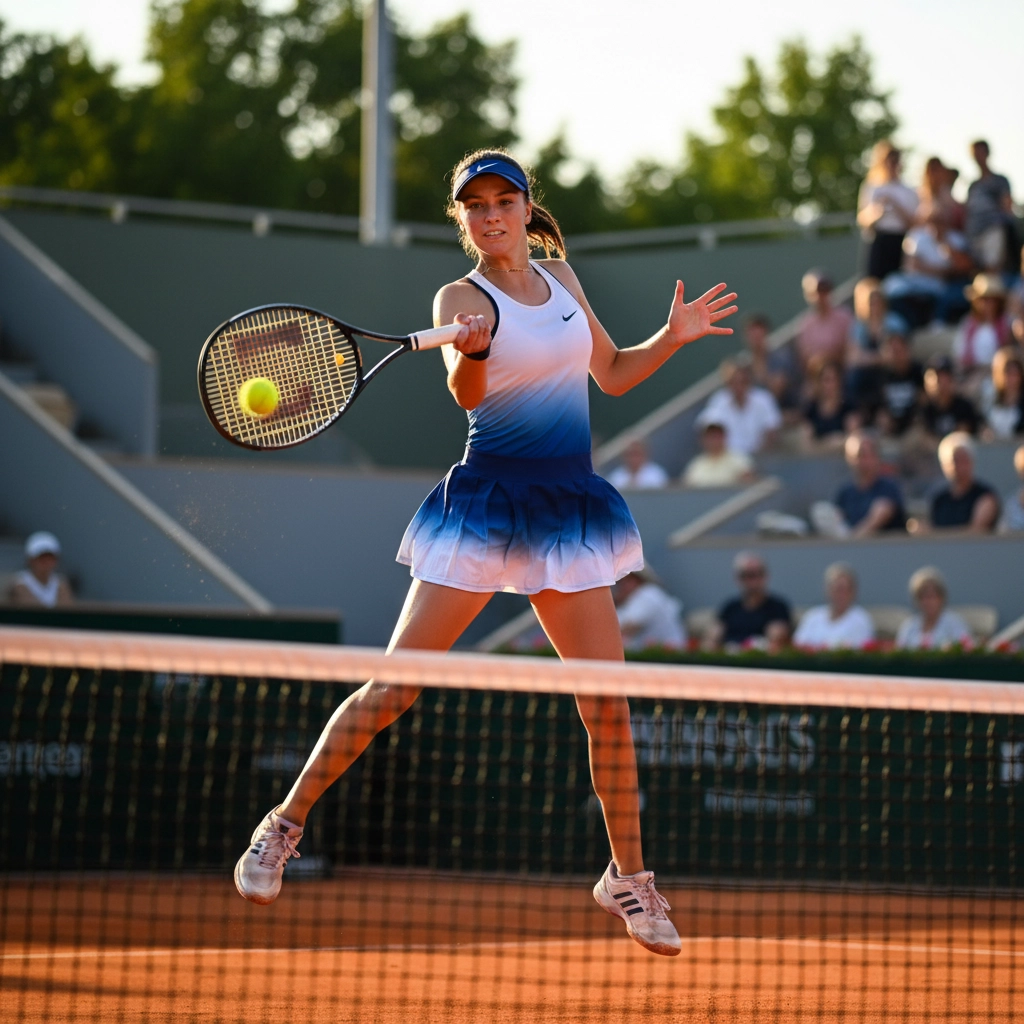
Profiles to watch: four archetypal teen breakouts
Not every rising teen looks the same. To make sense of individual results, it helps to categorize newcomers by the kind of game and development path they’re following. Below are four concise profiles you’ll see repeatedly on the tour — each includes the concrete signs that indicate genuine progress and the matchups likely to expose their readiness for the next level.
-
The Power Baseline Prodigy
What they bring: Heavy, consistent groundstrokes, explosive court coverage and a first-strike mentality. These teens generate free points and can dominate on faster hardcourts.
Progress signals to watch: A reliable second serve under pressure; the ability to construct points rather than only hit through opponents; fewer unforced errors in three-set matches.
Key matchups: Players who can redirect pace (lefties, crafty counterpunchers) and clay specialists who can extend rallies. Wins over counterpunchers and holding serve in deciding sets are strong indicators of transition readiness.
-
The All-Court Tactician
What they bring: Variety — slice, drop shot, willingness to come to net — combined with quick decision-making. These players often frustrate opponents who expect pure power.
Progress signals to watch: Successful net approaches under pressure, a growing percentage of short-point conversions, and the ability to adapt strategy mid-match after scouting an opponent.
Key matchups: Big hitters who struggle to finish points; veterans who test patience by grinding rallies. Upsets over higher-ranked players who rely on power reveal that the all-court teen can bend matches to their game plan.
-
The Clay-Court Specialist
What they bring: Exceptional movement, heavy topspin, and point construction designed to open angles and create short balls on slower surfaces. Often develops earliest in countries with strong clay programs.
Progress signals to watch: Deep runs at clay challengers or ATP/WTA 250/500 events, wins against aggressive players who fail to shorten points, and improved serve placement to avoid being overrun on return games.
Key matchups: Aggressive hard-court players adapting to slow conditions and all-courters who can mix pace. Successful translations of clay form to slow hardcourts are the clearest sign they can broaden their calendar.
-
The Serve-and-Volley/Net-Forward Adopter
What they bring: A classical approach retooled for modern tennis — big, well-placed serves followed by aggressive net positioning. Especially valuable on grass and quick indoor courts.
Progress signals to watch: High first-serve win percentage late in matches, confident approach shots that set up clean put-aways, and improved return-of-serve to avoid being targeted on second serves.
Key matchups: Baseline-dominant teens who lack slice or low balls; tight, quick-surface contests. Consistent success across serve-and-volley duels against experienced pros shows tournament-winning potential.
When you watch a rising teen, place them in one of these archetypes and then check whether their results are expanding beyond surface-specific success. A true prospect will begin taking facets of other archetypes into their game — for example, a power baseliner who starts using short slices to disrupt rhythm, or a clay specialist who improves first-serve effectiveness on hard courts.
Key tournaments and matchups that will define their seasons
Certain events and types of opponents act as accelerators or litmus tests for teen development. Knowing which tournaments to track and what match results really mean helps you separate publicity from substance.
-
Early-season hard-court swing (Australian Open, lead-up 250/500 events)
Why it matters: Tests fitness, travel readiness, and ability to handle strong baseline players after the off-season. Early Grand Slam wins — even a single main-draw upset — can change a teen’s schedule and confidence.
What to watch: How they manage five-set/three-set match endurance, the quality of second-serve returns, and whether coaching adjustments between matches are implemented successfully.
-
Clay-circuit stretch (Clay Challengers, WTA/ATP 500s, Roland Garros)
Why it matters: Clay reveals point-construction intelligence and movement under duress. Deep runs here show tactical maturity and patience.
What to watch: Break-point conversion rates, defensive resetting ability, and the frequency of successful crosscourt angle winners.
-
Grass season and quick indoor events (Wimbledon lead-ins, ATP/WTA 250 grass tournaments)
Why it matters: These surfaces reward variety and serve quality. Teens who can adjust from heavy spin to low bounces quickly often surprise more established players.
What to watch: Serve placement, transition volley success, and the capacity to shorten points without increasing errors.
-
Head-to-head tests: Young vs veteran, sibling/peer rivalries, and Davis/Billie Jean King Cup ties
Why it matters: Matches against veterans expose match temperament; sibling or cohort rivalries show competitive growth in a familiar pressure environment; national team events test composure under external expectations.
What to watch: Clutch performance in decisive sets or tiebreaks, ability to stick to game plans when momentum swings, and recovery after public mistakes.
Track these tournaments and matchup types across a season. A pattern of wins in the right contexts — not just one-off upsets — is the clearest signal that a teen will move from promising to dependable on tour. In the next section, we’ll look at specific names and short-form scouting notes to help you follow individual trajectories match by match.

Looking Ahead: How to keep watching the next generation
As the season unfolds, the most useful approach is less about picking a single wunderkind and more about tracking the development signals that separate flashes from futures: adaptability across surfaces, tactical growth, and dependable results in pressure moments. Follow match-by-match trends, tune into the right lead-up events, and give extra weight to repeated success against established pros rather than one-off upsets. For up-to-date schedules and official results, consult resources like the ATP Tour, which list draws, live scores and player activity across levels.
Frequently Asked Questions
How can I tell if a teen player’s upset is a fluke or a sign of real progress?
Look for follow-up evidence: wins on similar surfaces, improved metrics (serve consistency, break-point conversion), and victories in matches that test resilience (deciding sets, tiebreaks). Single upsets are notable, but patterns across tournaments and match types indicate genuine development.
Which events give the clearest picture of a teen’s readiness for the top tour?
Key tests include early-season hard-court swings (Australian Open lead-ups), the clay-circuit stretch and Roland Garros, and the grass/quick-indoor season around Wimbledon. National team ties and matches against seasoned veterans are also revealing because they probe temperament under pressure.
Where should I follow reliable stats and schedules for rising players?
Official tour sites (ATP, WTA), Challenger/ITF calendars, and live-score services provide reliable match stats and schedules. Combine those with match video when possible and coaching/development news to understand context—injuries, surface choices, and scheduling decisions often explain sudden form changes.