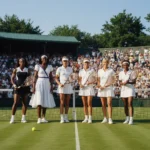


Why tennis legends matter to your understanding of the sport
You learn the game’s present and future best by studying those who shaped it. Tennis legends and Hall of Famers are more than record holders; they are case studies in innovation, resilience, and influence. When you examine their careers you pick up more than statistics—you learn tactical shifts, equipment evolution, and how off-court behavior changed tennis culture.
Thinking of legends as a living curriculum helps you evaluate players across eras. You’ll see how a serve-and-volley champion taught you about court positioning, how a baseline tactician redefined consistency, and how charisma expanded the sport’s global popularity. This perspective will guide your reading of match footage, biographies, and Hall of Fame citations in the sections that follow.
How players are recognized: criteria and selection mechanics
What the Hall of Fame looks for
When you read Hall of Fame bios, you’ll notice recurring themes. Selection committees typically weigh a blend of on-court achievement and off-court contribution. The main factors you should expect to find documented are:
- Career achievements: Grand Slam titles, major tour victories, and sustained world rankings.
- Impact on the game: Tactical or technical innovations, rule changes prompted by a player’s style, and influence on coaching philosophies.
- Longevity and consistency: How long the player performed at an elite level and how they adapted across seasons.
- Sportsmanship and character: Contributions to the sport’s reputation, conduct in high-pressure situations, and mentoring younger players.
- Ambassadorship: Growth of tennis through promotion, charity work, and global outreach.
Different halls—national federations, the International Tennis Hall of Fame, or sport-specific bodies—may emphasize these elements differently. As you read profiles, note which criteria are foregrounded; that often reveals what a particular institution values most.
How the selection process works and what you should watch for
Selection typically involves nomination, vetting by historians and former players, and a final vote by a committee or electorate. You should pay attention to these procedural points:
- Nomination windows and eligibility rules—many halls require retirement for a set number of years, though exceptions sometimes occur for contributors.
- Voter composition—whether former players, journalists, or tennis historians cast ballots determines the weight of different accomplishments.
- Public recognition versus committee recognition—a legend’s popular status doesn’t always equal formal induction; sometimes the committee prioritizes technical influence over media popularity.
Understanding the selection mechanics helps you interpret why some celebrated players are inducted promptly while others wait years or remain excluded despite fan support.
Pioneers and early eras that set the foundation for later legends
How the sport’s early champions shaped modern play
You’ll find that many modern tactics trace back to transitional figures. Early lawn-court and amateur-era champions established baseline patterns, while pre-open-era innovators introduced equipment and training shifts that later stars built upon. When you study pioneers, focus on three kinds of contribution:
- Technical innovation: Changes in grip, footwork, or stroke mechanics that propagated through coaching.
- Tactical shifts: Movement from net-dominant to baseline-oriented strategies or vice versa.
- Institutional influence: Founding tournaments, popularizing coaching methods, and early media engagement.
Notable early figures illustrate these contributions: players who dominated on grass and inspired baseline adaptations, coaches who standardized conditioning, and promoters who turned regional championships into international events. As you map these developments, you’ll gain tools to compare players across disparate technological and social contexts.
In the next part, you’ll begin examining individual Hall of Famers by era—starting with the pre-open and early open-era legends—to see how their records and reputations were built and later reassessed.
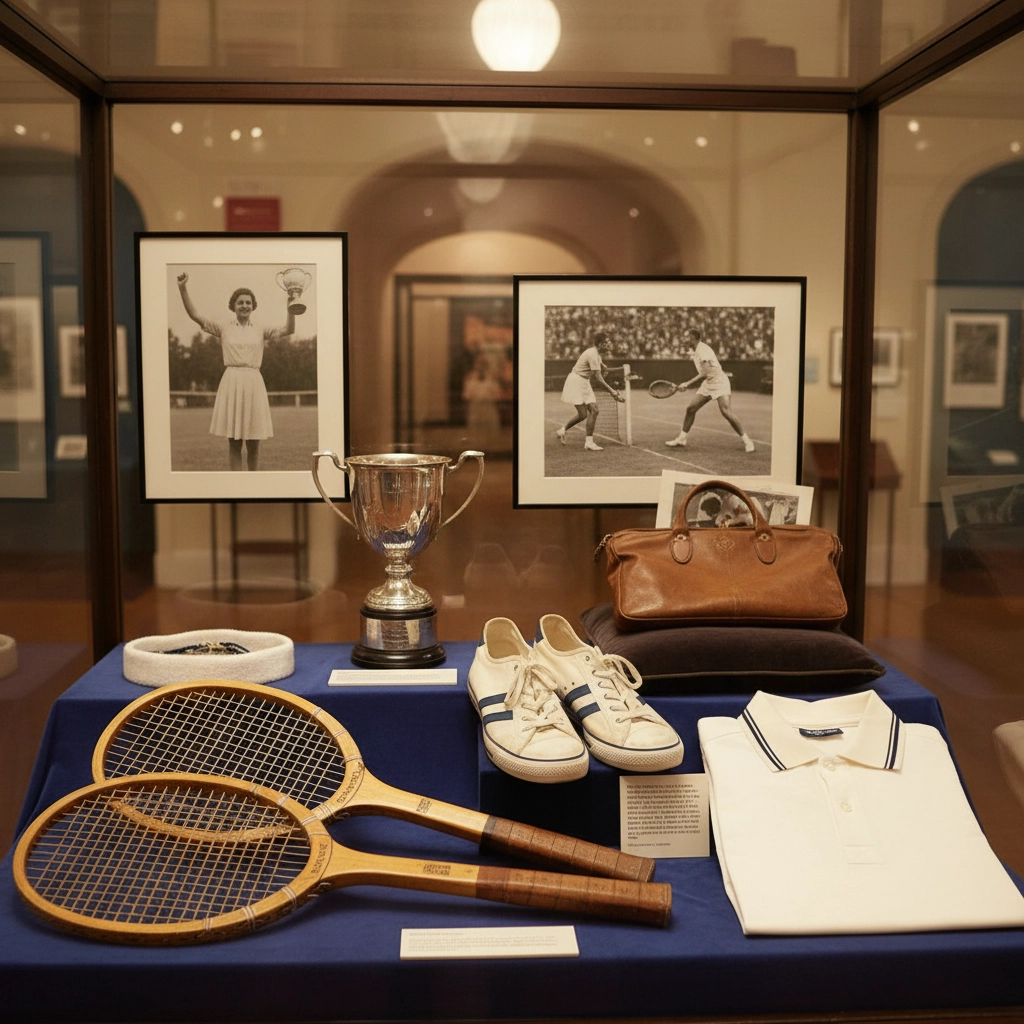
Pre-open and early open-era legends: context that reshapes raw records
Before you evaluate pre-open and early open-era Hall of Famers strictly by Grand Slam tallies, pause to place their numbers in historical context. Between the 1920s and the late 1960s the sport was split between amateur championships (including the four majors) and a parallel professional circuit that barred its players from major events. For many top players the most grueling, high-quality competition took place on pro tours—head-to-head barnstorming schedules, challenge matches, and closed pro tournaments—that weren’t always recorded or elevated to “major” status the way Slams were.
Other structural differences matter too. Wooden rackets, natural gut strings, and slower-court preparation changed what techniques were advantageous; serve-and-volley dominance on grass and fast courts often trumped the grinding baseline game that flourished later. Travel limitations, fewer global events, and regionally concentrated training meant that some champions never competed head-to-head as frequently as modern pros do. When reading a Hall of Fame biography from this era, watch for mentions of pro tour wins, long-term head-to-heads, and the player’s role in the transition to open competition—those parts of a career can be as illuminating as the lists of major titles.
Profiles that illustrate reassessments: Laver, Rosewall, Court, King, and Gonzales
Case studies help you see how reputations were built and reassessed. Consider a few emblematic names often discussed in Hall of Fame citations and subsequent debates:
- Rod Laver — His two calendar-year Grand Slams (1962, 1969) are headline achievements, but a full appraisal weighs the five years he spent on the professional circuit (1963–1967) when he was ineligible for Slam events. Hall biographies that give equal space to his pro tour dominance, adaptability to different surfaces, and later mentorship roles provide the truest picture of his influence.
- Ken Rosewall — Rosewall’s longevity is his defining attribute. Fewer Slam titles than some contemporaries mask decades of elite play, especially on the pro tours; Rosewall excelled with a counter-punching style that modern analysts cite as a precursor to baseline consistency. Look for Hall narratives that highlight his extended peak and repeated comebacks rather than only major counts.
- Margaret Court — Court’s raw numbers (including a record number of majors in some counts) are staggering, but careful readers note the composition of those titles—surface distribution, periods of amateur-only competition, and the absence of certain pro rivals. Honest Hall entries juxtapose the statistical record with era-specific competitive landscapes.
- Billie Jean King — King’s induction is about more than trophies. Hall citations emphasize her dual legacy: on-court excellence and institution-building—founding the Virginia Slims circuit (a precursor to the WTA), advocating for equal prize money, and a cultural impact crystallized in the 1973 “Battle of the Sexes.” When a Hall profile foregrounds activism alongside match records, it’s signaling how off-court contributions elevated her candidacy.
- Pancho Gonzales — Gonzales dominated pro tours in the 1950s with a ferocious serve and an uncompromising competitive style. Because his best years coincided with exclusion from Slams, his Hall entries rely heavily on contemporary reportage, head-to-head tallies, and eyewitness testimony. These qualitative sources are essential for reconstructing his place in the pantheon.
Reading these biographies together helps you spot themes: the importance of pro tour documentation, the role played by personal advocacy and institution-building in shaping legacies, and the way historians rectify statistical blind spots created by the amateur/pro divide.
How to read Hall bios from this era: questions that reveal depth
When you encounter a Hall of Fame profile from the pre-open or early open eras, use a short checklist of probing questions to move past surface claims:
- Does the profile include pro tour records and contemporary press? If not, seek those sources—match reports, touring records, and periodicals often fill gaps official Slam lists leave.
- Are longevity and adaptability discussed? Many early legends are defined by how they sustained excellence across equipment changes or the advent of open tennis.
- Is there attention to institutional impact? Founding tournaments, coaching methods, and contributions to player organization are as relevant to Hall selection as match wins.
- How does the bio handle controversial or later-life actions? Halls vary in whether and how they address off-court controversies—note whether the entry contextualizes these within the player’s era or treats them as unconnected footnotes.
- Are primary sources cited? Match logs, contemporaneous interviews, and archival photos strengthen narrative claims; their presence signals rigorous research.
Applying these questions will help you move beyond headline statistics and see why certain pre-open and early open-era figures are commemorated as legends: not only for the titles they won, but for the environments they shaped, the rivals they defined themselves against, and the historical discontinuities they helped bridge into the modern game.
Legacy, Context, and the Living Hall
The way we honor tennis greats is as much about the present’s questions as it is about past results. Halls of Fame are living narratives: committees, historians, and fans continually reframe careers as new evidence, analytical tools, and cultural priorities emerge. Read those plaques and profiles as starting points—not endpoints—and let curiosity about era, competition, and contribution guide further exploration. For a deeper look at institutional criteria and current inductees, see the International Tennis Hall of Fame.
Frequently Asked Questions
How do Hall of Fame committees evaluate players from the pre-open era?
Committees consider more than Grand Slam counts for pre-open players: they weigh pro tour records, contemporary press accounts, head-to-heads, longevity, and contributions to the sport. Because official Slam opportunities were restricted for many, qualitative sources like match reports and eyewitness testimony often carry significant weight.
Why do some historically great players have fewer major titles than expected?
Several factors can suppress Slam totals: exclusion from majors due to professional status, fewer tournaments and travel limitations, surface specialization, and interruptions such as wars or injuries. Evaluating greatness requires placing raw numbers against those structural constraints.
Do off-court actions (activism, organizing, coaching) influence Hall of Fame selection?
Yes. Many Halls regard institution-building, advocacy, coaching, and leadership as meaningful parts of a candidate’s legacy. Players who changed the sport’s landscape—creating circuits, winning equal-pay battles, or advancing player welfare—often receive recognition beyond match records.