
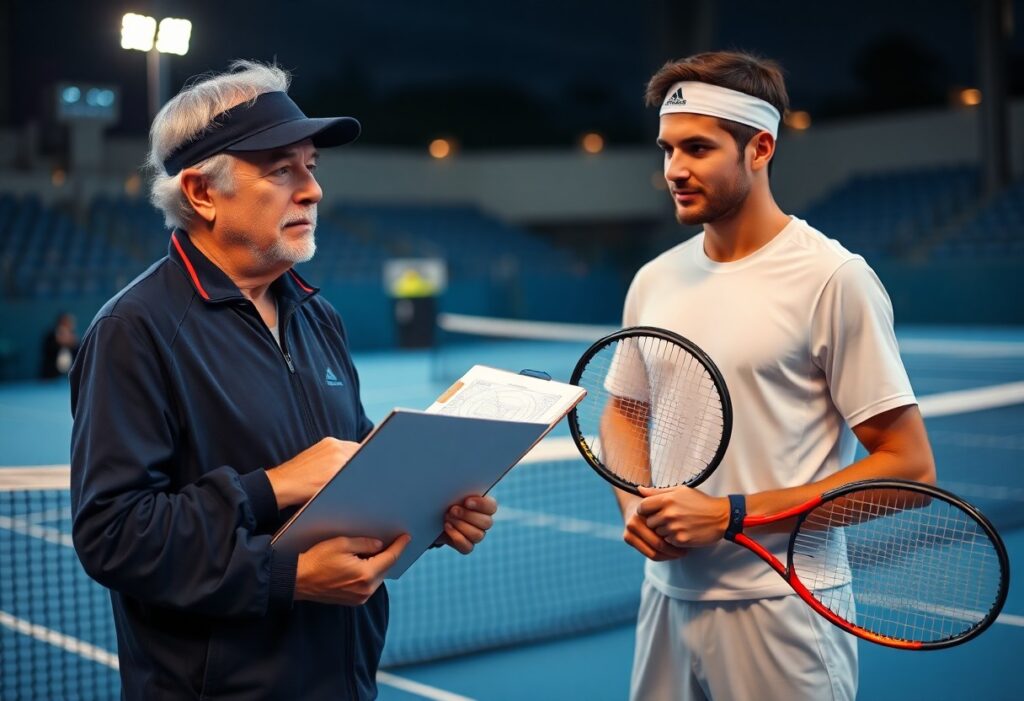

Over decades, the invisible hands of masterful coaches forged tennis icons by blending innovative tactics, surgical technical fixes, and psychological shaping; this guide analyzes the strategic genius that turned talent into titles, the rigorous discipline that can produce both peak performance and burnout, and the enduring mentorship that created sustained greatness.
Types of Coaching Styles
- Authoritative Coaching
- Collaborative Coaching
- Technical Coaching
- Tactical Coaching
- Mental/Performance Coaching
| Authoritative | Direct, high-structure approach; examples include Toni Nadal’s early program with Rafael Nadal and Ivan Lendl’s period with Andy Murray. |
| Collaborative | Player-led input, iterative feedback and sports science integration; exemplified by long-term partnerships like Marian Vajda and Novak Djokovic. |
| Technical | Focus on stroke mechanics and biomechanics, often used by coaches working with juniors to build repeatable technique. |
| Tactical | Match-pattern development and opponent analysis, common in teams that emphasize video scouting and set-piece planning. |
| Mental/Performance | Sports psychology, routines, and recovery protocols delivered alongside physiologists and conditioning coaches. |
Authoritative Coaching
Often deployed in formative years, authoritative coaching sets strict schedules, high-repetition drills and detailed correction. Coaches like Toni Nadal insisted on a regimented childhood program that built Rafa’s resilience; Ivan Lendl provided intense tactical discipline that reshaped Andy Murray’s training. This style yields rapid technical gains and a proven track record, but carries a risk of burnout and strained player autonomy if applied long-term.
Collaborative Coaching
Collaborative coaching blends player input, analytics and a support team to craft individualized plans. Partnerships such as Marian Vajda with Novak Djokovic evolved over more than a decade, using iterative match reviews and adaptation. Coaches favor open dialogue, letting a player’s preferences shape practice content while integrating measurable metrics to refine decisions and preserve long-term sustainability.
In practice, collaborative teams often include a coach, data analyst and physiotherapist, and they use video plus quantified metrics to adjust tactics between matches. For example, coaches may track serve placement percentages and return positions to change game plans mid-tournament; this method reduced unforced-error trends in several top players and supports player ownership, while still delivering high-performance gains.
Knowing which coaching style aligns with a player’s temperament, age and injury history streamlines selection and accelerates development.
Key Factors in Effective Coaching
Elite coaching fuses technical drills, tactical planning, physical conditioning and mental shaping into integrated programs; Toni Nadal’s long-term work with Rafael Nadal demonstrates how sustained focus on court positioning and endurance creates competitive consistency. Data-driven tools-short video clips and match-pattern analytics-drive weekly adjustments and targeted practice blocks. Teams often periodize training in 12-16 week cycles to peak for major events. Perceiving a player’s emotional thresholds lets coaches adapt strategy and communication in real time.
- Communication
- Player Psychology
- Technical Instruction
- Tactical Planning
- Physical Conditioning
- Match Preparation
Communication Skills
Precise cues matter: elite coaches limit in-match instructions to one or two clear, actionable points, pair concise verbal cues with nonverbal signals, and use 15-30 second video clips to illustrate errors. Timing feedback between sets-typically 60-90 seconds-lets players process corrections without cognitive overload. Teams that standardize cue language reduce confusion and speed uptake of tactical changes.
Understanding Player Psychology
Integrating mental training-goal-setting, routine development and controlled pressure drills-shifts performance more than ad hoc pep talks; Brad Gilbert’s work with Andre Agassi emphasized simplified decision trees to reduce split-second errors. Short, repeatable practices like a pre-serve routine or 4-6 breath cycles before big points build resilience. Increasingly, teams include a sport psychologist to sustain confidence and focus.
Deeper interventions use imagery, simulated crowd noise and structured debriefs; many programs hold 1-2 weekly sessions with a psychologist and rehearse tie-break scenarios to strengthen responses in tense moments. Coaches monitor metrics such as unforced errors under pressure and heart-rate variability during matches to quantify improvement and tailor mental skills work.
Tips for Aspiring Coaches
Prioritize technical analysis, communication and athlete-centered periodization; combine video review, quantifiable metrics and tailored drills. Implement 15-minute serve placement routines, 30-ball rally endurance sets and monitored heart-rate zones to map fitness. Measure KPIs like first-serve percentage, unforced errors and breakpoint conversion weekly. Thou apply these metrics to shape practice and match plans.
- Video analysis: review slow-motion serves and footwork, 2 sessions/week.
- Periodization: plan microcycles (6 weeks) and peak for key tournaments.
- Communication: 15-minute weekly check-ins and post-match debriefs.
Building Rapport with Players
Establish trust through consistent, evidence-based feedback: use a 3:1 ratio of positive to corrective comments during drills, which research links to higher motivation. Offer individualized goals-such as a 4-week plan to raise first-serve percentage by refining toss alignment-and schedule 15-minute emotional check-ins. Paul Annacone’s approach with elite athletes shows how direct, empathetic dialogue improves buy-in; emphasize trust and communication when calibrating intensity.
Continuous Learning and Adaptation
Schedule at least 20 hours of formal education per year and analyze match footage weekly with tools like Dartfish or Kinovea to detect technical drift. Integrate sports science-GPS, heart-rate variability-and A/B test drills across 2-3-week microcycles to measure outcomes. Coaches who adopt data-driven methods maintain edges; prioritize video analysis and ongoing certification.
Study case studies such as Ivan Lendl’s work with Andy Murray: targeted technical and tactical adjustments helped Murray regain consistency and achieve the 2012 Olympic gold and 2013 Wimbledon, showing how focused education plus biomechanics can change a career. Build a 12-month learning plan with quarterly courses, monthly video deep-dives and biweekly KPI reviews to close gaps in footwork, serve mechanics and match strategy.
Step-by-Step Approach to Coaching Success
| Step | Action & Example |
|---|---|
| Assessment | Comprehensive baseline: fitness battery, stroke video analysis, and match-stat review (serve %, unforced errors, break points) – like Nadal’s early focus on endurance and topspin volume. |
| Goal Setting | Define short (4-6 weeks), medium (3-6 months), long (12 months) targets; e.g., increase first-serve win rate by 8-12 percentage points in 12 weeks. |
| Periodization | Use 4-6 week mesocycles (3 work:1 recovery) to manage load and peak for key tournaments. |
| Skill Work | Progress from blocked to random practice; daily 30-45 minute technical blocks plus tactical pattern repetition. |
| Simulation | High-pressure sets, tie-break practice, and match-situation drills to translate skills into wins. |
| Monitoring | Weekly video, Hawk-Eye/statistics, and load metrics to adapt sessions and reduce injury risk. |
Setting Goals
Start with measurable targets: set a short-term 4-6 week objective, like cutting unforced errors by 15-25% and improving first-serve win rate by 8-12 percentage points. Coaches often mirror professional timelines-weekly micro-goals feeding into a 3-6 month tactical aim and a 12-month competition target. Use specific drills tied to each goal (e.g., 200 serve placements per session) and assign clear accountability for coach and player to track adherence.
Tracking Progress
Implement a KPI dashboard combining Hawk-Eye, match stats (serve %, winners, errors, break-point conversion), and wearable load data; monitor over 12-week blocks to spot trends. Aim to reduce unforced errors by a set percentage while increasing high-percentage patterns in pressure points. Avoid sudden load spikes-keep week-to-week increases under 10% to lower injury risk and ensure sustainable gains.
Operationally, run weekly reviews: analyze 6-10 KPIs, tag video clips for technical drift, and adjust the next week’s microcycle. For example, if first-serve effectiveness stalls, prescribe three targeted serving sessions (30-45 minutes each) plus two simulated pressure sets. Coaches who institutionalize this loop-collect, review, adjust-turn small weekly improvements into season-level breakthroughs.
Pros and Cons of Different Coaching Methods
| Pros | Cons |
|---|---|
| Builds fundamentals through repetition and live-ball drills, producing reliable motor patterns. | Can be rigid, which limits adaptability in rapidly changing match situations. |
| Mentorship and match-craft coaching foster mental toughness; Brad Gilbert’s tactics revived Andre Agassi in the late 1990s. | Progress depends on coach-player rapport; breakdowns in trust often derail development. |
| Video analysis (60-120 fps) isolates technical flaws for precise correction. | Over-analysis can create paralysis by analysis under pressure. |
| Data-driven tools (Hawk-Eye, wearables) quantify serve speed, spin and distance covered (pros 3-5 km per match). | Overreliance on metrics may neglect on-court feel and creativity. |
| Periodized programs manage load and recovery when properly implemented. | Poorly executed periodization or abrupt load changes raise injury risk. |
| Group coaching scales affordability and builds competitive training environments. | Less individual attention can slow elite-level technical refinement. |
| Technique-first methods produce long-term consistency in stroke production. | They sometimes delay tactical and improvisational development. |
| Modern scouting tools reveal opponent patterns and tendencies quickly. | Heavy reliance on scouting can make players predictable to opponents who exploit unconventional play. |
Advantages of Traditional Coaching
Hands-on, repetition-based training builds dependable strokes and footwork; coaches in classic academies emphasize overhand serve placement and split-step timing, producing stable motor patterns. Ivan Lendl’s technical focus with Andy Murray, for example, sharpened Murray’s second-serve consistency and mental routines, contributing to Grand Slam breakthroughs. Consistent live-ball reps and mentor feedback accelerate error correction and court sense, especially for juniors transitioning to pro-level match play.
Disadvantages of Modern Coaching Techniques
Relying heavily on analytics and wearables can create an overdependence on numbers, eroding instinctive decision-making during tense points. Teams using Hawk-Eye and GPS effectively track spin, serve speed and distance, yet players may sacrifice improvisation for optimized metrics. That trade-off often shows up when opponents deviate from expected patterns, exposing a player’s inability to adapt under pressure.
Further, the modern emphasis on quantified load and biomechanics introduces a real risk: abrupt training-load spikes flagged by acute:chronic workload studies correlate with soft-tissue injuries. Coaches who chase marginal gains from tech-altering serve tosses or swing paths based solely on numbers-can unintentionally disrupt timing and increase strain, making injury prevention and human judgment important complements to any data-driven program.
The Impact of Coaches on Player Performance
Coaches transform technique, tactics and conditioning into measurable outcomes: small improvements-often a 2-5% gain in serve speed, return depth or endurance-can flip match margins. Historical mentors built signature weapons; contemporary teams optimize recovery, load and data streams. Case studies show coaches turning juniors into consistent winners and rescuing careers mid‑season, but overemphasis on volume or technology can increase injury risk if load isn’t managed alongside gains.
Historical Perspective
Nick Bollettieri’s academy (founded 1978) and long‑term mentors like Toni Nadal illustrate how prolonged, intensive coaching forged champions: Bollettieri produced top pros such as Andre Agassi and Jim Courier, while Toni Nadal’s decades with Rafael Nadal created a legendary heavy‑topspin forehand and mental resilience. Emphasis then was on repetitive drilling and match toughness rather than biometric monitoring, producing signature styles and double‑digit Grand Slam totals for their pupils.
Modern Influences
Today’s coaches combine biomechanics, wearable data and video analytics to design individualized programs; many elite players now work with multidisciplinary teams of 5-10 specialists (physio, biomechanist, nutritionist, analyst). Coaches like Patrick Mouratoglou and Marian Vajda integrate pattern analysis and periodization, producing tactical shifts and sustained peak performance while using load metrics to limit injury exposure.
As an example, modern coaching frequently leverages high‑speed video and shot‑tracking to alter shot selection percentages-boosting first‑serve effectiveness or reducing unforced errors by targeting specific match situations. Teams use GPS and heart‑rate variability to adjust weekly loads, and sports scientists quantify recovery windows in days, not guesses; this data‑driven approach has produced faster return‑to‑form after layoffs and prolonged careers, though it demands disciplined implementation to avoid performance plateau or overtraining injuries.
To wrap up
Following this exploration of coaches who shaped champions, we see how mentorship, tactical insight, and psychological guidance intersect to elevate talent into sustained excellence. Their strategic adjustments, training philosophies, and ability to instill resilience offer a blueprint for performance development and coaching impact across sports and competitive endeavors.
FAQ
Q: How have legendary coaches shaped the playing styles and careers of today’s greatest tennis champions?
A: Legendary coaches have redefined technique, tactics and preparation to match each player’s strengths and personality. Toni Nadal developed Rafael Nadal’s heavy-topspin, point-construction and endurance through repetitive drills and an obsessive focus on consistency; Ivan Lendl remade Andy Murray with a demanding physical program, aggressive court positioning and clearer tactical plans that translated into Grand Slam wins; Patrick Mouratoglou helped Serena Williams modernize her return positioning, sharpen point-closing instincts and rebuild competitive confidence after injury. Other long-term partnerships – Marian Vajda with Novak Djokovic, Darren Cahill with Andre Agassi and later Simona Halep – show how tailored technical adjustments, scouting and psychological support produce sustained shifts in performance and career trajectories.
Q: What specific training methods and innovations do top coaches use to turn elite players into champions?
A: Top coaches combine on-court pattern training with modern sports science and match simulation. Common methods include intensive point-pattern drills that ingrain tactical responses, video and statistical analysis to identify opponent tendencies and weak links, periodized fitness plans (strength, conditioning, recovery) to peak for majors, and pressure-simulation practices that recreate decisive match moments. Coaches such as Lendl and Cahill emphasize regimented physical conditioning and mental routines; Mouratoglou and contemporary teams layer analytics and targeted serve/return placement work; recovery protocols, nutrition and load management are now integrated into daily planning to preserve performance through long seasons.
Q: How does the coach-player relationship affect success, and what should players look for when choosing a coach?
A: Success depends as much on interpersonal fit as on technical skill: trust, communication, shared goals and mutual respect determine whether a coach’s methods take hold. Players should seek a coach who combines proven technical and tactical knowledge with clear communication style, adaptability to evolve tactics over time, and the ability to build a comprehensive team (fitness, physio, analytics). Consider track record with similar player types, philosophy on practice versus match play, and whether the coach’s temperament complements the player’s mental makeup; examples like Murray-Lendl, Djokovic-Vajda and Rafa-Toni illustrate how alignment of vision and work ethic produces breakthroughs, while mismatches often lead to short-lived partnerships.