


[Start HTML content here]
Why the WTA Top Players List Shapes How You Follow Women’s Tennis
You rely on the WTA top players list to make sense of a fast-changing tour: it tells you who’s consistently winning, who’s making surprise runs, and which newcomers are threatening the established order. Beyond a simple ranking, the list reflects match results, surfaces, schedules, and the physical and mental condition of players throughout the season. If you want to follow storylines, anticipate matchups, or spot the next Grand Slam contender, understanding how to read this list will make your viewing—and analysis—more meaningful.
When you look at a snapshot of the top 20 or top 50, consider more than the number next to each name. Rankings are backward-looking by design: they reward recent performance but also carry points from previous seasons. That means a player who’s been injured can drop quickly even if their level is still high, while a player racking up consistent quarterfinal and semifinal appearances can climb steadily. You should therefore interpret rankings alongside form indicators—win streaks, head-to-heads, surface-specific results, and physical availability—to get a fuller picture.
Established Pros: What Keeps Long-Standing Top Players at the Summit
Established pros stay near the top because they combine proven technical skills with habits and practices that you can learn to identify. Watching these players helps you understand the benchmarks for sustained success on the tour: tactical intelligence, reliable serve, efficient movement, and the mental routines that help them close matches. These are the names that often frame your expectations for major events and define the title favorites week after week.
Key traits that define established top players
- Consistency across surfaces: You’ll notice they win on hard, clay, and grass because they adapt their game rather than relying on a single strength.
- Mental resilience: They convert break points when it matters, handle high-pressure tie-break situations, and manage momentum swings effectively.
- Strategic variety: Top pros can change patterns mid-match—mixing spins, approaching the net, or extending rallies to exploit an opponent’s weakness.
- Physical durability: Season-long conditioning allows them to play deep into tournaments without a steep drop in level.
Players you’ll commonly see in the established group
While rankings fluctuate, several players have consistently occupied the conversation about the tour’s elite. You’ll often see names like Iga Świątek, Aryna Sabalenka, Coco Gauff, Jessica Pegula, and Elena Rybakina—players who combine major titles or finals runs with reliable week-to-week results. Observing their match patterns—how they build points, when they attack, and how they recover after tight losses—teaches you what a top-ranked season looks like in practice.
Rising Stars: How to Spot the Next Wave of WTA Contenders
Rising stars change the tour’s dynamics. They often bring fearless aggression, novel shot-making, and a hunger that can unsettle more established opponents. When you watch rising talents, focus on their rate of improvement, ability to handle pressure, and whether they translate junior or lower-tier success to wins on the WTA stage. The most informative signals are not just headline wins but consistent progress in tournament rounds and adaptation to different opponents and surfaces.
What to watch for when identifying a true breakout talent
- Transition from juniors or ITF events: Are they winning matches at higher-tier events, not just landing isolated upsets?
- Composure under spotlight: Can they close out big matches, or do they fade when the stakes rise?
- Technical completeness: Do they have a reliable serve and a dependable second shot, or are they still one-dimensional?
- Physical and tactical growth: Are they getting fitter, smarter in point construction, and more consistent across sets?
Young players to keep an eye on include Mirra Andreeva and Linda Fruhvirtová, among others who have shown the capacity to push top opponents and win significant matches. You’ll notice that breakouts often occur in phases: initial upsets, a string of deeper runs, and then a sustained presence in higher draws. Tracking these phases will help you predict who’s likely to climb the official list rather than merely registering a single breakthrough.
With this foundation—how rankings reflect form and the distinguishing features of established pros versus rising stars—you’re ready to dive deeper into the statistics and playing styles that separate these groups and to examine specific player case studies in more detail.
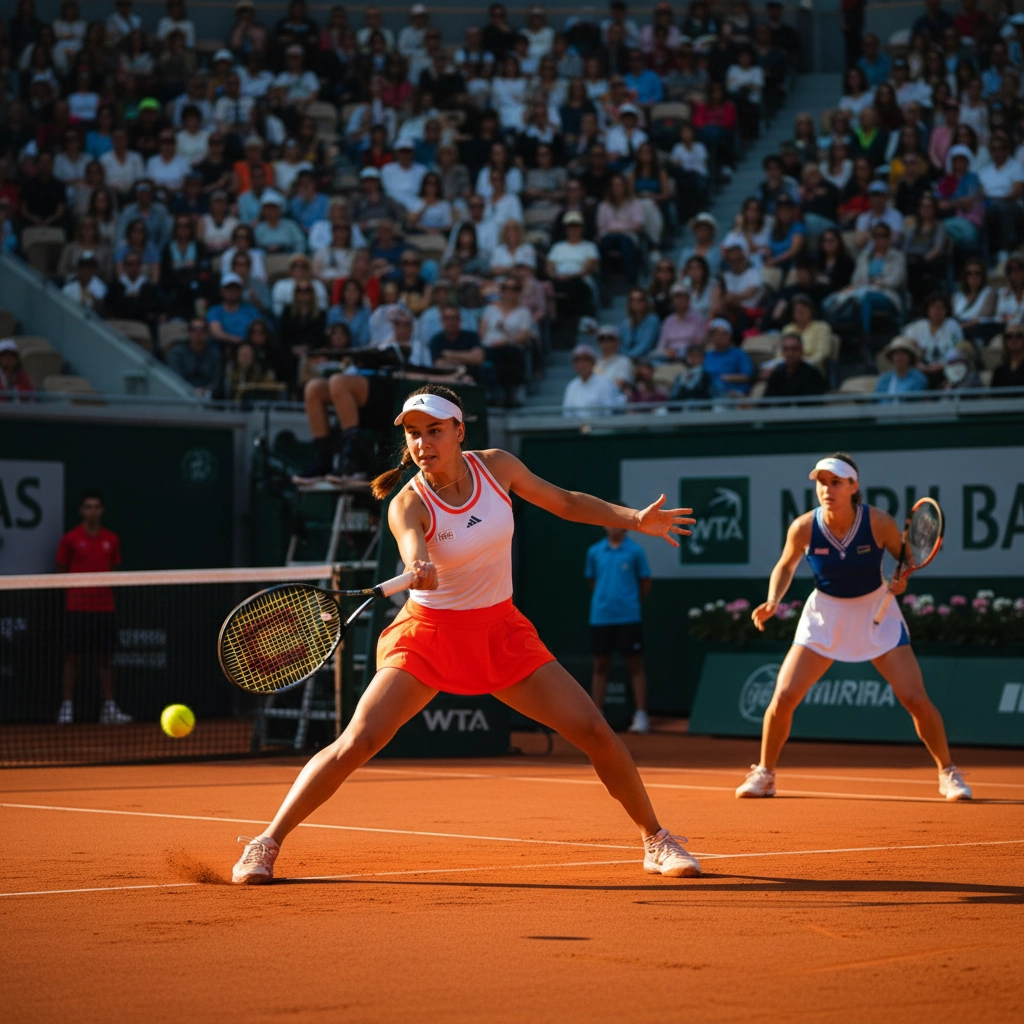
Numbers That Tell the Real Story: Which Stats Predict a Sustainable Rise
Rankings are driven by points, but you can often see a player’s future movement on the list before the numbers change dramatically—if you know which statistics to watch. Rather than relying on headline win-loss records, look for underlying indicators that suggest a player’s results are repeatable.
- Win rate against top-20 opponents: A single upset is noise; multiple wins against highly ranked players across different tournaments indicate a genuine step up in level.
- Service and return efficiency: Hold percentage on serve and return games won are practical proxies for dominance. Players who consistently hold serve and win a high share of return games are hard to dislodge across a week.
- Break-point metrics: Conversion and save rates show clutch performance. Top players often distinguish themselves by converting critical chances and saving key break points under pressure.
- Surface-specific splits: Look at how a player performs on hard, clay, and grass separately. A sharp increase in clay-court wins, for example, may forecast upward movement during the clay swing even if overall rank remains flat.
- Match length and physical load: Shorter average match time and fewer three-set losses reduce injury risk and fatigue over a season—important when defending points and making deep runs.
- Strength of schedule: Average ranking of opponents and stages reached at higher-tier events (WTA 1000, Grand Slams) help separate fleeting tournament form from sustained progression.
Advanced models like Elo-style ratings or predictive probability models can supplement WTA points by providing a forward-looking sense of who’s likely to win in a given matchup. For a practical approach, combine these metrics with qualitative observations—serve speed consistency, return depth, and movement efficiency—to form a clearer expectation of whether a player’s climb is built to last.
Playing Styles, Surface Fit, and Scheduling: Why Some Players Peak at Specific Events
Understanding style-to-surface fit clarifies why some players spike in the rankings around particular parts of the season. The tour’s surface diversity rewards different skill sets at different times, and smart scheduling amplifies a player’s strengths while minimizing weaknesses.
- Power and flat hitters: Often thrive on faster surfaces where clean striking and serve placement produce free points. These players can jump the rankings quickly during hard-court and grass periods.
- Topspin and movement-oriented players: Excel on clay where constructing points and sliding into angles pays off. A player who looks pedestrian on grass might suddenly impress during the clay swing.
- Serve-and-volley or aggressive net players: Can be particularly effective in short-format, faster conditions or indoors where low bounce shortens points.
Scheduling choices matter too. Players defending many points may choose to skip lower-priority events to freshen up for Grand Slams or WTA 1000s, while up-and-comers often enter more lead-up tournaments to accumulate points and match toughness. Recovery planning—managing travel, physiotherapy, and practice intensity—directly affects consistency. In short, a style that matches the calendar and a schedule tailored to conserve energy and exploit favorable draws can accelerate a rise on the list more reliably than isolated technical improvements alone.

Micro Case Studies: Recent Climbs and What They Reveal
Looking at quick player snapshots illustrates how the metrics and style-schedule interactions play out in practice.
Mirra Andreeva (rising): Her early-year breakthroughs came via fearless offense and the ability to shorten points—an asset on faster hard courts. The signals that suggested sustainability were not just upset wins but improved serve consistency and fewer unforced errors in decisive moments. When she began converting more break points and holding serve more often, her tournament runs stopped being flashes and started becoming predictable deep draws.
Coco Gauff (established, adaptable): Gauff’s climb to the top tier illustrates strategic growth: incremental enhancements to serve power and variety, coupled with a deliberate improvement in point construction on slower surfaces. The combination of a higher hold percentage, smarter scheduling through the season, and mental routines that help her close tight matches turned semifinal and final appearances into repeatable outcomes rather than one-off highs.
Both cases show the same pattern: statistical improvements in serve/return metrics, better outcomes against top opponents, and smart calendar choices. Those are the concrete signals you should track when deciding whether a name on the WTA top players list is a momentary headline or a name you’ll see near the top for months to come.
Looking Forward: How to Watch the List Evolve
Tennis rankings will keep shifting as players adapt, recover, and refine their games. Treat the statistical signals discussed here as tools for spotting meaningful trends rather than definitive verdicts. Watch how players manage their calendars, how their numbers change across surfaces, and how they perform in pressure moments—those patterns reveal more than any single headline result. For up-to-date rankings and tournament calendars, check the WTA official site.
Frequently Asked Questions
How can I tell if a young player’s rise is sustainable?
Look for repeated quality wins (multiple top-20 victories across events), improved serve/return efficiency, better break-point conversion and save rates, and positive surface-specific results. Consistency across several tournaments and evidence of smart scheduling and physical recovery are key signs that a rise is more than a flash.
Why might predictive models (like Elo) disagree with WTA rankings?
WTA rankings are point-based and reflect results over a rolling period with event-weighting; predictive models like Elo emphasize recent head-to-head performance and probabilistic strength, often accounting for margin and recency differently. Use both: rankings show earned position, models offer forward-looking matchup insights.
How should surface and scheduling influence expectations for tournament outcomes?
Assess whether a player’s style matches the surface—power and flat hitting reward fast courts, topspin and movement favor clay—and consider whether they’re peaking toward a targeted swing or defending many points. Players who plan their schedules to maximize favorable surfaces and recovery windows tend to produce deeper, more reliable runs at specific events.