
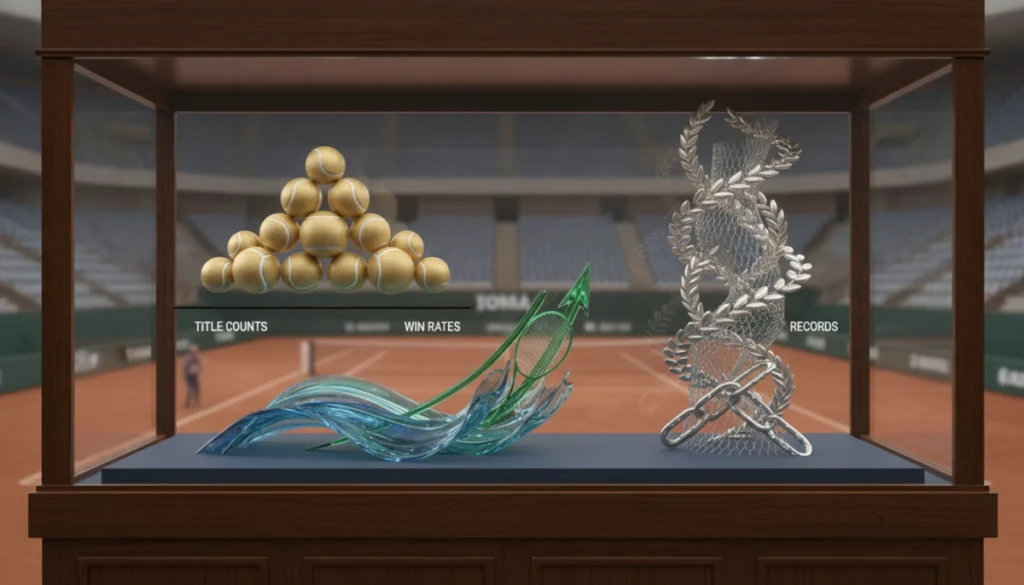

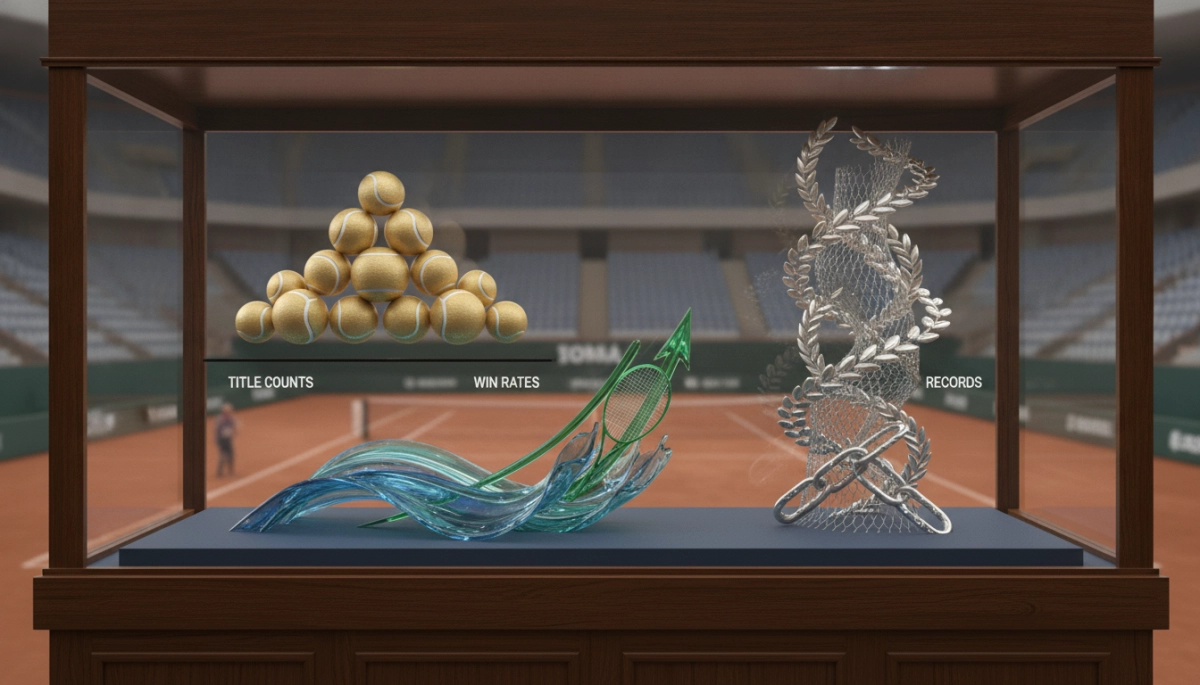
Where Rafael Nadal fits in the modern tennis landscape
You may already know Rafael Nadal as one of the game’s all-time greats, but understanding why his statistics are remarkable requires context. From a playing style built on relentless topspin to a mental toughness that thrives in high-pressure moments, Nadal’s numbers reflect more than wins and losses — they map how he changed the sport, especially on clay.
In this part, you’ll get a clear picture of Nadal’s early statistical footprint: when he broke through, how quickly his title count grew, and the patterns in his win rates that signaled longevity and peak performance. These early metrics are the scaffolding for the career records you’ll examine in later sections.
How to read early-career stats and why they matter
When you look at a player’s career stats, several early-career indicators are particularly telling:
- First ATP title and timing: How soon a player converts promise into professional victories indicates adaptability to the tour.
- Win rate in first full seasons: A high win percentage early on often predicts sustained success and confidence against top opponents.
- Surface-specific performance: Early dominance on a particular surface can shape a player’s identity and training focus.
For Nadal, these indicators underscored a trajectory that combined rapid ascent with surface specialization, and you can trace many of his later records back to patterns established in his first years on tour.
First steps: breakthrough moments and initial title haul
You should note that Nadal’s breakthrough came very quickly after he entered the ATP circuit. He turned professional as a teenager and captured his first ATP title early enough to draw comparisons with other prodigies. That initial title was more than a trophy — it was a statistical inflection point that improved his seeding, confidence, and opportunities to face top-ranked opponents.
Key early milestones that shaped his statistical legacy include:
- Rapid accumulation of tour-level wins against higher-ranked players, boosting his early win rate.
- First clay-court titles that revealed a surface-specific mastery, leading to a disproportionate share of victories on clay.
- Breakthrough performances at major tournaments that transitioned him from a rising talent to a perennial contender.
These milestones created a foundation for his title counts: early streaks helped him climb rankings quickly, which in turn improved draw positions and created further opportunities to add trophies. If you track his yearly win percentages from those formative seasons, you’ll find a consistent pattern of high conversion in crucial matches — a statistical signature of a player who thrives in tight situations.
Having established how Nadal’s early wins and first titles set up his long-term trajectory, the next section will examine his Grand Slam title counts, overall win rates across surfaces, and the records that grew out of his clay-court supremacy.
Grand Slam dominance: tallying titles and patterns
Rafael Nadal’s Grand Slam résumé is the clearest statistical shorthand for his place in tennis history. Across all majors he has accumulated a total that places him among the game’s very top achievers, but the distribution of those titles tells a more instructive story than the raw count. The standout figure is his record at Roland Garros — by far his most prolific arena — which accounts for a disproportionate share of his major trophies and underpins much of his career prestige.
Beyond the French Open, Nadal’s Grand Slam victories span the other surfaces as well: hard-court successes (including the Australian Open and multiple US Open triumphs) and grass wins (notably Wimbledon) demonstrate adaptability and the ability to peak on the biggest stages. What the Slam pattern reveals is twofold: an exceptional, almost unassailable mastery of clay that afforded him a steady stream of high-value titles, and a capacity to convert that clay-honed resilience into championship performances elsewhere when fit.
Another pattern in the Grand Slam data is timing. Nadal’s major titles cluster in extended peaks rather than a single, short-lived burst — early dominance on clay gave way to repeated resurgences over more than a decade, allowing him to add Slams across different phases of his career. Those waves of titles also correlate with periods of physical fitness and favorable draws, highlighting how injuries have been the chief limiter of even greater slam counts.
Surface-by-surface win rates and the clay legacy
If you measure Nadal by win rate rather than by trophies, the same narrative emerges: clay is a different category. His winning percentage on clay courts sits well above his percentages on hard courts and grass, and is often cited as one of the highest single-surface rates in the Open Era for players with long careers. This exceptional clay consistency — match after match, season after season — is the statistical engine behind his title totals and ranking stability.
On hard courts and grass, Nadal’s win rates are still elite by any historical standard, but they are measurably lower than his clay performance. The gap matters because it explains why Nadal’s overall title haul skews toward tournaments held on slower surfaces. Hard-court swings and the grass season offer fewer guaranteed points and require periodic tactical adjustments; Nadal’s ability to win big there increased his Hall-of-Fame résumé, but did not erase the numerical advantage clay supplied.
Beyond percentages, a few signature records crystallize the clay legacy. Nadal’s extended winning streaks on clay, his unparalleled haul at a single Grand Slam venue, and the sustained collection of clay-court trophies in events across Europe are the statistical fingerprints of a career built around one surface without being limited by it. Those records also shaped opponent strategies, tournament preparation, and the way ranking points flowed across seasons — effects that go well beyond match-by-match box scores.
Records forged by clay — influence beyond match wins
Nadal’s clay supremacy produced headline records (tournament-specific title counts and long unbeaten runs) and subtler impacts: opponents scheduling to avoid early clay clashes, national federations benchmarking clay development programs, and the way seeding calculations accounted for his near-automatic deep runs at certain events. In short, the numbers quantify his dominance, but the ripple effects explain why those numbers mattered for tennis as a whole.
What to watch going forward
- Annual title totals and any shifts in surface distribution as Nadal manages fitness and scheduling.
- Head-to-head trends against the next generation — how new challengers affect win rates over time.
- Record longevity: which tournament-specific marks remain vulnerable to being broken, and which are likely to stand.
- How statistical comparisons evolve as historical data and modern metrics (e.g., rally length, point-win percentages) become more widely used.
Legacy and the numbers that endure
Statistics give a clean, comparable snapshot of Rafael Nadal’s career, but they are only one way to measure impact. Beyond titles and percentages, his influence shows up in how players prepare, how tournaments are viewed, and how moments of matchcraft are remembered. The figures will remain a reference point for fans, analysts, and historians — and they will continue to invite discussion as the sport changes.
To follow Nadal’s official records and seasonal updates, see his Rafael Nadal ATP profile, which tracks match results, rankings, and tournament data in real time.