
More Than Talent: What Actually Makes a Tennis Player Elite
Watch any professional tennis match closely and one thing becomes apparent: the gap between a player ranked 200th in the world and one inside the top ten is not simply a matter of hitting harder or faster. Every competitor on the ATP or WTA tour can serve, rally, and construct points. What separates the best from an otherwise talented field is something more layered — a combination of physical capability, mental clarity, technical precision, and tactical intelligence that turns individual skills into a coherent, adaptable game plan.
Understanding those qualities does more than satisfy curiosity. It sharpens how fans read matches, explains why certain players consistently reach the late rounds of Grand Slams, and reveals why others with apparently equal gifts plateau at a lower level.
The Physical Foundation That Separates Top Competitors
Professional tennis places extraordinary demands on the body. A five-set match can stretch beyond four hours, requiring players to sprint, change direction, absorb impact, and generate explosive power — repeatedly, with precision, under fatigue. The physical profile of an elite player reflects a carefully developed combination of speed, endurance, coordination, and recovery capacity.
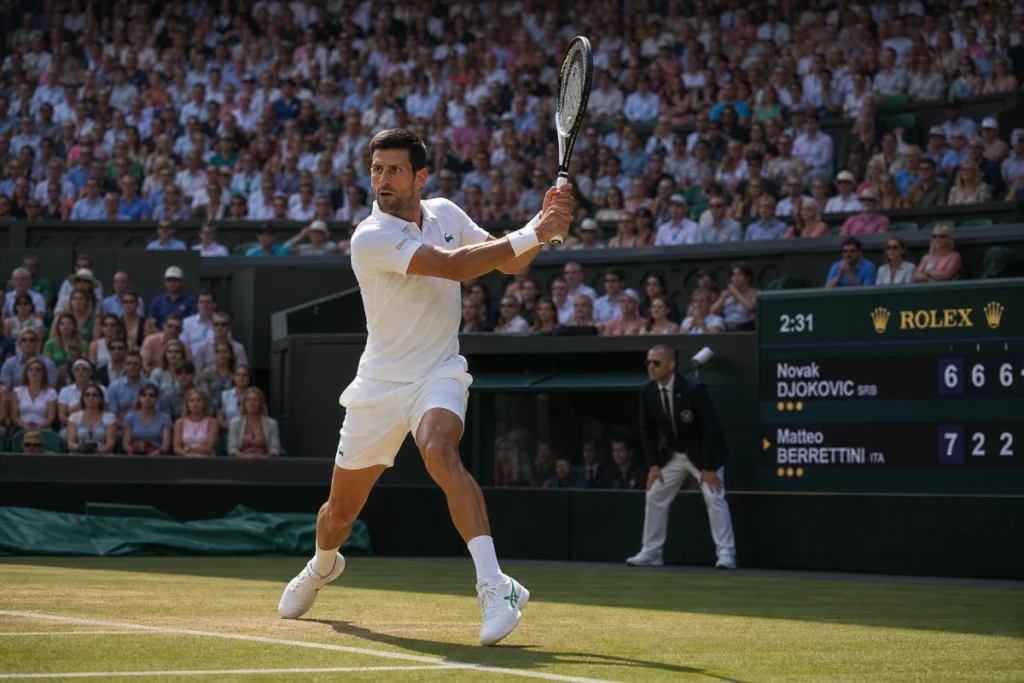
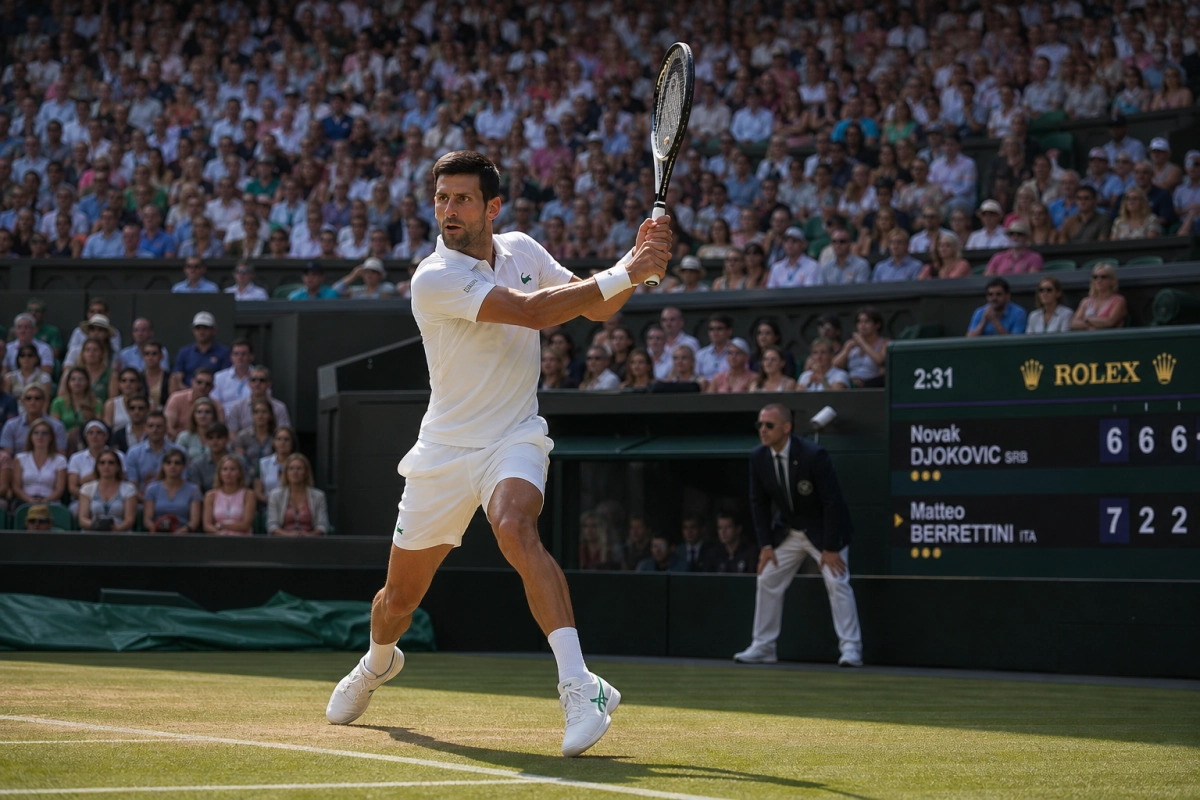
Foot speed is arguably more decisive than raw power. A player who reaches a ball half a step earlier has time to reset their balance, select a better shot, and control the rally. This is why coaches at the professional level treat footwork as a technical skill in its own right. Players like Novak Djokovic have been widely recognized for a defensive movement quality that allows them to retrieve balls others would concede — and then immediately transition into offense.
Endurance matters across match schedules that pile up at major tournaments, but raw fitness alone does not distinguish elite players from the rest. What matters is how efficiently physical resources are managed — breathing patterns between points, recovery during changeovers, and the ability to maintain technical quality as the body tires.
Technical Skill: The Difference Between Capable and Dangerous
Every professional arrives on tour with a technically sound game. At the elite level, the question is not whether a player can execute a shot correctly, but whether they can do so consistently under pressure, from difficult positions, and at pace. Technical quality here is about reliability and range — producing a wide variety of shots with repeatable mechanics.
Consider the serve. Most professionals can hit with considerable speed. What separates elite servers is their ability to place the ball precisely in different areas of the service box, vary spin between first and second serves, and disguise direction until the last moment. A single well-placed serve in a tight third set can decide a match.
The same principle applies to groundstrokes. The best players don’t just hit winners — they create them systematically, using depth, angle, and spin to force opponents into uncomfortable positions before closing the point. At the elite level, technical skill is inseparable from tactical intent.
Mental Toughness: Competing When the Match Turns Against You
The most technically gifted players in tennis history have not always been the most decorated. What determines whether talent translates into titles is the capacity to compete effectively when conditions are uncomfortable — when the crowd has shifted, when an early break has been lost, when fatigue distorts decision-making. Mental toughness is not simply bravery. It is a precise set of psychological skills developed and refined through years of high-pressure competition.
One of the most critical is the ability to stay present between points. Tennis offers players structured time to think — and that time can become either an asset or a liability. A player who uses those twenty seconds to replay an error arrives at the next point already compromised. Elite players use the same window to reset, refocus, and return to a neutral emotional baseline. It looks effortless from the stands. In reality, it is a trained discipline.
Equally important is the capacity to raise performance under pressure rather than merely maintain it. Many professionals play well when momentum is flowing in their direction. Fewer can lift their tennis precisely when a set is slipping away or a tiebreak hangs in the balance. That ability — to accelerate into adversity rather than retreat from it — is one of the clearest markers of a champion-level mindset.
How Elite Players Manage Pressure Points Differently
Elite players approach pressure points — break points, tiebreaks, fifth sets — with a measurably different profile than lower-ranked opponents. Rather than becoming passive and waiting for errors, the best players tend to become more aggressive and more willing to take calculated risks at exactly the moment when hesitation feels most tempting. This is not recklessness. It is the product of deep match experience and a psychological framework that associates high-stakes moments with opportunity rather than threat — built through difficult matches, losses processed thoughtfully, and the gradual accumulation of evidence that pressure can be navigated successfully.
Tactical Intelligence: Reading the Match as It Evolves
Physical fitness and mental resilience create the conditions for elite performance. Tactical intelligence determines what a player does with those conditions. At the professional level, tactics are not a pre-match game plan executed mechanically. They are a continuous, real-time process of observation, adjustment, and decision-making that unfolds across every point, game, and set.
The best players are problem-solvers operating at high speed. They notice when an opponent struggles with a particular spin combination, when a previously reliable shot breaks down under fatigue, or when their own patterns have become predictable enough to be neutralized — and they act on those observations while there is still time to shift the dynamics in their favor.
The Role of Surface Awareness in Tactical Planning
Tactical intelligence cannot be separated from surface knowledge. Clay, grass, and hard courts don’t simply change how the ball bounces — they fundamentally alter which weapons are most effective and how points are constructed. Elite players reconstruct their tactical priorities to extract maximum advantage from the conditions in front of them.
- On clay, patience and high-margin ball-striking reward players who build points through physical and tactical attrition, making defensive mobility and spin variety central assets.
- On grass, compressed reaction time shifts the advantage toward players with powerful, accurate serves and the ability to attack short balls with confidence.
- On hard courts, versatility is rewarded — neither extreme baseline defending nor serve-and-volley dominates, so players who can shift modes within a match carry a meaningful edge.
Players who accumulate the most consistent results across a full season are rarely those who dominate a single surface. They are the ones who understand what each surface demands and meet those demands without abandoning their core identity.
Adaptability: The Quality That Sustains Careers
Across a long professional career, the game changes constantly. Opponents study footage and exploit patterns. Physical attributes shift with age. New generations arrive with different weapons. The elite players who remain consistently competitive share one quality that transcends any individual skill: the willingness and ability to adapt without losing their competitive identity.
Adaptation does not mean abandoning what works — it means refining and occasionally reinventing while preserving the core that makes a player dangerous. Rafael Nadal extended his career by adding variety to a game built on relentless physicality. Roger Federer evolved his aggressive all-court style as reflexes shifted with age, leaning further into point construction rather than outright power. These were not signs of decline. They were intelligence applied to a changing competitive reality.
Adaptability also operates within matches. Recognizing mid-match that a chosen approach is not working — and shifting without panic — is one of the most reliable indicators of a player capable of winning at the highest level. Lower-ranked players frequently continue down an unproductive tactical path hoping results will change. Elite players diagnose the problem and change the equation.
What the Best Players Ultimately Share
Strip away the surface differences — playing styles, physical profiles, preferred surfaces — and the players who consistently compete for the sport’s biggest titles share a recognizable set of qualities. They have built physical engines capable of sustaining elite output across long matches and long seasons. They have developed technical skills precise enough to execute under pressure and varied enough to create problems from multiple angles. They bring a mental framework that treats adversity as navigable rather than decisive. They read the tactical landscape in real time and act without hesitation. And they adapt — to surfaces, to opponents, to the inevitable changes a long career demands.
None of these qualities arrives fully formed. Each is the product of deliberate work, accumulated experience, and a competitive environment that exposes weaknesses without mercy. The players who reach and sustain elite status are not simply the most gifted. They are the ones who have engaged most seriously with the full complexity of what the game requires — and continued doing so long after the initial talent was obvious.
That is what makes watching elite tennis genuinely compelling for anyone who looks beyond the highlight-reel shots. The best matches are not just athletic spectacles. They are structured, high-stakes tests of everything a competitor has built — and the result reflects not a single quality, but the sum of all of them, applied at the same time, under the conditions that matter most.