
What Makes Roland Garros One of the Most Structured Events in Tennis
The French Open is one of the four Grand Slam tournaments and, by most measures, the most physically demanding of them all. Played on the red clay courts of Roland Garros in Paris each May and June, it draws the world’s best players through a carefully organized competition spanning two weeks and multiple simultaneous draws. Understanding how the tournament is put together — who gets in, how the bracket is seeded, and how a player progresses from the opening round to the final — gives the competition a depth that pure scoreline watching can’t offer.
Getting Into the Draw: Entry, Rankings, and Qualifying
Participation in the French Open main draw is not automatic for most professional players. Entry is primarily governed by ATP and WTA rankings, with the highest-ranked players receiving direct acceptance. The main singles draw accommodates 128 players in both the men’s and women’s competitions. Rankings used for entry are not always current — the French Open uses a protected entry system allowing players returning from injury to enter based on their ranking at the time of injury, provided certain conditions are met.
Beyond direct acceptance, several additional routes exist into the main draw:
- Wild cards — awarded by the French Tennis Federation to emerging French talents, high-profile returnees, or players the committee wishes to include.
- Qualifying — a separate three-round tournament held the week before the main draw, offering 16 spots per gender to lower-ranked players.
- Lucky losers — players who lose in the final qualifying round but enter the main draw when a direct acceptance withdraws before play begins.
Winning through qualifying demands three consecutive victories on clay against competitive professionals — no less taxing than the early rounds of the main draw itself.
How the Draw Is Structured and Seedings Are Assigned
Once all 128 players are confirmed, the draw ceremony — held the Thursday or Friday before the tournament opens — establishes the full bracket. Seedings are assigned based on current rankings, though organizers retain some discretion, particularly in the women’s draw where surface specialization and recent form may be factored in. The top 32 players in each singles draw receive seeds.
The structural logic of seeding is straightforward but important. The top two seeds are placed in opposite halves, meaning they can only meet in the final. Seeds 3 and 4 are placed in the remaining halves, ensuring they cannot meet before the semifinals. This design makes it statistically likely — though never certain — that the highest-quality players meet in the later rounds. Unseeded players are distributed by random lot, which is why early upsets can significantly alter a seeded player’s expected path.
How Players Advance: The Round-by-Round Structure
The French Open operates on a single-elimination format. Lose one match and your tournament is over. Win seven and you are a Grand Slam champion. The 128-player draw produces seven rounds: the field halves with each stage, moving from 128 players through the round of 16, quarterfinals, semifinals, and the title match.
On clay, the surface tends to produce longer matches than grass or hard courts. Five-set men’s matches regularly exceed three hours, making physical recovery a genuine competitive variable. Grand Slam rules guarantee players a minimum rest day between matches under normal conditions, though weather delays and court congestion can compress those windows in the second week.
Scheduling, Court Assignments, and Night Sessions
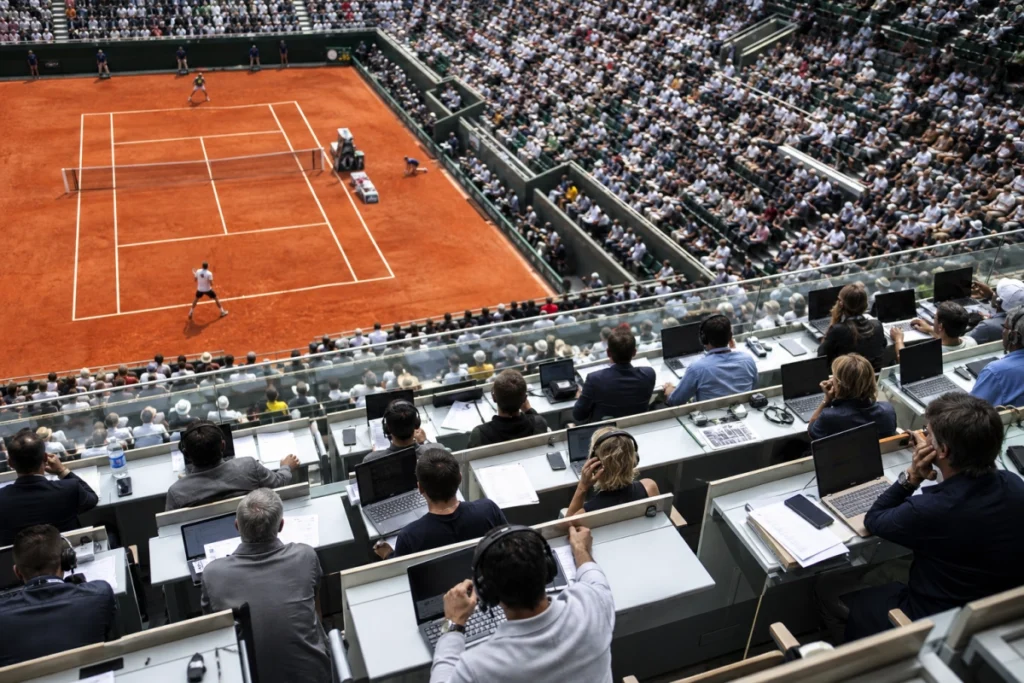
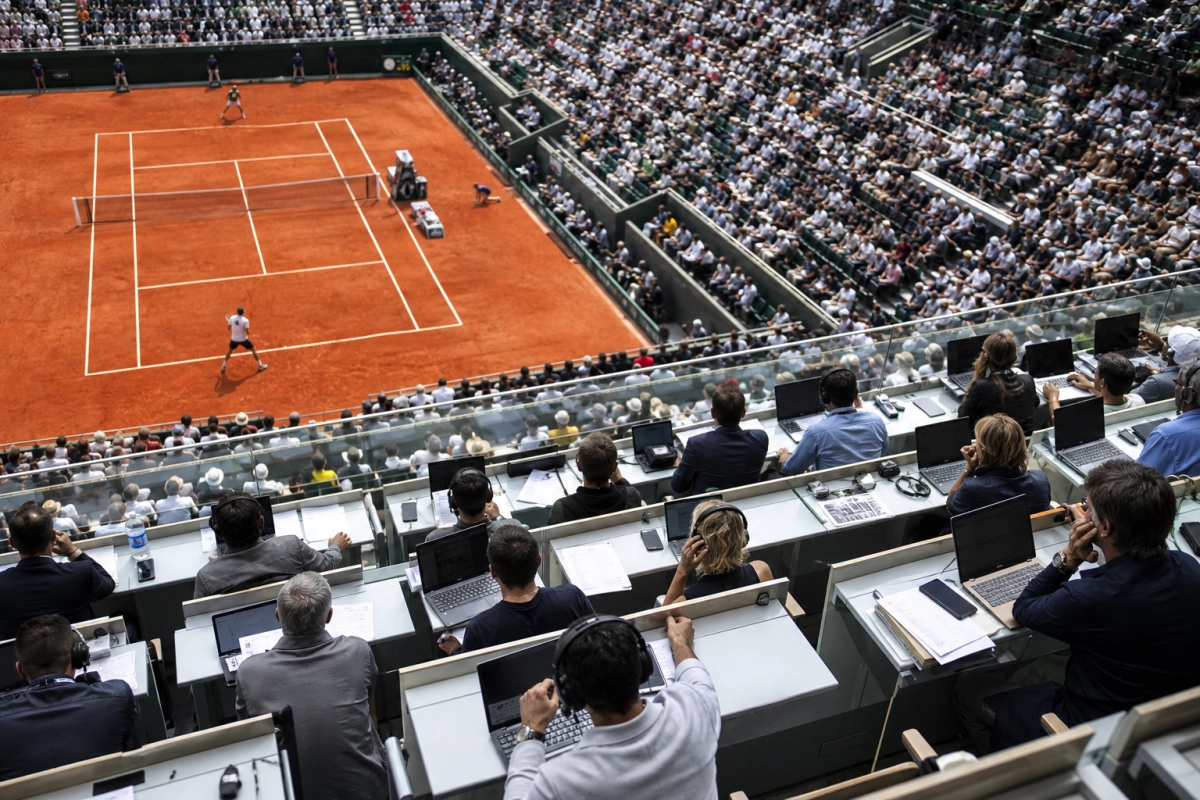
Scheduling at Roland Garros is managed by the tournament referee’s office and represents one of the more logistically complex operations in professional sport. The three main showcourts — Philippe Chatrier, Suzanne Lenglen, and Simonne Mathieu — are reserved for the highest-profile matches. Outer courts handle the volume of the early rounds, where dozens of matches may take place on a single day.
In recent years, Roland Garros introduced night sessions on Court Philippe Chatrier, a relatively late adoption compared to other Grand Slams. These evening slots offer broadcasters a premium window but have generated controversy. Clay behaves differently under artificial lighting and cooler temperatures — the ball moves slower, the surface becomes more slippery — and players scheduled for night sessions have raised legitimate concerns about fairness and recovery timelines.
The Doubles and Mixed Draws
The French Open simultaneously runs full draws for men’s doubles, women’s doubles, and mixed doubles. These fields typically contain 64 pairs, producing six rounds of competition. Doubles seedings follow the same principle as singles, with the highest-ranked pairs placed into protected bracket positions. However, doubles matches receive less scheduling priority, particularly in the first week, with many contested on outer courts without dedicated broadcast coverage.
Mixed doubles at Roland Garros carries particular prestige, though top singles players often decline to enter to protect their energy for the primary competition. The wheelchair draws have expanded significantly in prominence, with the FFT now providing court assignments and broadcast coverage that reflect the competitive quality on display.
Junior Competition: A Preview Window for the Sport
Roland Garros also hosts junior singles and doubles competitions running concurrently with the senior professional tournament. The junior draw follows the same essential bracket logic — single elimination, seedings assigned by relevant rankings — and has historically served as one of the most reliable preview windows in tennis. Players who perform well here frequently appear in the professional main draw within a few years, and winning the junior title carries genuine meaning within the sport.
What the Structure of Roland Garros Actually Produces
Taken as a whole, the French Open is a tightly engineered competitive system designed to determine, as reliably as sport can, who is the best player in the world on clay over two weeks in late spring. The qualifying rounds filter the broader professional field. The seeding system protects the most likely contenders from eliminating each other too early. The scheduling operation distributes matches across courts and days to maintain fairness while meeting the commercial demands that fund the event.
What emerges after fourteen days is a champion who has won seven consecutive matches on one of the most physically demanding surfaces in professional sport, against opponents drawn from the best players on earth. Understanding that organizational architecture doesn’t diminish the drama of what happens on the court. It deepens it. Every match at Roland Garros carries its place in a larger structure, and that structure is what makes the tournament’s final moments feel genuinely earned.