
Why the Nadal–Federer Grand Slam rivalry matters to you
You may already know the names—Rafael Nadal and Roger Federer—but to appreciate their Grand Slam clashes you need to understand what made each final a cultural event, not just a tennis match. Their meetings at the sport’s biggest stages combined contrasting techniques, evolving strategies, and high-stakes storylines that altered expectations of what a Grand Slam final could be. When you watch those replays or read match reports, you’re seeing more than points; you’re seeing how two all-time greats pushed each other to redefine excellence.
This rivalry matters because it spanned surfaces and generations. Federer’s fluid, attacking all-court game and Nadal’s relentless topspin and physicality produced matchups that tested adaptability and mental strength. For you as a viewer, that translated into unpredictable momentum swings, tactical chess matches, and moments that entered tennis folklore. The Grand Slam context amplified pressure, making each final a laboratory for greatness under the brightest lights.
How their early Grand Slam finals set the tone for decades
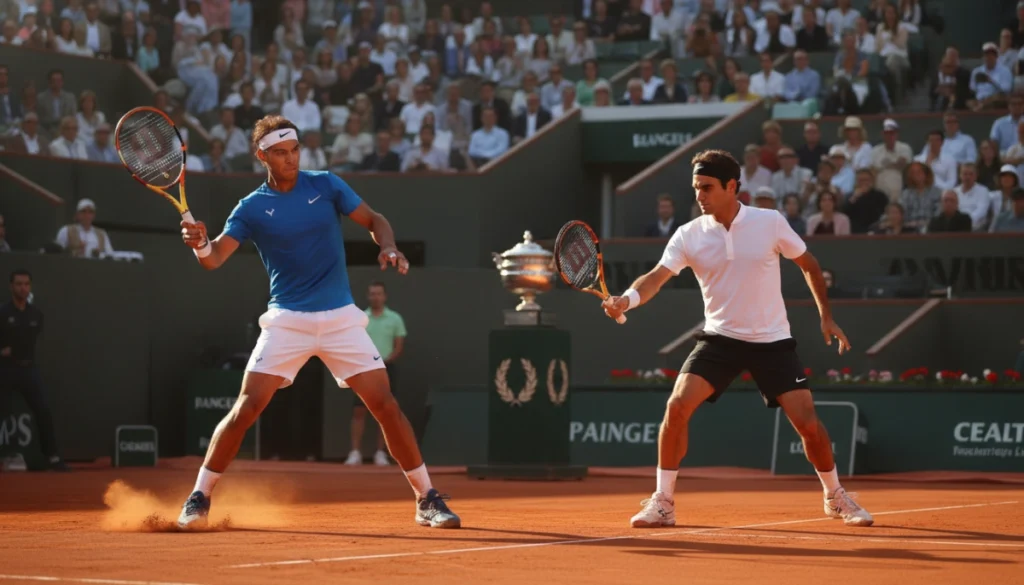
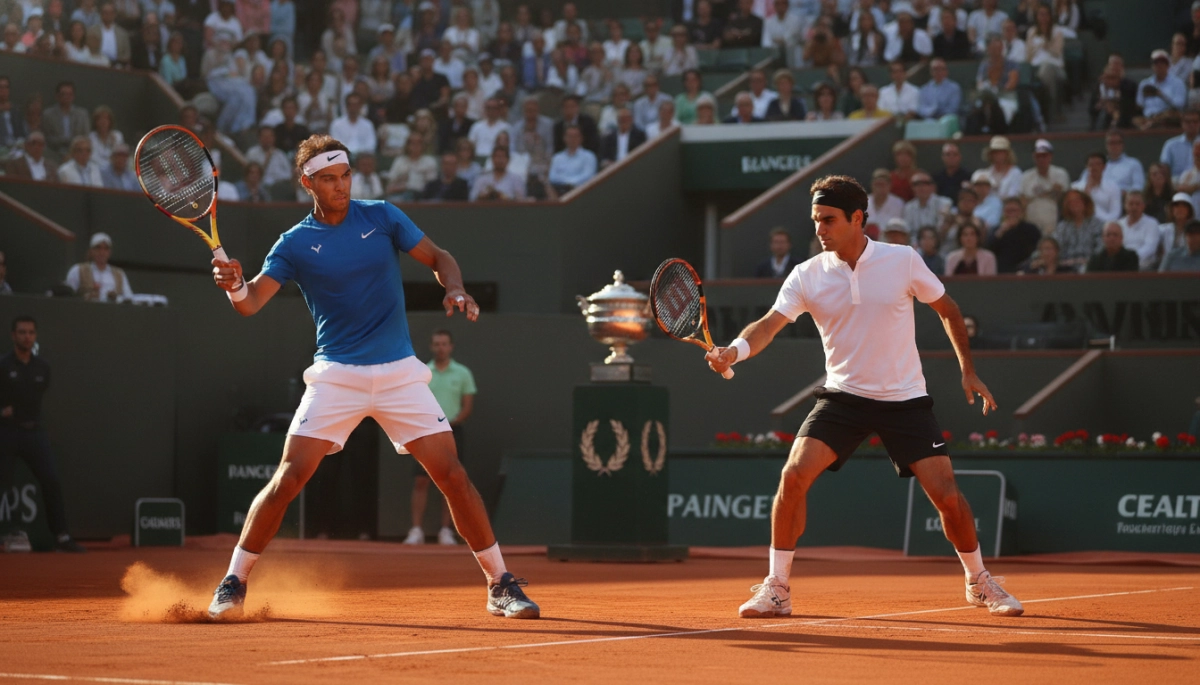
From 2006 through the late 2000s, Federer and Nadal met repeatedly at Grand Slams, and those early finals created the narrative arcs you’ll see echoed in later years. You’ll notice three consistent themes when you study these matches: a surface-driven advantage (clay versus grass/hard), psychological pressure built from repeated encounters, and incremental tactical adjustments both players made to one another.
- Surface and momentum: Early finals showed how surface favored one player’s tools. Nadal’s high-bouncing forehand and defensive chops thrived on clay, while Federer’s serve-and-volley instincts and flat groundstrokes were particularly potent on grass and faster courts. Each final forced the other to test weak points and expand their game.
- Growing psychological battles: Repeated Grand Slam meetings turned single losses into narrative pressure. As you follow these finals chronologically, you’ll see confidence swings—periods where Federer seemed uncatchable, followed by stretches where Nadal’s persistence and belief tilted outcomes.
- Tactical evolution: In those early encounters you can trace clear learning curves. Both players adjusted return positions, serve placements, and rally construction. These tactical tweaks are why their later Grand Slam meetings were often tighter and more dramatic than their first.
To appreciate the rivalry’s arc, you should focus on the sequence of early Grand Slam finals that repeatedly pitted them against each other—Wimbledon meetings that tested nerves on grass and an Australian Open decider that showed how the balance could shift on hard courts. These formative matches created the blueprint for the legendary contests that followed.
Next, you’ll dive into the single most discussed Grand Slam final between them—the 2008 Wimbledon final—examining its pivotal moments, turning points, and why it’s frequently labeled the greatest tennis match of the modern era.
The 2008 Wimbledon final: a microcosm of the rivalry
The match itself reads like a condensed history of what made Nadal–Federer so compelling: surface contrast, momentum swings, and raw drama. Nadal arrived as the clay-court titan who had finally cracked Federer’s Wimbledon aura; Federer was the incumbent grass sovereign trying to hang on. From the first ball it was clear this would not be a tidy victory for either man. Nadal’s heavy high-bouncing forehand repeatedly pushed Federer back, producing short windows to attack; Federer’s variety — the sliced backhand, the sudden serve-and-volley forays — kept rallies unpredictable.
What turned the match into legend were the oscillations. Nadal took the early initiative with two clinical sets, exploiting rhythm and depth to control the baseline. Federer then dug in, finding angles, winning two successive tiebreaks and giving the match the kind of five-set narrative that amplifies significance. Intervening rain delays and a long spell as dusk approached added an almost theatrical tension: crowds hushed, momentum fragments had time to calcify into doubt or resolve, and every service game in the fifth felt like a mini-final.
There were defining moments rather than a single turning point — a string of crucial break-point saves, a handful of pressured double faults, and the one extra long game that finally broke the balance. The final scoreboard (a long fifth set that extended past the usual limits) is less important than what the match represented: two champions testing each other to exhaustion, adapting mid-match, and refusing to yield even as the scoreboard swung wildly. The emotional release at the end — both exhaustion and mutual respect — crystallized why many observers label it the greatest modern match. For Federer, the loss ended a run of Wimbledon dominance; for Nadal, it proved he could conquer a surface once considered his weakest Grand Slam stage.
How that Wimbledon final reshaped subsequent Grand Slam narratives
The 2008 encounter didn’t just decide a trophy; it altered how each player and the broader tennis world approached Grand Slam finals. Tactically, you can trace several ripples. Federer began to refine his defensive resilience against heavy-topspin forehands, mixing in more patience and calculated aggression rather than leaning solely on instantaneous winners. Nadal, meanwhile, demonstrated the value of evolving his serve and court maneuvering to translate clay-court strengths onto faster surfaces.
Psychologically, the match eroded the notion of surface invulnerability. Nadal’s victory on grass signaled that specialization could be overcome by relentless improvement and strategic nuance. That perception shifted how opponents prepared: coaches emphasized cross-surface adaptability, physical conditioning for longer points, and mental preparation for the unique rhythms of five-set finals. Broadcasters and fans noticed too — Grand Slam finals involving either player were no longer predictable affairs; they were suspenseful, tactical films that rewarded repeated viewing.
Culturally, the clash elevated expectations. The Nadal–Federer finals became must-see events, not merely for the outcome but for the narrative arcs they produced — comebacks, tactical masterpieces, and theatrical weather or crowd moments. Younger players watching those matches absorbed lessons about innovation under pressure, and the sport’s storytelling gained a template: two distinct styles collide, adjust, and push the other into new territory. That is why even years later, when you revisit Grand Slam finals across surfaces, you can spot fingerprints of that 2008 match in strategies, psychological approaches, and the very way finals are framed for audiences.
Legacy and living moments
The Nadal–Federer Grand Slam finals did more than hand out trophies; they created reference points for how elite athletes adapt, persist, and craft narratives under pressure. Those matches live on in coaching sessions, highlight reels, and conversations among fans because they capture evolution as a process — not a single outcome. That continuing relevance is what keeps these finals vivid long after the scorelines have faded.
How to revisit the rivalry
If you want to experience the matches again, look for full-match archives and curated highlight reels that preserve atmosphere as well as points. The official tournament sites and major broadcasters maintain extensive libraries; for example, the Wimbledon official site is a good place to start for authentic footage and context.
- Watch with an eye for adjustments: notice how each player tweaks patterns between sets rather than trying one fix.
- Pay attention to small momentum shifts — a saved break point or a prolonged service game often tells the story.
- Listen to the crowd and commentators: emotional texture helps explain why certain points mattered beyond the score.
Those who rewatch these finals will find new details each time. The matches are living documents of rivalry, craft, and character — and they remain as instructive and compelling now as when they first unfolded.