

Why the French Open Draw Matters Before a Single Ball Is Struck
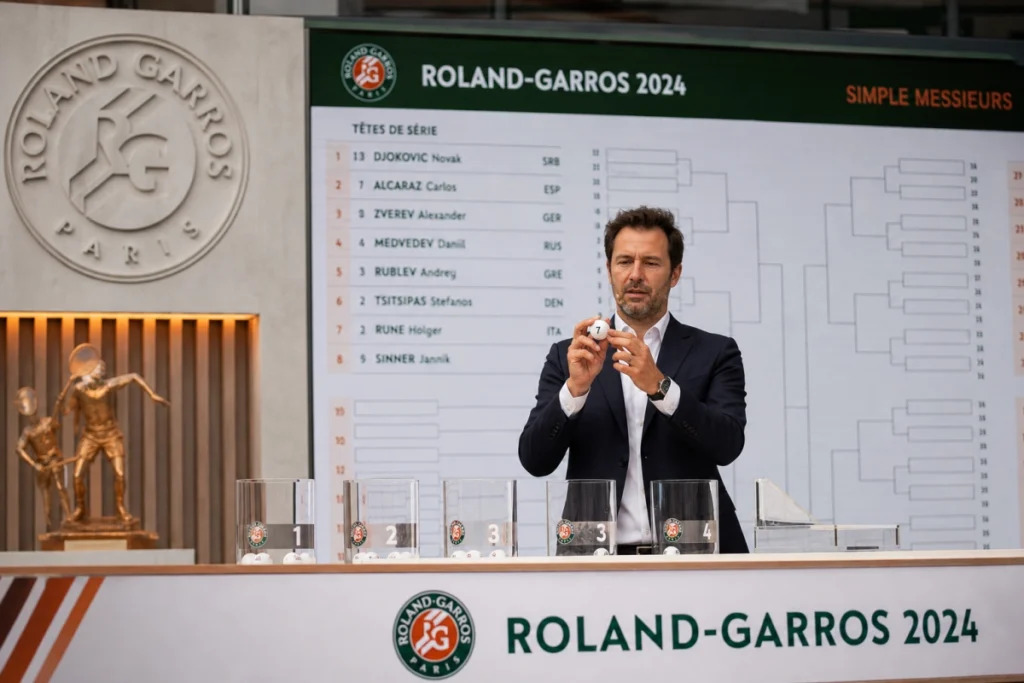
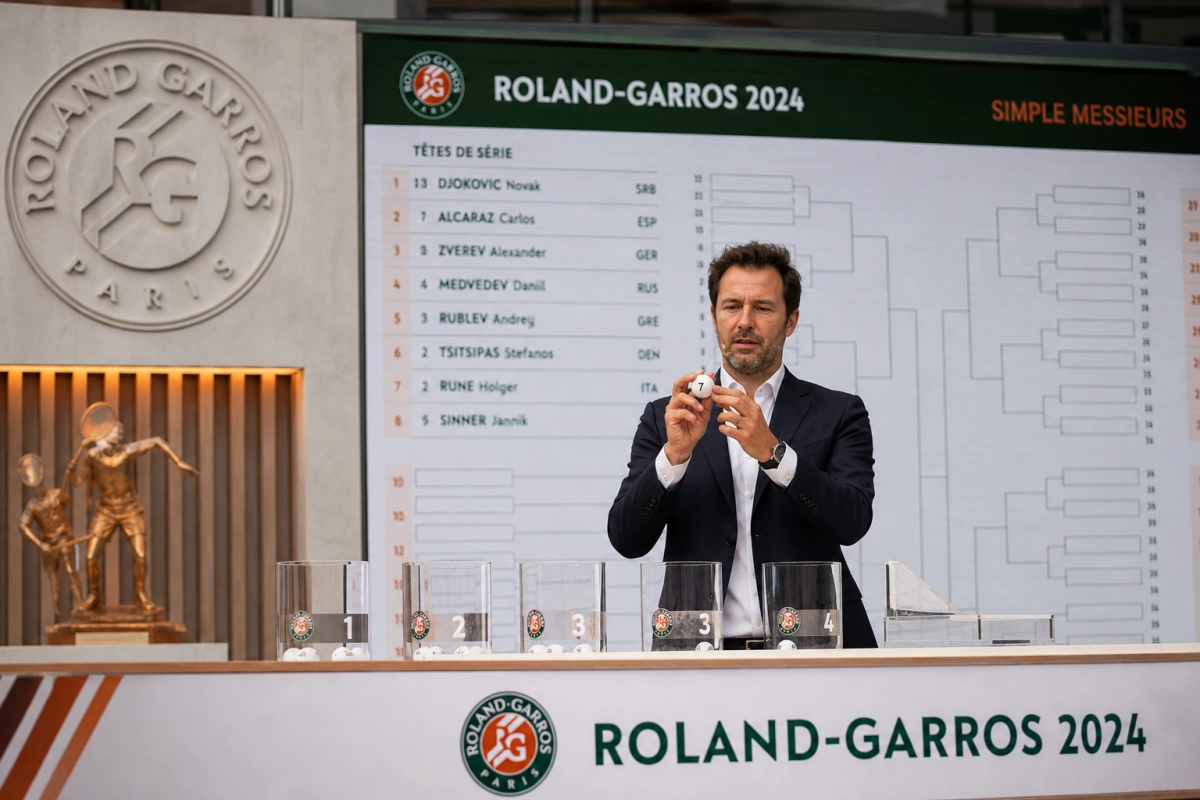
Every Roland Garros champion earns the title through seven matches on clay, but the road to that final is shaped long before the opening round. The draw determines who faces whom, when rivalries collide, and which sections of the bracket offer a more forgiving path. For players, coaches, and fans, draw day is a significant moment — one that can signal a contender’s advantage or expose a dangerous vulnerability before the tournament begins.
Understanding how the draw is constructed requires looking at three connected processes: how seedings are assigned, how the bracket divides into halves and quarters, and where each category of player is placed within that structure. The system follows specific rules designed to protect the highest-ranked players from meeting too early while preserving a genuine element of chance.
How French Open Seedings Are Assigned
Seedings at the French Open are based directly on ATP and WTA world rankings published at the start of tournament week. The top 32 players who have entered receive seeded status, guaranteeing them a protected bracket position. This prevents top players from being grouped together in early rounds — something that would reduce competitive value and deny fans the high-profile matchups they expect in the later stages.
The 32-seed format has not always been standard. Until partway through the 2001 season, Grand Slams seeded only 16 players. The expansion followed pressure from within the sport, with the argument that a deeper structure gave more players — including clay specialists who had climbed the rankings on slower surfaces — a fairer initial placement.
One detail distinguishes Roland Garros from Wimbledon: the French Open uses a pure ranking-based seeding model with no surface adjustments. The world number one is the first seed, the number two is the second, and so on to 32. Wimbledon has historically modified seedings to account for grass court performance, occasionally producing results that diverge noticeably from official rankings. At Roland Garros, the rankings speak for themselves.
How the 128-Player Bracket Is Divided
The French Open main draw accommodates 128 players in both singles events, organized into a single-elimination bracket of halves, quarters, and eighths — each division carrying specific rules about where seeds can and cannot be placed.
The bracket splits into two halves of 64 players. The top seed is placed at the top of the upper half, and the second seed anchors the bottom. This guarantees seeds one and two cannot meet before the final. From there, seeds three and four are drawn randomly into the two remaining quarters — one alongside the top seed, one alongside the second — ensuring neither can meet a top-two player before the semifinals. Seeds five through eight are distributed across the four quarters so none can encounter a top-four player before the quarterfinals.
This cascading placement logic continues through each seeding tier. The result is a structure designed to reward ranking consistency while leaving room for upsets — because within each section, unseeded players, qualifiers, and wildcards are placed without such protections.
How Qualifying, Wildcards, and Lucky Losers Shape the Bracket
The 128-player draw does not fill itself exclusively with top-ranked competitors. A meaningful portion arrives through other routes, and where those players land has a real influence on how difficult individual sections become.
Qualifying takes place the week before the main draw. Players outside the automatic acceptance threshold compete across three rounds, with 16 spots available for survivors. These qualifiers enter as unseeded players placed randomly, meaning any section can absorb them. A seeded player whose quarter receives several qualifiers faces a statistically easier opening stretch than one who draws established veterans who narrowly missed automatic acceptance.
Wildcards operate differently. The French Tennis Federation distributes a set number at its discretion — typically to French players, returning former champions, or highly regarded juniors. Because wildcards often go to players whose rankings do not reflect their actual ability or clay court pedigree, drawing one in the opening round is no guarantee of an easy match.
The lucky loser mechanism adds one more variable. When a main draw player withdraws before their first match, the last player eliminated in qualifying is elevated into that vacant slot. Lucky losers inherit the withdrawn player’s bracket position rather than being redrawn, meaning they can stumble into a more navigable opening stretch than any planning could have arranged.
The Practical Effect of Draw Position
For seasoned Roland Garros observers, the draw ceremony is analyzed with the same seriousness as a first-round result. Bracket position compounds across rounds. A player who avoids the top three seeds until the final has more recovery time, more opportunity to build rhythm, and a more predictable preparation schedule. A player drawn into the same quarter as the dominant clay court performer faces an entirely different psychological landscape from day one.
Several factors shape how a draw position is evaluated in practice:
- Clustering of clay specialists: The unseeded draw can contain former top-ten players who have dropped in ranking due to injury but retain all of their surface-specific competence. If several land in the same quarter, that section becomes significantly more demanding regardless of which seed anchors it.
- Schedule implications: Compressed turnaround times from five-set matches or rain delays affect physical freshness heading into the second week.
- Familiar versus unfamiliar opponents: A run of unfamiliar opponents forces coaching staff to prepare detailed scouting material for every round rather than relying on accumulated match knowledge.
- Historical head-to-head records on clay: Clay amplifies the advantages of players with specific physical and technical profiles. A draw that routes a big server through a section full of defensive baseliners can neutralize that weapon before the second week begins.
How Top Seeds Experience the Draw Differently
It is tempting to assume the top seeds benefit from the draw system in uniform ways. In reality, the experience varies considerably even among the four players guaranteed a quarterfinal on different sides of the bracket.
Seeds one and two know their half of the bracket immediately and can begin preparing for every mathematically possible opponent through round six. Seeds three and four face additional uncertainty: they do not know which quarter they will occupy until their name is drawn, meaning coaching staff must hold contingency plans for two possible configurations simultaneously.
For seeds five through eight, the uncertainty deepens further. These players know they will face a top-four seed in the semifinals if both survive — but not which one until two random draws have been resolved. At Roland Garros, that identity carries enormous weight. Facing a player whose clay record dwarfs everyone else in the field is a fundamentally different preparation challenge than facing a player whose ranking reflects hard court results more than clay dominance.
Why the Draw Remains the Quiet Architecture of Every Roland Garros Title
When the trophy is lifted on the final Sunday, conversation turns immediately to the champion’s performance — their footwork, their resilience, their ability to solve problems across seven matches. The draw is rarely mentioned at that point. But it was always there, shaping the path from the first round in ways both visible and invisible.
The seeding process ensures the highest-ranked players are not fed to each other before the second week. The bracket structure translates those seedings into a physical arrangement controlling when the tournament’s most consequential matches can occur. Wildcards, qualifiers, and lucky losers fill the remaining spaces with genuine unpredictability that no formula can fully suppress.
What makes the French Open draw particularly compelling is that it operates on clay — a surface rewarding patience, physical conditioning, and specialized technique more than any other. A draw that looks manageable on paper can harden once clay court records are examined, and a loaded section can open up if the right results fall elsewhere in the bracket.
The players who navigate Roland Garros most successfully are rarely those who drew the softest path. They are the ones who understood their bracket clearly, prepared with discipline for every round, and produced the required level of tennis regardless of who stood across the net. The draw gives shape to the tournament. The tennis decides what that shape ultimately means.