

Why ATP and WTA Differences Matter When You Place Tennis Bets
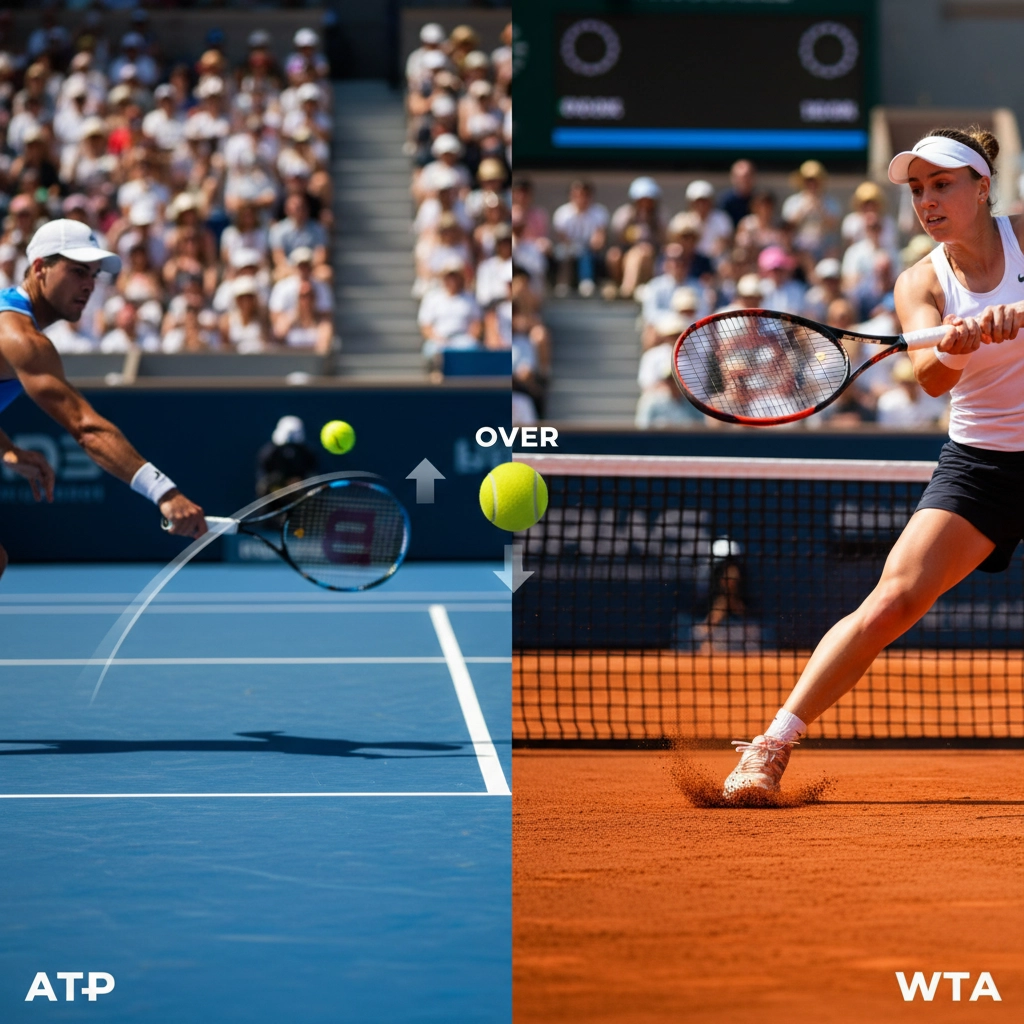
You’re not betting on “tennis” in the abstract — you’re betting on two distinct tours with different tendencies. ATP matches often feature heavier serves, more frequent service holds and longer physical rallies in certain conditions. WTA matches typically display different return patterns, more variation in shot selection and a generally higher break-rate on many surfaces. If you ignore these baseline differences, you’ll misread odds, overlook value and misjudge match momentum.
When you study a match you should ask: which tour is it, what surface will they play on, and how do each player’s serve and return shapes interact with that surface? Those three factors create the betting angles you need to exploit. Below you’ll find a clear starting framework to convert surface and stylistic knowledge into smarter wagers.
How Court Surface Changes Match Dynamics and Betting Angles
Court speed and bounce vary by surface, and those variations amplify the inherent tendencies of ATP and WTA players. Understanding these interactions helps you predict service holds, break opportunities and match duration — all important when choosing markets like moneyline, games totals or set handicaps.
- Hard courts: Neutral-to-fast surfaces reward big serves and aggressive returners alike. On the ATP tour, big servers can dominate; on the WTA tour, powerful hitters will create quick points but returns are still crucial. Hard-court matches often produce predictable hold patterns, so betting on total games or set lines can be effective when you detect a clear server/dominator mismatch.
- Clay courts: Slower courts neutralize raw serve power and reward consistency, topspin and physical endurance. ATP clay specialists grind down opponents with heavy topspin and longer rallies; on the WTA side, the break rate rises for players who can sustain depth and movement. Look for value in break-based markets and handicaps when a strong baseliner faces a weaker mover.
- Grass courts: Fast, low-bouncing grass accentuates serve advantage and short points. In ATP matches you’ll often see aces and quick holds; WTA grass matches can be more unpredictable because many players have less experience on grass. Favor serve-heavy players in hold markets, and watch for lower total games when both players serve well.
Serve and Return Traits to Watch for Immediate Betting Insight
Serve and return statistics give you actionable signals before you even watch a point. For serving, focus on first-serve percentage, free points (aces + service winners) and win rate on first and second serve. For returning, concentrate on return games won, break-point conversion and return depth tendencies. On the ATP tour, a huge serve with mediocre return numbers usually means more tie-breaks; on the WTA tour, stronger returners can flip expected outcomes by pressuring second serves.
Combine those stats with surface context and recent form to determine whether markets like set betting, over/under games, or in-play break props offer the best value. In the next section you’ll learn how to translate specific serve/return metrics into concrete bet types and situational rules you can apply when handicapping matches.
Concrete Betting Rules Based on Serve and Return Data
Turn raw numbers into repeatable betting rules by mapping specific metrics to the market that most amplifies that advantage. The point is to make pre-match decisions mechanical so you avoid emotion and overthinking.
– If Player A’s first-serve percentage ≥ 65% and first-serve win rate ≥ 75% on a fast surface (hard/grass): favor hold-centric markets — moneyline for that player in shorter formats, games handicap with them +1.5 holds, or backing fewer total games. On the ATP tour this also increases tie-break probability; look for value in “match to include tie-break” or individual set tie-break props.
– If Player B wins > 40% of return games (or opponent’s second-serve points won ≤ 45%) and surface is slow/neutral: target break markets and over games. On WTA matches these numbers typically translate into multiple breaks; consider “player to win X return games” props or set handicaps like -3.5 games on the returner.
– If both players have high free-point rates (aces + service winners) and second-serve vulnerability is low: expect shorter points and fewer service breaks — back under total games, and avoid long-match markets. Prefer markets that reward short sets (correct-set scores like 2-0/3-0).
– If one player has markedly better tie-break record and both show similar hold rates: seek tie-break lines or player to win deciding set. This is particularly relevant on ATP hard-court events where tie-break frequency is higher.
– Use surface-adjusted form: a clay specialist with slightly worse serve numbers but superior return depth in recent matches is a stronger pick for break markets than the raw serve stats suggest.
Translate these into staking rules: smaller stakes on volatile break-heavy matches, heavier stakes where serve-dominated stats line up with surface speed and head-to-head history.
In-Play Tactics: Timing, Momentum and Live Market Selection
Live betting rewards speed and pattern recognition. Use pre-match stats to set up triggers you’ll act on in-play, and stick to them.
– Early-Game Break Trigger: If a server’s second-serve points-won is under 45% and they face an opponent who converts >35% of break points, take an early in-play “next game to be broken” or lay the server to hold. This is most effective on clay and WTA matches, where breaks come earlier and more often.
– First-Set Signal: The first set usually reveals whether serve advantage is holding. If the server gets broken early and has poor second-serve numbers, expect momentum to swing — take quick moneyline or set-correct-score positions on the returner before odds adjust.
– Mid-Match Fatigue/Movement Read: On long rallies or late in third sets, players with weak movement on clay and lower endurance metrics see exponential break-risk. Shift from moneyline to games/handicap markets that favor the fitter mover.
– Cashout and Hedge Discipline: If you grabbed a live value bet (e.g., break prop) and it cashes in early, consider partial cashout rather than full; preserve profit but keep exposure if further value exists.
Finally, limit live markets to those you can monitor. Tie-breaks, next-game, and break props are high-signal; avoid broader futures or volatile long-term in-play lines unless you can follow the match closely.

Putting Strategy into Practice
Turn the frameworks above into repeatable habits rather than one-off guesses. Treat each match as an experiment: set clear entry triggers, record outcomes, and iterate. Prioritize markets you can monitor closely (tie-breaks, next-game, break props) and avoid sprawling live exposures you can’t follow in real time.
- Define mechanical entry rules (e.g., first-serve ≥65% on fast courts → favor hold markets) and size stakes before the match starts.
- Limit live markets to high-signal options and pre-set your cashout/hedge thresholds to remove emotion.
- Keep a simple results log (date, tour, surface, market, stake, outcome) and review monthly to spot edges or leaks.
- Supplement your analysis with reliable data sources — for deep match-level stats try Tennis Abstract — and update surface-adjusted form, not just raw lines.
Discipline, testing, and consistent record-keeping are the operational advantages that turn knowledge of ATP/WTA nuances into long-term value. Stay patient and let the numbers guide your sizing and market selection.
Frequently Asked Questions
Do ATP and WTA players require different pre-match models?
Yes. ATP models should weight serve dominance and tie-break frequency more heavily, especially on fast surfaces, while WTA models should place extra emphasis on return games won and break probability. Always surface-adjust those weights.
Which single stat is most useful for choosing between under/over total games?
Combine first-serve win rate with opponent second-serve points-won. High first-serve win rates for both players (and low opponent second-serve win rates) predict shorter points and fewer games; discrepant numbers point toward higher game totals.
When is live betting most profitable on WTA matches?
Live value on the WTA tour often appears early — after the first service games — because breaks happen more frequently. Look for matches where a returner with strong break conversion faces a server with weak second-serve numbers; act quickly before odds normalize.