
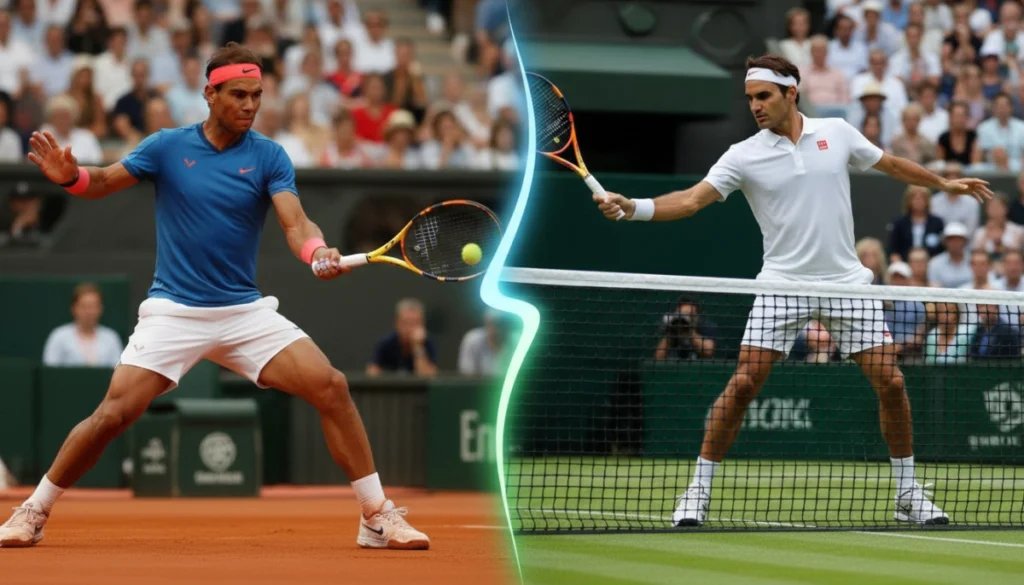

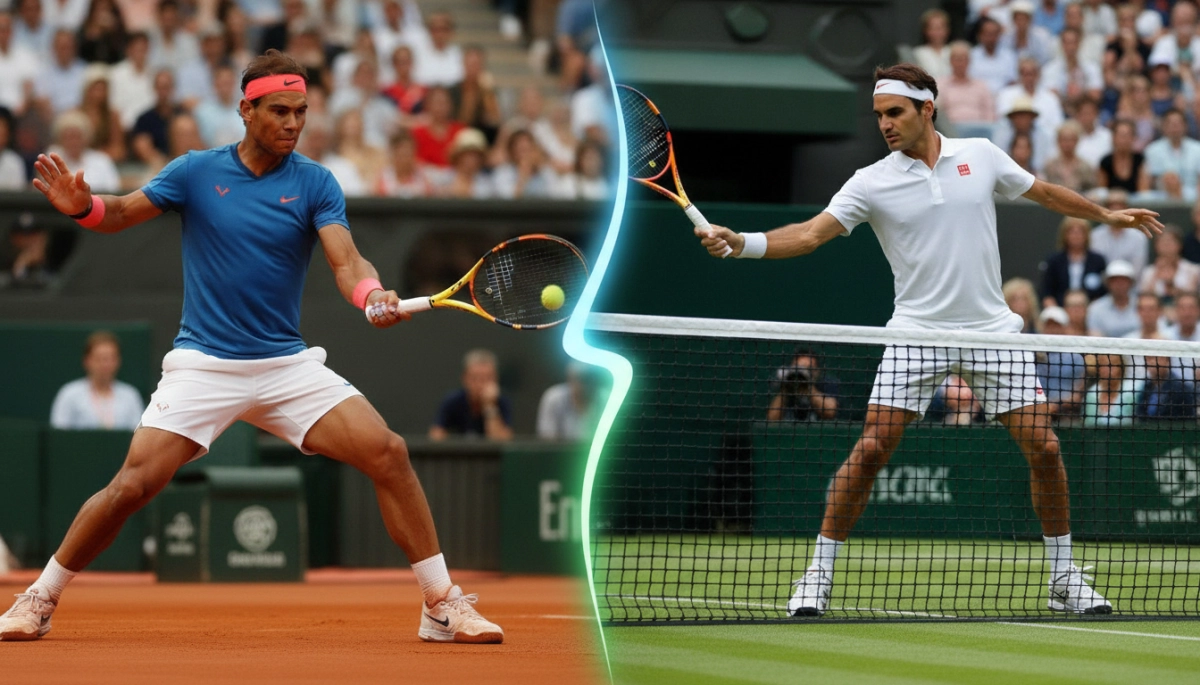
When Nadal and Federer first crossed paths and why it mattered
You’re looking at one of the defining rivalries in modern sport: a matchup that didn’t just produce great matches but reshaped expectations about surface specialization, longevity, and tactical adaptation. When the younger Rafael Nadal entered the top tier in the mid-2000s, he challenged Roger Federer’s near-total control of the men’s tour. Those early encounters set the tone for decades: you saw raw athleticism meet elegant precision, and the results often depended less on rankings and more on where they played.
How the first clashes framed a long-term rivalry
In the opening phase of their head-to-heads, you could already detect patterns that would persist. Federer arrived as the near-universal favorite on faster surfaces with a game built around a fluid single-handed backhand, variety and superb court sense. Nadal countered with left-handed heavy topspin, relentless court coverage and mental grit—traits that gave him an immediate advantage on slower, high-bounce courts.
- You noticed quick momentum swings: matches could be tight on hard courts but often tilted toward Nadal on slow clay.
- Early results didn’t just reflect current rankings; they signaled how each surface and tournament pressure would define future outcomes.
- For you as a viewer, those matches were the first hints that this rivalry would be era-defining rather than a brief clash between two peak players.
Early battles: surface advantages and the first momentum shifts
When you examine the early era, two simple facts stand out. First, surface mattered more than almost anything else. Nadal’s heavy topspin and exceptional court positioning neutralized Federer’s backhand and prevented the Swiss from dictating points as often on clay. Second, Federer’s mastery of grass and many hard-court environments limited Nadal’s ability to impose the same pressure in return. As a result, the head-to-head in this phase became a story of situational dominance rather than one player outright eclipsing the other.
What you should watch for in these opening years
Pay attention to three practical trends that defined the early period and that still help you understand the rivalry today:
- Surface-specific records: Federer collected more wins on grass and many hard-court events, while Nadal built a near-impenetrable clay record.
- Adaptation under pressure: both players learned from losses and adjusted tactics—Federer improved his backhand depth and slice use, Nadal began to flatten out his forehand and enhance his serve to be more effective off faster courts.
- Mental edge swings: momentum in a season could quickly favor one player, with confidence from a single high-profile win often carrying across tournaments.
Understanding these early dynamics — surface-driven advantages, tactical evolution, and psychological momentum — prepares you to see how the rivalry escalated into full-blown era contests; next, you’ll look at the peak years when those adaptations produced some of the most memorable matches in tennis history.
Peak years: defining matches that tipped the balance
Once both players had adjusted to each other’s strengths, their meetings stopped being mere matches and started to become epochal events. In that peak window you could see the rivalry distill into a handful of signature contests that did more than change a ranking — they shifted confidence for a season or more. For Federer, those were the years when his serve-and-volley timing and ability to shorten points on grass and faster hard courts allowed him to win the exchanges that mattered. For Nadal, the peak phase amplified his clay superiority and introduced a new durability on slower hard courts that made best-of-five finals brutal tests of will.
Those landmark encounters forced both men to evolve: Federer worked on depth and variety to blunt Nadal’s heavy lefty spin, while Nadal learned to flatten his forehand more consistently and improve first-serve percentages so he could take the initiative off faster surfaces. The result was that long, tactical baseline rallies began to coexist with sudden bursts of finishing brilliance — and fans got some of the sport’s most memorable five-setters as a consequence.
Finals, slams and the psychological ledger
When you look at who dominated each era, don’t just count wins — weight the wins. Grand Slam finals and big tournament deciders carried outsized psychological freight. A single headline-grabbing victory in a major could deliver a confidence boost that lasted months, especially in seasons when both players were near their peaks. Nadal’s repeated success at the clay majors often translated into season-long belief he could handle Federer’s pressure; Federer’s clutch wins on grass and indoor hard courts did the same for him.
Beyond technique, what separated the eras was how each man handled pressure points. Federer’s supremacy early on came from taking control of points and avoiding long scrappy exchanges where Nadal’s fitness and depth paid off. As the rivalry matured, Nadal increasingly won the long, attritional battles, while Federer found ways to shorten rallies with improved aggression and timing. Matches that mattered the most — finals and semis at the biggest events — tended to tilt the broader narrative. A decisive Grand Slam win didn’t just add a trophy; it signaled who was likely to carry momentum through the clay/hard/grass swing that followed.
Late-career adaptations: injuries, timing and a redefined dominance
In the later phase, dominance was less about unbroken streaks and more about selective excellence. Injuries, schedule management and the natural slowing that comes with age altered how each man could assert control. You began to see matches where one player arrived fresher, or where tactical nuance trumped raw athleticism. Federer’s surgical timing and shot-making still allowed him to win big on his terms, but he played fewer events and picked moments to peak. Nadal, meanwhile, relied on a combination of refined offense—more kick in the serve, strategic flattening of winners—and sheer tenacity to continue racking up decisive wins, especially on clay.
So in this final phase, “domination” often meant dominating specific tournaments or surfaces rather than owning the tour week-in, week-out. That shift is crucial for you to understand: the rivalry’s balance didn’t flip overnight; it stretched across adjustments, tactical countermeasures and the practical realities of long careers. Those factors are what ultimately defined who got the edge in each era — not just talent, but timing, health and the capacity to reinvent under pressure.
Legacy and the lasting echo of a rivalry
What endures from the Federer–Nadal story is less a tally of matches and more a set of lasting shifts in the sport: how players approach surfaces, how coaches plan careers, and how fans measure greatness. Their rivalry forced continuous reinvention, raised tactical sophistication across the tour and produced moments that remain reference points for pressure, resilience and artistry in tennis.
For fans and students of the game, the true value lies in those moments of adaptation and character—the tactical counters, the late-career pivots, the sportsmanship that punctuated ferocious battles. Those elements ensure the rivalry will be returned to again and again, not merely as a historical ledger but as a living template for how two champions can elevate one another and the sport itself. For a deeper timeline and match-by-match record, see the full Federer–Nadal rivalry.