
When two contrasting champions rewrote how you watch tennis
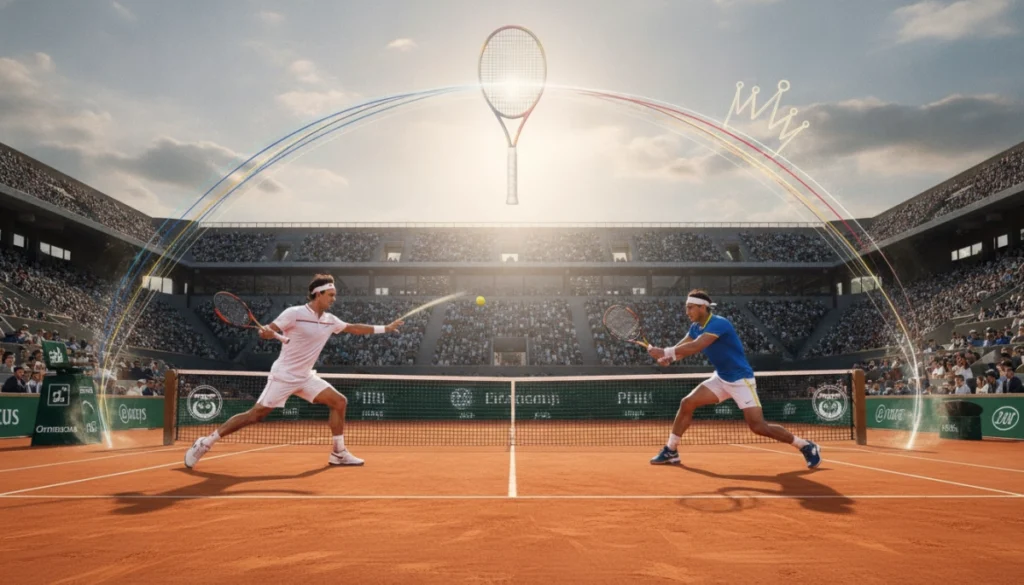
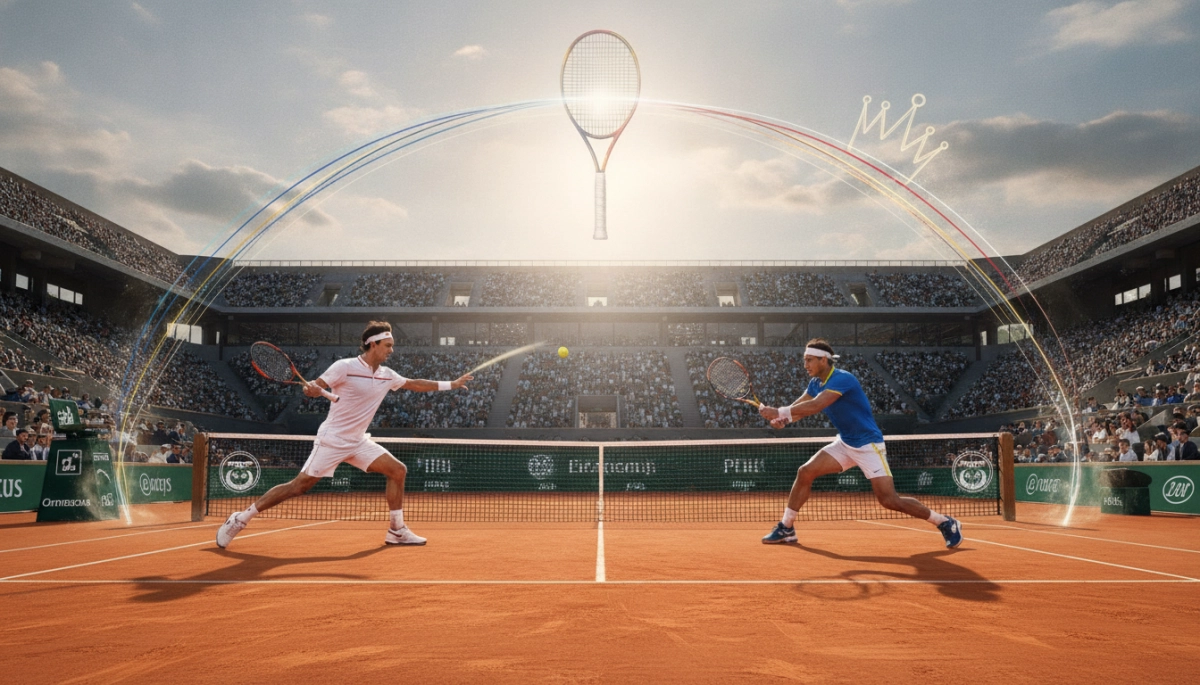
You first noticed the Federer–Nadal rivalry because it felt like two different philosophies of tennis colliding. One player brought fluid geometry, precision and a seemingly effortless attacking game; the other brought relentless intensity, heavy topspin and a physicality that pushed baseline tennis to new extremes. As you follow their story, you’ll see how those differences created matches that were tactical masterclasses and cultural events — not just sporting contests.
How the rivalry began and why it mattered immediately
Their first encounter signaled more than a single result. When they met in 2004, you witnessed the opening of a long-running narrative: Federer as the established world No. 1 and Nadal as the emerging lefty force, especially on clay. That early meeting gave you a preview of a pattern that would repeat — surface, styles and timing all influencing who had the edge.
- Early momentum: Federer had the early advantage in big-court, fast-surface matches, using his serve and variety to keep Nadal off-balance.
- Clay dominance: Nadal quickly became the benchmark on clay, using heavy topspin and physical endurance to dictatethe rallies.
- Rising stakes: As both players accumulated Grand Slams and public attention, each match became more than a head-to-head; it became a barometer for changes in the sport.
What the first years taught you about their lasting influence
In those opening chapters, you learned several lessons about how rivalries shape a sport. First, matchups force tactical evolution. Federer adapted by improving his backhand handling of high-bouncing balls and by developing new strategic patterns. Nadal refined his attacking options on faster courts and improved his serve to shorten points when needed. You can trace shifts in their games directly to the need to counter the other.
Key early encounters that set the tone
Rather than a single turning point, the rivalry’s early phase was defined by a series of recurring themes: Nadal’s supremacy on clay, Federer’s command on grass and many hard-court battles that swung with form, conditions and momentum. These early meetings taught you how surface, psychology and crowd dynamics could tilt the balance — and how two elite athletes would respond by evolving their techniques, schedules and mindsets.
As you prepare to look deeper into their peak-era showdowns and the single matches that entered tennis lore, you’ll see how those early patterns hardened into defining chapters of modern tennis — including epic finals, shifting head-to-head records and an influence that reached beyond the court.
Peak-era showdowns that redefined drama
When both players were at their absolute peak, their meetings felt engineered to elevate tension. You didn’t just watch tennis—you watched narrative arcs unfold in real time: momentum swings that lasted sets, courtside atmospherics that became part of the contest, and moments of improvisation that only two champions of their caliber could produce. Some matches stopped being about who won a point and became about who could impose a personality on the match—the graceful geometry of Federer or the grinding, spinning insistence of Nadal.
These were the contests that established new standards for what a big-match atmosphere could be. They produced marathon five-setters where fitness and nerve mattered as much as shot selection, finals that were delayed or extended by rain and darkness yet still drew millions of viewers, and a string of clay-court classics in Paris that felt like modern gladiatorial contests. Every time they met at the biggest stages—Wimbledon, Roland Garros, the Australian Open—the event telegraphed that something historic might happen. You felt it in the hush after a brilliant winner, in the spontaneous applause for a remarkable retrieval, and in the way both players seemed to raise their games simultaneously.
How their rivalry reshaped tournaments, media and the fan experience
The Federer–Nadal rivalry didn’t only change how matches were played; it changed how tournaments were staged and how tennis was sold. Promoters learned that a single matchup could drive attendance, TV ratings and international interest, which pushed scheduling decisions (prime-time slots, marquee court assignments) and marketing strategies. Organizers made sure big matches happened under the best possible conditions for viewership—sometimes at the expense of tradition—and broadcasters built countdowns and feature packages around their storylines.
Fans experienced tennis differently because of them. Crowds became part of the drama, with national loyalties and palpable split sympathies creating electric atmospheres. Social media and global broadcasts amplified every micro-controversy, miraculous point and sportsmanship moment, turning individual rallies into shareable cultural moments. And for the casual viewer, their rivalry served as a recurring entry point: tune in for Federer’s artistry or Nadal’s relentlessness, and you’d stay for the match because everyone else had been talking about it all week.
The tactical influence on the next generation
The technical and tactical fingerprints of their rivalry are visible on players who followed. You can trace the modern emphasis on heavy topspin, depth control and relentless fitness back to the way Nadal stretched rallies and punished short balls. At the same time, Federer’s versatility—net approaches, slice variation, pace change—reminded the game that variety still wins points. Coaches began teaching more hybrid skill sets: strong baseline fundamentals paired with the willingness to finish points up the court.
Beyond strokes, their duel accelerated a broader professionalization: year-round conditioning, tailored scheduling to peak for big events, and a more scientific approach to recovery and equipment. Young players today inherit a template that blends Nadal’s competitive ferocity with Federer’s aesthetic efficiency. It’s a synthesis born of one rivalry that demanded constant adaptation—proof that two competitors, through repeated confrontation, can redraw the playbook for an entire sport.
Legacy Beyond the Scoreboard
The Federer–Nadal rivalry did more than decide titles; it changed expectations. It became a living example of how contrasting temperaments and techniques can elevate a sport’s aesthetic and competitive limits. Beyond tactics and trophies, their meetings redefined what excellence looks like over decades: adaptability, respect in victory and defeat, and a willingness to push the boundaries of personal bests. Those values now inform coaching, broadcasting and how players map their careers.
Even as eras shift and new names rise, the imprint of their rivalry persists in moments—coaching conversations, highlight reels, and fans’ memory—that shape how tennis is taught, watched and debated. It’s a reminder that great rivalries do more than produce great matches; they create reference points for what the sport can aspire to be.
Where to explore more
For official records, match archives and further reading on high-profile rivalries, visit the ATP Tour, which maintains comprehensive historical data and feature stories that put these matches in context.