
How Federer’s early rise set the stage for record-breaking success
You may already know Roger Federer as one of tennis’s all-time greats, but understanding his achievements means tracing how his early years built the foundations for later records. From a junior champion to a polished professional, Federer’s ascent combined technical refinement, mental calm, and an adaptable playing style that let him dominate multiple surfaces. In this section you’ll get a clear picture of the milestones and traits that foreshadowed his legendary run.
From promising junior to polished pro: pivotal early milestones
You can track Federer’s trajectory through a handful of clear milestones that signaled his potential long before he began collecting major titles. These early achievements reveal the consistency and versatility that would underpin his record-collection later on:
- Junior success: Federer captured notable junior honors, including the Wimbledon junior crown in 1998, showing early comfort on grass and an ability to perform under pressure.
- Turning professional: He turned professional in 1998, swiftly moving through challengers and smaller ATP tournaments to establish himself on the tour.
- First ATP title: Federer won his first ATP singles title in 2001, a clear sign that his game translated from promise to tangible results at the top level.
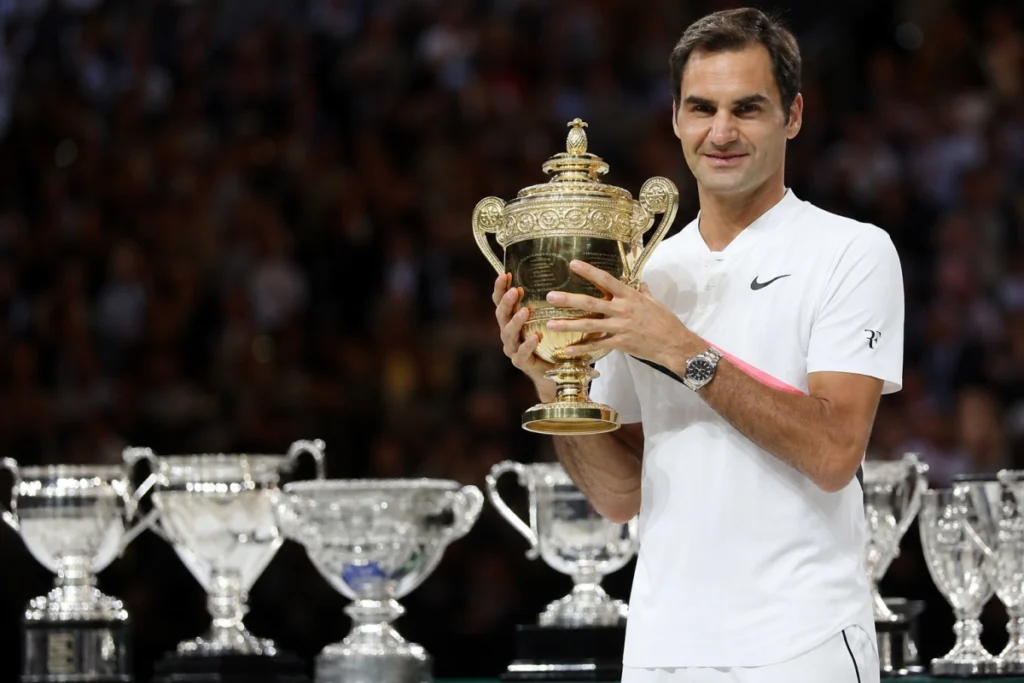
- Grand Slam breakthrough: The breakthrough came at Wimbledon in 2003 when Federer won his first major singles title, announcing himself as a new force on the biggest stages.
- Rise to world No. 1: In early 2004 Federer reached the top of the ATP rankings, a position he would hold extensively during his career and use as a platform to set long-standing records.
Early playing style and mental traits that predicted longevity
As you examine Federer’s early matches and interviews, certain characteristics become obvious. His one-handed backhand, smooth footwork, and mixture of offense and court sense gave him an elegant, efficient style that conserved energy across long seasons. Those technical traits paired with an unusually calm competitive temperament — you’ll notice he rarely let momentum swings derail his game — created a player who could peak repeatedly over many years.
Another important aspect you’ll see is adaptability. Federer’s ability to perform on grass, hard courts, and clay (even as rivals specialized) meant he could pursue a broad set of titles and records rather than limiting himself to a single surface. That versatility is a recurring theme when you later look at the range of records he set.
With the foundation of his early milestones and stylistic advantages now clear, you’re ready to move into the era when those qualities translated into record-breaking dominance on the biggest stages.
Grand Slam supremacy: the headline records that defined the majors
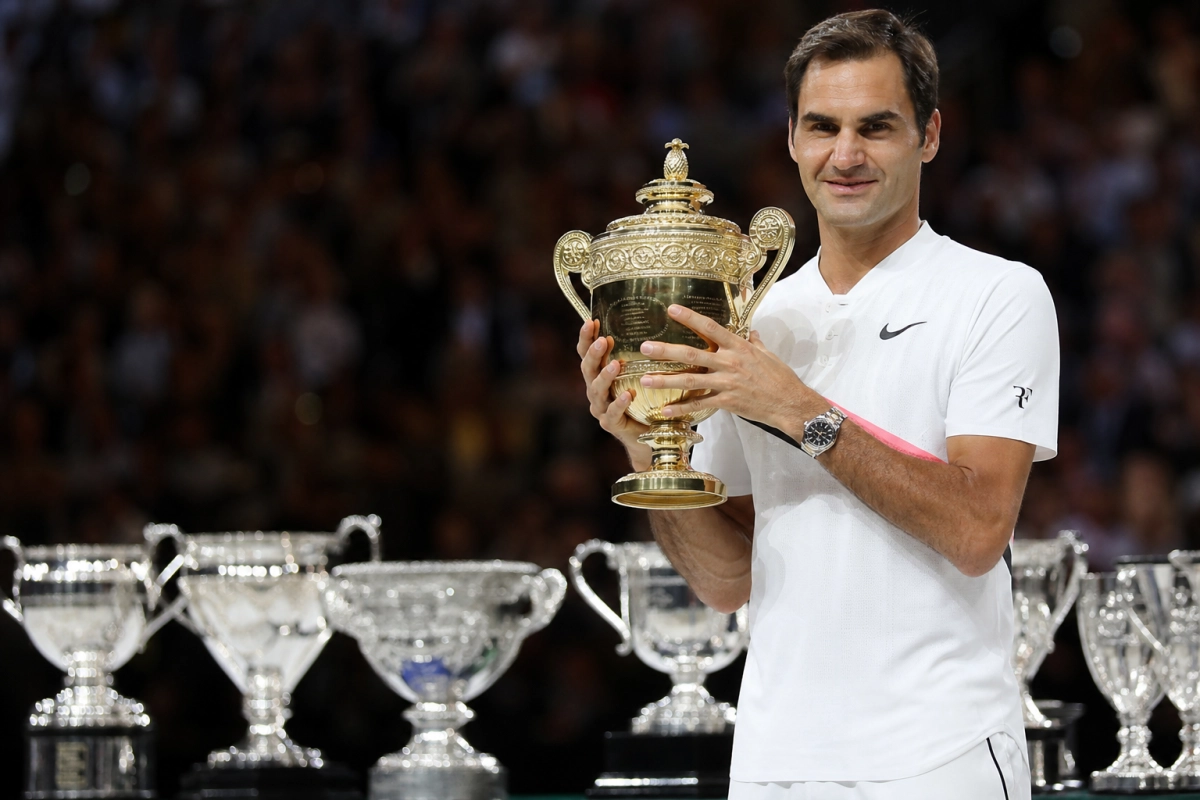
When you think of Federer’s career, the Grand Slam ledger is usually the first place your mind goes—and for good reason. He amassed 20 major singles titles, a total that became the benchmark for excellence in men’s tennis and stood as the record for years. Within that haul are tournament-specific feats that illustrate his range: a record eight Wimbledon titles that underline his unrivaled mastery of grass, and a run of five consecutive U.S. Open victories (2004–2008) that showcased sustained dominance on hard courts. His solitary French Open title in 2009 also told an important story—this was the crowning stroke in a career that had conquered every surface.
Beyond raw totals, Federer’s Grand Slam consistency produced other records that spoke to his unrivaled endurance at the sport’s highest level. He put together one of the longest streaks of deep Slam runs in history, stringing together consecutive semifinal and quarterfinal appearances across many years. Those streaks meant Federer was not just capable of sporadic greatness; he turned up at the majors with near-expected regularity as a title contender, week after week, year after year.
Dominance across the tour: rankings, titles, and year-end honors
Federer’s supremacy wasn’t limited to the four majors. On the ATP Tour he piled up records and milestones that spoke to both peak brilliance and remarkable longevity. He won 103 ATP singles titles, placing him among the most prolific champions in the Open Era. At the year-end ATP Finals—arguably the tournament of champions—he collected a record six titles, regularly proving he could beat the best players when it mattered most.
Rankings records further cemented his place in the sport’s history. Federer spent a total of 310 weeks as world No. 1, including a then-record streak of 237 consecutive weeks at the top—a measure of sustained supremacy over multiple seasons. He finished the year as No. 1 multiple times, an accomplishment that underscored his ability to deliver across an entire calendar rather than in isolated bursts.
Legacy beyond trophies: team pride, Olympic moments, and respect across the sport
Some of Federer’s most meaningful achievements came in contexts that don’t always appear on the headline stat sheet. He helped lead Switzerland to its first Davis Cup title in 2014, delivering as a teammate as well as an individual star. At the Olympics he earned a doubles gold medal in 2008 and a memorable singles silver in 2012, adding national honors to his personal collection.
Off the scoreboard, Federer set standards of conduct and popularity that are records of a different sort. He repeatedly won the sport’s sportsmanship awards and was a frequent Laureus World Sportsman of the Year—recognitions that reflect his global influence, marketability, and the esteem in which peers and fans held him. Those honors, combined with his playing records, helped transform Federer from a supremely successful player into a cultural icon whose impact on tennis will be studied and felt long after the final match of his career.
The lasting imprint of a sporting artist
Records are tangible milestones, but Federer’s true imprint goes beyond statistics: it lives in the way the game is played, presented, and celebrated. His blend of technical mastery, aesthetic elegance, and measured competitiveness helped elevate expectations for what a modern champion can be—on court, in sportsmanship, and through public presence.
As tennis evolves, Federer’s career will remain a touchstone for players, coaches, and fans seeking lessons in longevity, adaptability, and balance. Those who study the sport will continue to find value not only in his headline achievements but in the subtle habits that sustained them—preparation, respect for opponents, and an unhurried pursuit of excellence.
Further resources
Coaching, training habits, and continual evolution
Another pillar of Federer’s early and sustained success was the way he approached coaching and daily preparation. Throughout his career he worked with a series of coaches who each refined different aspects of his game — from footwork and timing to serve variety and tactical nuance. Those collaborations enabled Federer to add targeted improvements without abandoning the core elegance of his stroke production. Off court, his regimen emphasized balance: careful scheduling to avoid burnout, a disciplined recovery routine when injuries arose, and selective tournament planning to peak for the biggest events. He also invested in film study, opponent scouting, and the incremental mental habits that stabilized his performance under pressure. Together, these practices allowed him to adapt as the tour evolved — integrating more aggressive serving strategies, improving his net play, and fine-tuning fitness to remain competitive against younger, more physically explosive rivals. The willingness to evolve while preserving fundamental strengths is a recurring theme when analysts explain how his early promise turned into multi-decade excellence.
Influence on the next generation
Federer’s example shaped how many younger players think about professionalism and craft. His blend of technical excellence, sportsmanship, and off-court poise created a model that extended beyond pure match preparation to include media management, sponsorship conduct, and long-term career planning.
- Technical: renewed interest in one-handed backhands and courtcraft.
- Professionalism: standards for media, branding, and sponsorship relations.
- Longevity: emphasis on load management and recovery planning.
- Sportsmanship: a template for behaviour that enhances the sport’s image.