

How a Paris Suburb Became the Home of Clay-Court Tennis
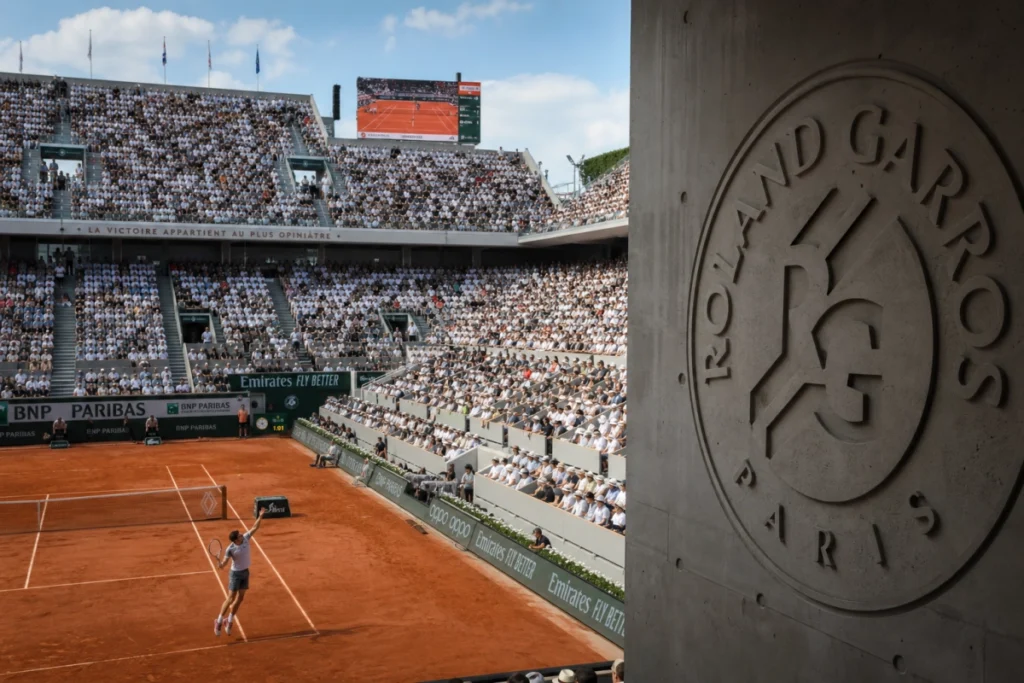
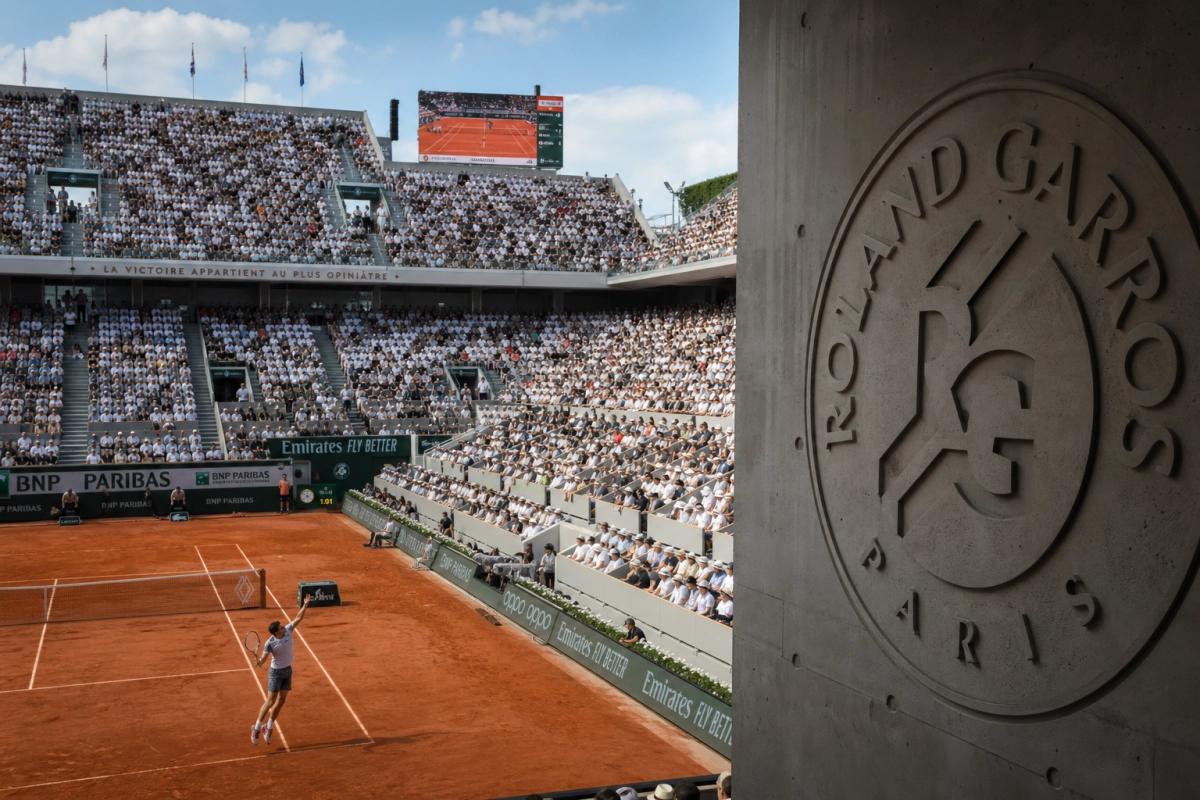
Few sporting venues carry the weight of history quite like Roland Garros. Nestled in the 16th arrondissement of Paris, just steps from the Bois de Boulogne, this tournament has shaped professional tennis more profoundly than almost any other event on the calendar. Its slow red clay rewards endurance, precision, and tactical intelligence in ways that grass and hard courts simply do not. Winning here is a distinct achievement — a separate test of character that has defined and, in some cases, eluded even the greatest careers in the sport.
From Aviation Hero to Tennis Legend
The tournament takes its name from Eugène Adrien Roland Georges Garros, a French aviator who became the first pilot to cross the Mediterranean Sea in 1913. Garros died in aerial combat in 1918, and when the Stade de Roland Garros was built in 1928, it was dedicated in his memory — constructed so that the French Davis Cup team could host an international tie on home soil.
The stadium was not originally designed to host a prestigious open tournament. The French Championships had existed in various forms since 1891, but were largely restricted to French nationals and club members for much of their early history. It was not until 1925 that the event opened to international competitors, and not until 1968 — the dawn of the Open Era — that professional players were permitted to compete alongside amateurs. That shift transformed the tournament entirely, setting it on the path to global prominence it holds today.
The Clay Surface That Changes Everything
Roland Garros is played on crushed red brick clay, a surface that fundamentally alters the dynamics of professional tennis. The clay slows the ball significantly after the bounce, reducing the advantage of powerful flat serves and opening the game to longer rallies, heavy topspin, and tactical maneuvering from the baseline. Points that might last two or three shots on grass can extend to ten, fifteen, or twenty exchanges on the Parisian clay.
Pure servers and aggressive net rushers often struggle here unless they can construct points from the back of the court. Baseline players with high-kicking topspin and exceptional physical conditioning tend to find the surface more forgiving. Clay also demands a particular mental resilience — the ability to absorb pressure over five sets, recover from momentum swings, and execute precise patterns even when legs are heavy from hours of sliding and grinding.
That predictable yet punishing character is part of what gives the tournament its unique identity within the Grand Slam calendar. Certain players return to Paris each year knowing the conditions suit them; others arrive knowing they face a genuine uphill challenge regardless of ranking.
The Players Who Made Roland Garros Their Cathedral
Every Grand Slam produces champions, but Roland Garros produces legends — players whose relationship with the Parisian clay transcended statistics and became something closer to mythology. The tournament has a way of clarifying greatness, separating those who can adapt from those who cannot.
No discussion of Roland Garros is complete without acknowledging Rafael Nadal, whose dominance on this surface remains one of the most extraordinary achievements in the history of professional sport. His record borders on the inexplicable — a sustained mastery that continued well into his thirties. Nadal’s game was essentially engineered for clay: the vicious topspin on his forehand, the relentless defensive retrieval, the physical and psychological endurance that wore opponents down point by point. The tournament has also been notable for the players it denied: champions at every other Grand Slam who arrived in Paris as favorites and departed without the title, their limitations exposed by the one surface that refuses to offer shortcuts.
The Rivalries That Defined Generations
Roland Garros has hosted some of the most compelling rivalries professional tennis has ever produced. When two evenly matched players meet over five sets on a surface that rewards patience and tactical depth, the psychological drama intensifies in ways that shorter formats on faster surfaces rarely allow. Every break of serve feels harder won and harder defended.
The rivalry between Bjorn Borg and Guillermo Vilas in the late 1970s offered an early template for clay-court combat at the highest level — two baseline artists testing each other’s endurance in prolonged, physically demanding exchanges. Later decades introduced new dynamics as power levels rose and players developed more aggressive approaches even on slow surfaces.
What these rivalries shared was a quality of unresolved tension that the clay surface cultivated deliberately. Unlike grass, where a single dominant weapon can end a match quickly, Roland Garros creates conditions in which momentum shifts gradually, allowing competitors to claw back from seemingly hopeless positions. That structural feature has produced some of the tournament’s most dramatic moments — comebacks that would have been impossible elsewhere, and collapses that reflected not individual mistakes but the accumulated weight of an entire fortnight’s effort.
The Architecture of an Iconic Venue
Beyond the tennis itself, Roland Garros has a physical character that distinguishes it sharply from other Grand Slams. The venue is compact, its courts arranged in close proximity, creating a density of atmosphere that larger complexes struggle to replicate. The Philippe Chatrier court sits at the heart of this arrangement, its tiered stands forming an enclosed, almost theatrical environment where crowd noise gathers and builds in distinctive ways.
The venue has undergone significant development in recent decades, most notably with the addition of a retractable roof over Chatrier, which addressed the longstanding problem of rain delays. Equally significant was the construction of the Simonne Mathieu court, embedded within the adjacent botanical garden — a deliberate architectural statement that Roland Garros could modernize without abandoning the blend of elegance and earthiness that defines it.
- The Philippe Chatrier court is the tournament’s historic centerpiece, recently fitted with a retractable roof to manage weather disruptions
- The Suzanne Lenglen court serves as the secondary showcourt, hosting high-profile matches throughout the fortnight
- The Simonne Mathieu court, opened in 2019, integrates striking design with its natural surroundings in the Bois de Boulogne
- The overall venue footprint remains relatively compact, contributing to its intimate and pressurized atmosphere
Why Roland Garros Endures as Tennis’s Most Unforgiving Measure of Greatness
There is a reason players speak about winning Roland Garros differently from winning other titles. The language they use after claiming the Coupe des Mousquetaires tends toward relief as much as celebration, exhaustion as much as elation. The tournament extracts something that other Grand Slams do not quite reach — a combination of physical depletion and psychological exposure that leaves little room for concealment. You cannot serve your way through Roland Garros. The surface finds the edges of every game, and what remains when those edges are tested is as honest an assessment of a tennis player as the sport possesses.
Over nearly a century of history, Roland Garros has also functioned as the sport’s clearest mirror, reflecting the evolution of professional tennis through the players it produced and the ones it resisted. Statistics from Roland Garros tell a more complete story about the sport’s development than those from almost any other event, precisely because the surface changes so little while the game around it changes so much.
What ultimately secures Roland Garros its place at the summit of the sport is the particular quality of attention it demands from everyone inside it. The clay slows everything down just enough that the details become visible: the weight transferred into a forehand, the precise arc of a cross-court angle, the split-second decision to step inside the baseline and shorten a rally. Roland Garros makes tennis legible in ways that faster surfaces obscure, offering something genuinely rare in modern professional sport — a stage on which the full depth of human athletic intelligence can be seen clearly, and appreciated for exactly what it is.
That is the enduring promise of the red clay in Paris: not that the best player will always win, but that the truest player — the one most completely prepared, most adaptable, most resilient — will rarely lose. Nearly a century after the stadium was built to honor a fallen aviator, that promise remains intact, and the tournament that carries his name remains the most honest examination professional tennis has ever devised.