

The US Open: America’s Grand Slam and the World’s Loudest Tennis Stage
The US Open is the fourth and final Grand Slam of the tennis calendar, held each year during the last week of August and the first week of September in New York City. The crowds are passionate and loud, the schedule runs deep into the night under floodlights, and the stakes feel enormous for every player still standing late in the draw. The US Open rewards a specific style of tennis, attracts a uniquely diverse crowd, and has produced some of the sport’s most memorable moments across both the ATP and WTA tours.
From Newport to New York: A Brief History of the Tournament
The tournament dates back to 1881, making it one of the oldest tennis championships in the world. It began as the U.S. National Championship at the Newport Casino in Rhode Island, restricted to members of American tennis clubs. The event moved to the West Side Tennis Club in Forest Hills, Queens, in 1915, where it played on grass and later clay over the following decades.
The most significant transformation came in 1978, when the tournament relocated to the USTA National Tennis Center in Flushing Meadows and rebranded as the US Open. Hard courts replaced the previous surfaces — durable, consistent, and well-suited to a high-volume, high-attendance event. The complex was later renamed the USTA Billie Jean King National Tennis Center in honor of the champion whose advocacy helped make the US Open the first Grand Slam to offer equal prize money to men and women, in 1973 — a milestone that shaped the conversation about pay equity in professional sports well beyond tennis.
Flushing Meadows: Venue and Playing Surface
The USTA Billie Jean King National Tennis Center is the largest tennis facility in the world by seating capacity. Three courts define the tournament experience for most fans and players.
- Arthur Ashe Stadium — the main showpiece court with a retractable roof installed in 2016, seating approximately 23,700 spectators.
- Louis Armstrong Stadium — the secondary show court, also with a retractable roof added in 2018, seating roughly 14,000.
- Grandstand Stadium — a smaller open-air arena used for featured matches with an intimate atmosphere.
The playing surface is DecoTurf, a hard acrylic surface over asphalt. It sits at a medium-fast pace — quicker than Roland Garros clay, slightly slower than Wimbledon grass, and broadly comparable to the Australian Open hard courts, though New York’s surface tends to play a little faster and lower than Melbourne’s. That favors aggressive baseliners and strong servers who benefit from the ball staying compact off the bounce.
Late August heat and humidity add another variable. Temperatures frequently climb above 90°F (32°C) during the early rounds, and extreme heat protocols exist to protect player welfare. Those conditions, combined with the distinctive night-session atmosphere at Arthur Ashe Stadium, give Flushing Meadows an identity entirely its own.
How the Draw Works: Tournament Format and Structure
The US Open follows the standard Grand Slam format. Both the men’s and women’s singles draws contain 128 players competing across seven rounds of single-elimination play. Win seven matches and you leave Flushing Meadows as champion. The top 32 players are seeded in both draws based on ATP and WTA rankings at the time of the draw.
One format distinction sets the US Open apart: the tournament uses a tiebreak in every set, including the fifth set for men and third set for women. This differs from Wimbledon’s final-set tiebreak at 12-12 and Roland Garros’s at 6-6. The approach prevents matches from extending into marathon territory, suiting the compressed scheduling demands of a busy urban venue.
Beyond singles, the tournament hosts men’s and women’s doubles, mixed doubles, and junior and wheelchair competitions, broadening the program considerably across the fortnight.
Prize Money and What It Signals
The US Open consistently offers one of the largest prize pools in professional tennis, reflecting its commercial strength and New York’s status as a global media market. Equal prize money across men’s and women’s singles has been a defining feature since 1973. First-round losers receive a meaningful payout by tour standards — an important detail given that many players outside the top 100 operate on tight margins while traveling the global circuit.
Singles champions have typically received figures exceeding three million dollars in recent editions, with runners-up, semifinalists, and quarterfinalists each receiving a defined percentage of the overall pool — acknowledging the difficulty of reaching the late stages of a 128-player draw over two demanding weeks.
What Makes the US Open Distinct
Each major has a personality beyond surface and seeding. The US Open’s identity is shaped by factors no other Slam replicates.
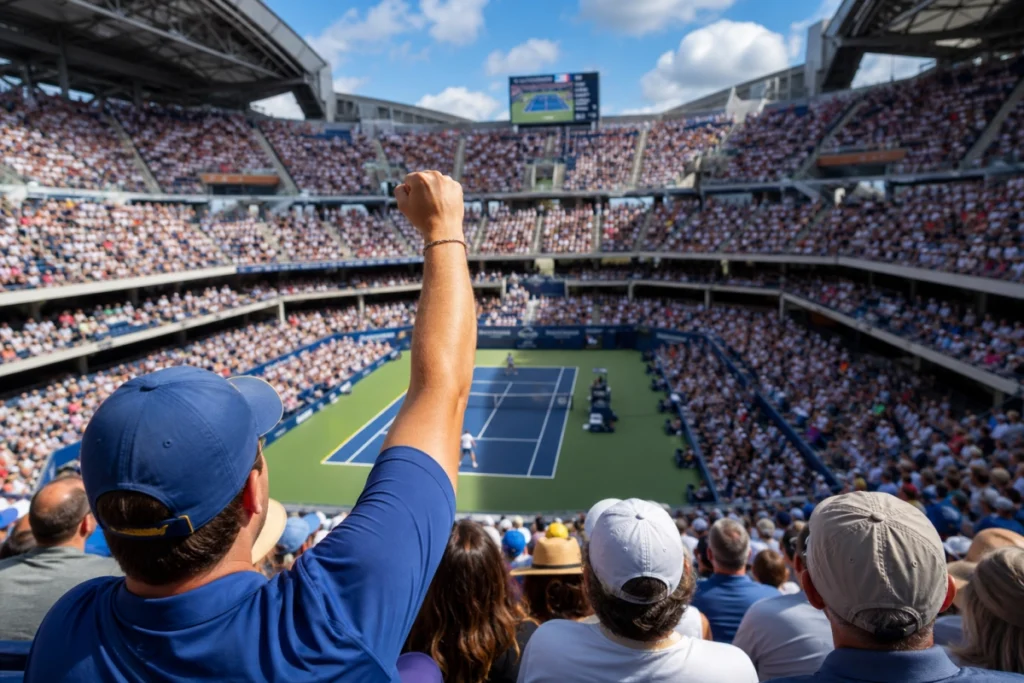
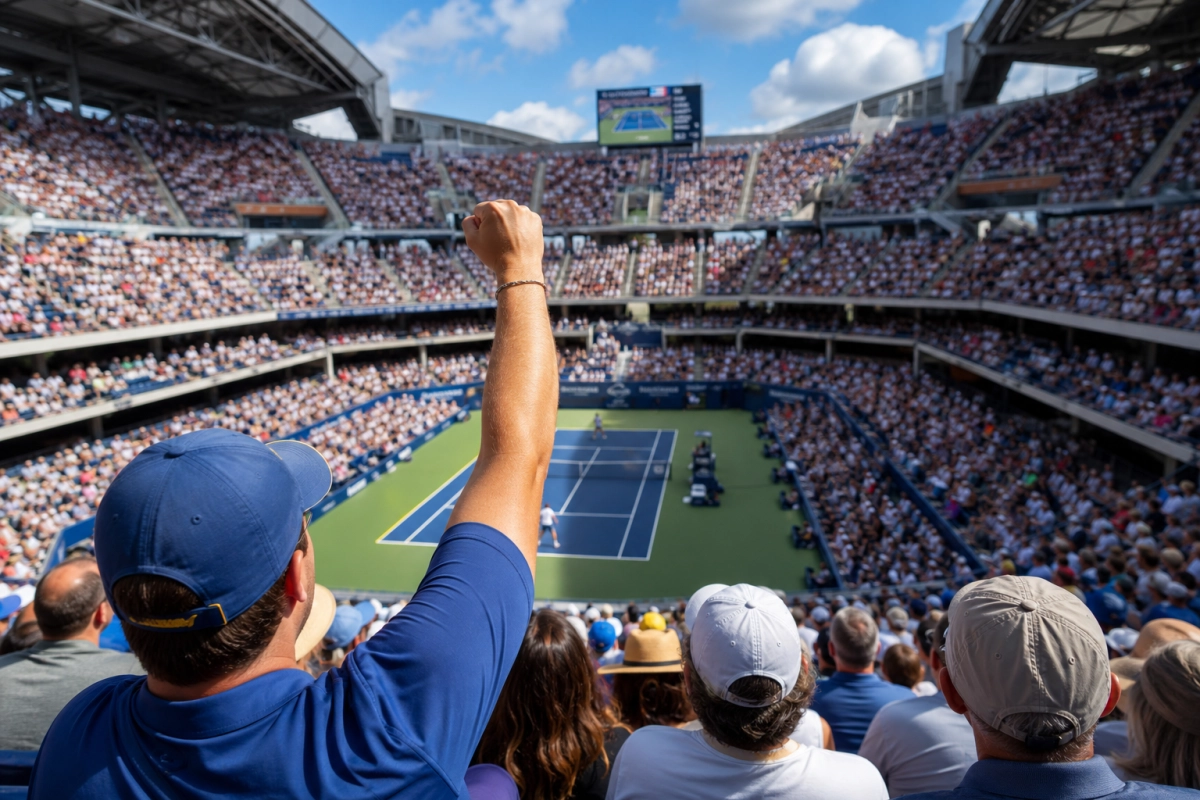
Night sessions at Arthur Ashe Stadium are a commercial and cultural cornerstone, featuring marquee matches that begin at 7 p.m. and sometimes finish well past midnight. Players have long acknowledged the psychological weight — the crowd is louder, the stakes feel amplified, and the atmosphere borders on theatrical. New York audiences are knowledgeable but openly partisan, quicker to respond emotionally to momentum shifts than crowds at most other majors. That energy can swing a match, and players accustomed to quieter atmospheres sometimes never quite adjust.
- Surface: Hard acrylic over asphalt, playing medium-fast and favoring aggressive ball-striking.
- Location: An urban complex in Queens with the New York City skyline as a backdrop.
- Scheduling: Prime-time night sessions that create a match-day rhythm unlike any other major.
- History: The first Slam to award equal prize money, with a long record of embracing change over tradition.
Notable Records and Champions
The US Open has produced some of tennis’s most decorated champions. On the men’s side, Pete Sampras, Jimmy Connors, Roger Federer, and Novak Djokovic have each won five titles — the benchmark for sustained excellence at Flushing Meadows. Among women, Serena Williams and Chris Evert each claimed six US Open singles titles, a figure that underscores just how difficult the tournament is to win even once.
The US Open has also been the site of significant breakthrough moments, with players claiming their first major here through sheer force of will rather than superior ranking. That pattern — the underdog delivering under New York pressure — has become part of the tournament’s folklore in a way that feels entirely organic.
Why the US Open Remains the Sport’s Most Electrically Charged Major
Strip away the statistics and prize fund figures, and what remains at the core of the US Open is a specific feeling. It is the one Grand Slam where the city itself seems to participate — where crowd noise bleeds into shot selection, where a late-night tiebreak in front of twenty thousand vocal fans carries an atmosphere players describe for years afterward.
The tournament’s willingness to evolve — adopting hard courts when others clung to tradition, installing retractable roofs, embracing night sessions as a competitive feature — reflects an institution that has always understood its relationship with its audience. The US Open has never positioned itself as a guardian of the sport’s past. It positions itself as the game at its most alive.
That combination of history, setting, format, and atmosphere is what makes the US Open not simply the last Grand Slam of the year, but for many who follow the sport closely, the one they anticipate most fiercely when the summer draws toward its end.
