
What Makes the French Open Different from Every Other Grand Slam
The French Open occupies a unique place in the tennis calendar. Held each spring at Roland Garros in Paris, it is the only Grand Slam played on clay — a surface that slows the ball down dramatically, rewards endurance, and rewards patience over power. For fans accustomed to the fast exchanges of Wimbledon or the hard-court speed of the US Open, watching a match at Roland Garros for the first time can feel like watching an entirely different sport. Rallies stretch longer, strategies shift, and players who dominate on other surfaces sometimes struggle to make a second week.
That contrast is precisely what makes the French Open so compelling. Understanding the tournament’s structure, its scheduling logic, and the tactical demands of clay puts a viewer in a much stronger position to appreciate not just who won a particular game, but why.
How the French Open Tournament Is Structured
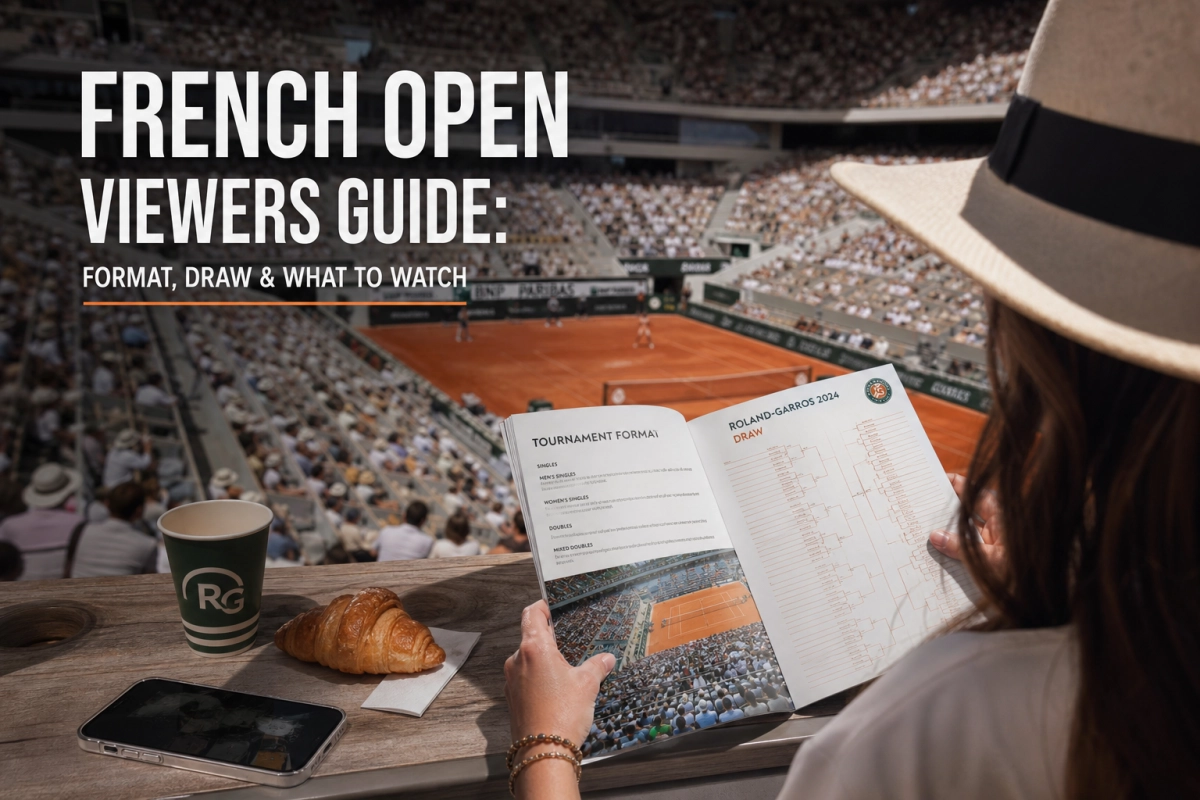
Roland Garros follows the standard Grand Slam format: a 128-player singles draw for both the men’s and women’s competitions, played across two weeks. Players must win seven consecutive matches to claim the title. The tournament also includes doubles, mixed doubles, junior events, and wheelchair competitions running alongside the main draws, giving the grounds a festive, multi-layered atmosphere even on days when the top seeds are not scheduled.
The draw is conducted before the tournament begins and determines every potential matchup from the first round through to the final. Seeded players are placed in different sections of the bracket to prevent top competitors from meeting too early. The top two seeds are placed at opposite ends, meaning they can only meet in the final. There are currently 32 seeds in each singles draw, with players ranked outside the top 32 drawn randomly into any position — which is why early rounds sometimes produce surprisingly competitive matches, particularly on clay, where the surface itself can neutralize certain advantages.
Wildcards and Qualifiers: Who Else Is in the Draw?
Not every player earned their place through ranking alone. The French Open awards wildcards — direct entry spots granted at the tournament’s discretion — typically to French players, returning former champions, or emerging talents. Qualifiers are a separate group who competed in a pre-tournament event and won enough matches to earn a main draw spot. Qualifiers can be genuinely dangerous opponents on clay, where consistent ball-strikers can make deep runs regardless of seeding.
Why Clay Court Scheduling Works Differently
Casual viewers often notice that matches at the French Open run longer and that the daily schedule operates with more flexibility than at other Slams. Both observations trace back to the surface itself. Clay plays slower than hard or grass courts — the ball bounces higher and loses pace, allowing players to retrieve shots that would be winners elsewhere. A match that might last ninety minutes on grass can stretch to three or four hours at Roland Garros without either player doing anything unusual.
Scheduling at Roland Garros also accounts more heavily for weather disruption. Paris in late May and early June is notoriously unpredictable, and because clay takes longer to drain and dry than hard courts, even moderate rainfall can halt play for extended periods. The installation of a retractable roof over Philippe-Chatrier has helped protect marquee matches, though not all courts have that protection.
A player might compete on consecutive days early in the tournament, then receive a rest day before a crucial third or fourth-round match — not by accident, but because the schedule is actively managed around court availability, broadcast windows, and physical recovery on a surface that taxes the legs and joints more than any other.
What Clay Actually Does to Tactics and Playing Styles
Watching a French Open match without understanding how clay reshapes tactics is like watching chess without knowing how the pieces move. On faster surfaces, a powerful first serve can end a point outright. On clay, that same serve often comes back — the returner has more time to load up, the ball sits up higher through the bounce, and suddenly the server is involved in a baseline exchange they never wanted. This is why players with massive serves but limited groundstrokes often underperform at Roland Garros, while consistent ball-strikers who can sustain long rallies without errors tend to thrive.
Topspin becomes particularly valuable on clay. Heavy topspin causes the ball to kick up sharply off the surface, pushing opponents well behind the baseline and opening the court for angled winners. This is one reason certain players have historically dominated the tournament: their ability to generate extreme topspin puts opponents in defensive positions that simply do not arise as frequently on other surfaces.
The Mental Dimension of Playing on Clay
Clay also rewards a particular temperament. Because points last longer and errors feel more costly after a fifteen-shot rally, the psychological weight of each game is different. Players must manage frustration carefully, resist forcing winners prematurely, and maintain concentration across matches that routinely exceed three hours. When watching closely, pay attention to how a player responds after dropping a long rally they appeared to be controlling — that reaction often signals more about their chances of winning than the point itself did.
Practical Viewing Tips for First-Time and Casual Fans
A few practical habits will make watching Roland Garros considerably richer. First, pay attention to which court a match is scheduled on. Philippe-Chatrier is the main show court, and the scheduling committee places the most significant matches there. Court Suzanne-Lenglen is the second show court and often hosts matches of comparable quality. Smaller outside courts host early-round matches that can be excellent viewing precisely because the atmosphere is intimate and the tennis less predictable.
Second, familiarise yourself with the deciding set on clay. In the men’s draw, five-set matches are played without a final-set tiebreak, meaning the deciding set can run until someone leads by two games. Matches have historically extended beyond five hours, and those late-stage contests often produce the most dramatic tennis of the entire calendar year.
- Watch early rounds on outside courts for raw, high-quality tennis without the pressure of a packed show court atmosphere.
- Track how players manage their physical condition as the tournament progresses — clay accumulates fatigue in the legs and lower back in ways that become visible by the second week.
- Notice how frequently the best clay-court players redirect the ball cross-court under pressure rather than attempting down-the-line winners.
- Pay attention to the bouncing ball before each serve — a small ritual that reveals a great deal about a player’s focus under pressure.
The French Open rewards patient viewing in the same way clay rewards patient play. The more context you bring to each match, the more each rally communicates — not just as a sequence of shots, but as a small tactical argument being played out in real time.
How to Get the Most from a Fortnight at Roland Garros
The French Open is not a tournament that reveals everything immediately. It unfolds across two weeks with a logic that becomes clearer the more you follow it — the gradual thinning of the draw, the accumulation of physical wear on players who have pushed through long matches, the emerging story of who has the game and temperament to sustain excellence across seven consecutive rounds.
By the second week, when the draw has thinned to the final sixteen and then the final eight, matches become longer, stakes climb, and the physical evidence of two weeks on clay becomes impossible to miss. Players who moved fluidly in round one begin to show the specific fatigue of the surface — tighter movement, slower recovery between points, more deliberate shot selection. Following a player from their first match through to a quarterfinal gives you an almost complete picture of how clay tests body and mind simultaneously.
The scheduling, the draw mechanics, the tactical grammar of the surface, and the psychological demands that separate clay-court champions from talented visitors — these are not technical details reserved for dedicated followers of the sport. They are the actual story of the French Open, running beneath every point of every match across the entire fortnight. A viewer who carries that understanding into each session does not simply watch the tournament. They read it.