
Why the Federer–Nadal rivalry mattered across clay and grass
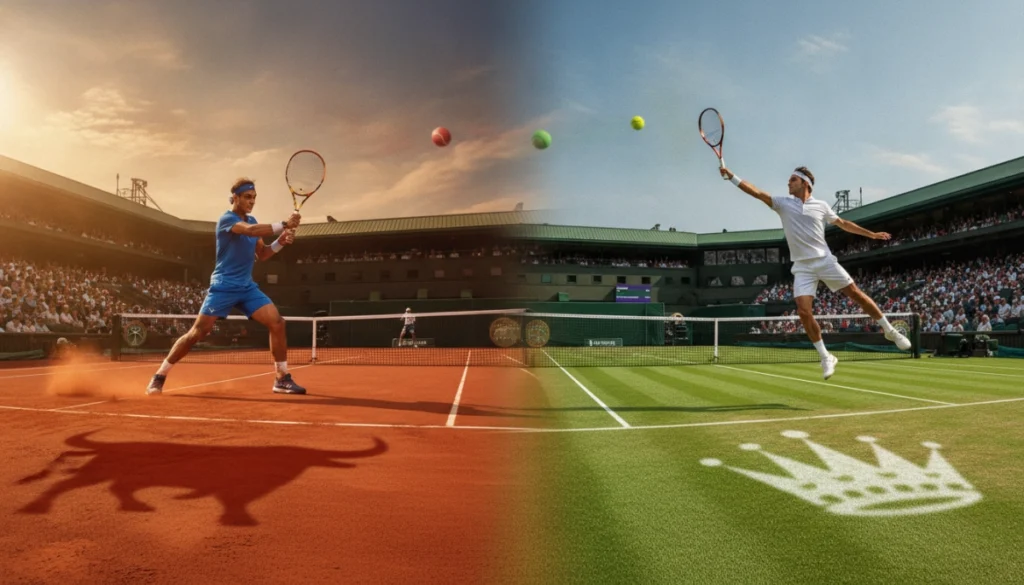
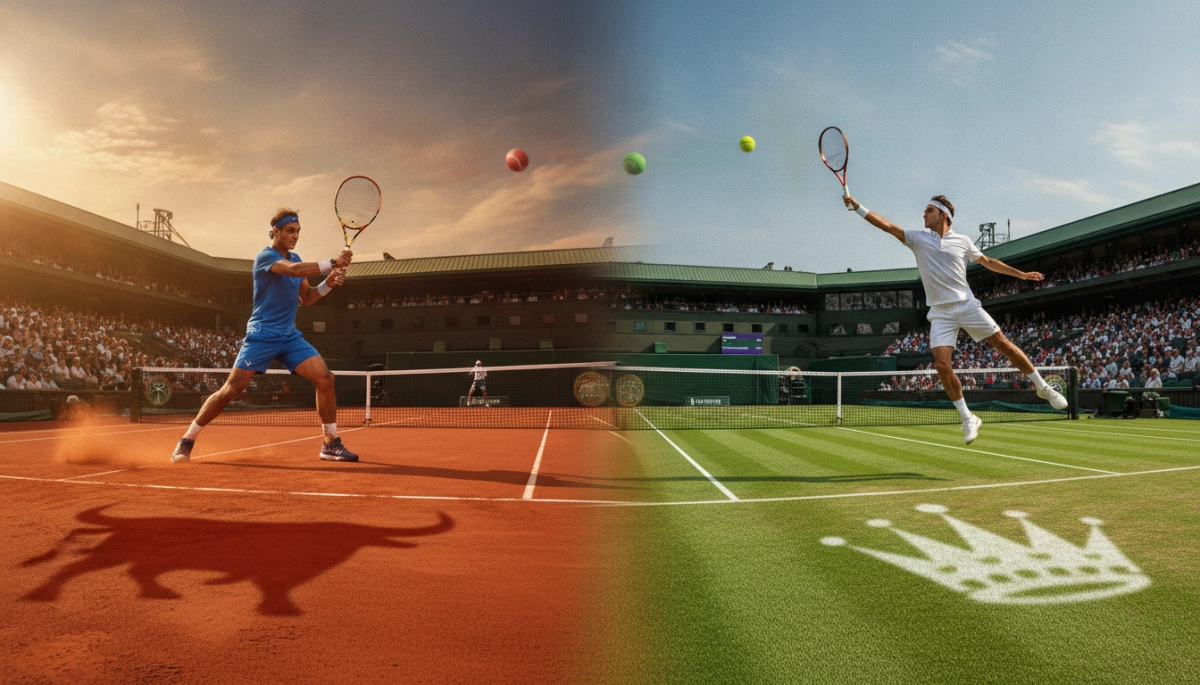
You witnessed more than a sequence of matches when Roger Federer and Rafael Nadal faced each other; you watched a clash of styles that defined an era. One player embodied fluid aggression, precision and variety, while the other brought relentless topspin, athletic defense and clay-court mastery. When those contrasting strengths met, especially at Roland Garros and Wimbledon, you saw tennis evolve in real time.
This section helps you understand the context behind the showdowns. Roland Garros served as Nadal’s proving ground — a place where his heavy lefty topspin repeatedly tested Federer’s timing and one-handed backhand. Wimbledon presented the opposite challenge: a low, fast surface that rewarded Federer’s slice, net play and rhythmic serve. Tracking how each match unfolded across these surfaces lets you see how tactics, confidence and momentum shifted from one Grand Slam to the next.
Early turning points: how the rivalry grew from clay to grass
To follow the arc from Paris to SW19, you should start with the early high-stakes meetings that set patterns for later finals. Nadal established control on clay early in their history, repeatedly confronting Federer’s attempts to translate grass-court dominance into French Open success. On grass, Federer repeatedly found ways to counter Nadal’s intensity — until the pivotal matches that began to redefine expectations for both players.
- Initial clay dominance: Nadal’s early wins at Roland Garros made you recognize the limits of Federer’s approach on slow, high-bouncing surfaces and forced Federer to adapt his preparation and strategy.
- Grass responses: Federer’s Wimbledon victories demonstrated how surface and style interact. You could see the Swiss player exploit a lower bounce, quick points and net access to neutralize Nadal’s top-spin advantage.
- Momentum swings: Each Grand Slam meeting carried psychological weight—when Nadal won in Paris, he carried confidence onto grass; when Federer prevailed at Wimbledon, he validated his all-surface mastery.
Looking back at the first intense showdowns, you can pick out recurring themes: tactical shifts between baseline rallies and attack-the-net sequences, the physical toll of long five-set battles, and the way each player adjusted his service games and return positions to exploit the opponent’s weaknesses. Those early encounters also framed public perception: Nadal as the clay specialist who could challenge anyone, Federer as the poetic all-court maestro who sought a missing French Open title.
As you prepare to examine individual matches in more detail, you’ll want to focus on several elements that repeatedly determined outcomes—rally length, forehand-to-backhand patterns, serve placement, and crucial breakpoint management—because these are the tactical keys that turned Roland Garros duels into Wimbledon epics. In the next section, you’ll get a closer, point-by-point look at the most iconic matches and the moments that swung them in one player’s favor or the other’s.
Iconic matches: moments that crystallized the rivalry
When you look back at the Federer–Nadal duels that stitched Roland Garros to Wimbledon, a handful of matches stand out not just for the outcome but for the sequence of moments that altered both players’ narratives. On clay, Nadal repeatedly negated Federer’s rhythm by using heavy, high-bouncing forehands to Nadal’s inside-out corner, forcing Federer onto his one-handed backhand and turning short windows of offense into defensive repairs. Those Paris battles weren’t always long blowouts—they were punctuated by decisive stretches: a string of returns that turned a hold into a break, or a late-set run of tenacious baseline points that bled confidence from Federer.
On grass the stories flipped. Federer’s victories at SW19 often read like tactical masterclasses in shortening points: a well-placed slice to low-bounce backhands, sudden net approaches after flattening forehands, and a serve that begged Nadal to hit one more ball. The 2007 Wimbledon final is a prime example — Federer mixed power and touch to neutralize Nadal’s heavy topspin and managed crucial breaks by varying depth and coming forward behind the second serve.
Then there is the match that most people cite when trying to pin down the rivalry’s drama: their Wimbledon encounter often described as one of the greatest tennis matches ever played. It combined almost everything the pair had shown across both surfaces — relentless defense meeting fearless offense, momentum swings, late-match endurance, and an atmosphere that turned every point into a potential turning point. Rain delays and fading light only added to the sense that each rally could decide not just the match but the psychological edge for years to come.
These matches mattered because they forced adaptation. A Federer forced to survive on clay learned to flatter his backhand with more slice and to reset sooner; a Nadal pushed on grass developed a crisper serve and a willingness to take the ball earlier. When you examine those headline encounters, you see tactical evolutions baked into the outcomes.
Point construction and turning points: what actually changed matches
If you dissect the decisive moments, patterns emerge. First, controlling the forehand-to-backhand corridor was paramount. Nadal’s signature sequence was to open with an angled forehand to Federer’s backhand, then follow up with a heavy inside-out to create an angle or elicit a short reply. When that pattern succeeded, Federer was reduced to sideways movement and half-chances. Federer’s counter was to flatten his forehand early, step in behind it, and immediately attack the net — a transition that either ended the point outright or forced Nadal to hit a riskier passing shot.
Second, serve and return nuance turned entire sets. On grass, Federer’s wide slice serves and low kick-outs limited Nadal’s ability to step inside; on clay, Nadal’s consistent first-serve placement and superior second-serve defense converted marginal points into break opportunities. Breakpoint management itself became an art: both players demonstrated the ability to manufacture one or two loose points in pressure games, whether by changing pace, opening the court with a drop shot, or drawing short replies with angled depth.
Finally, physical and mental endurance often decided late-set drama. Long rallies on clay rewarded Nadal’s retrieval skills; on grass, sudden bursts of aggression favored Federer’s feel. The truly decisive moments were rarely single spectacular winners but instead clusters — a mini-run of five hard-fought points where one player seized control through superior positioning, patience, or risk-taking. Those clusters are what turned Roland Garros duels into Wimbledon epics, and what made the Federer–Nadal rivalry enduringly compelling to watch.
How the rivalry reshaped modern tennis
Beyond trophies and headlines, Federer and Nadal forced the sport to evolve tactically and commercially. Coaches and players studied their matches to refine training on movement, topspin generation, and variety of shot-making. Tournament organizers and broadcasters capitalized on the narrative, scheduling and presentation that heightened the drama of big-match moments. Young players entering the pro ranks learned that mastery on one surface could no longer be the only path to greatness; versatility became essential.
- Technical influence: increased emphasis on heavy topspin and footwork drills inspired by Nadal; renewed interest in one-handed backhand and net play inspired by Federer.
- Tactical influence: more nuanced serve-and-return patterns and aggressive transition play across surfaces.
- Cultural impact: elevated global interest in men’s tennis, stronger rivalries as storytelling tools, and a benchmark for sportsmanship and mutual respect.
- Legacy in venues: matches between them helped cement the aura of places like Roland Garros and Wimbledon—see the official Wimbledon site for archives that capture many of those defining moments.
Enduring echoes: what the Federer–Nadal duels left behind
The matches between Federer and Nadal did more than determine champions; they created moments that linger in memory, set standards for professional rivalry, and inspired generations of players and fans. Even as both careers moved beyond their peak years, the lessons of their showdowns — about adaptability, respect, and the craft of point construction — continue to shape how tennis is taught and appreciated. For anyone who watched those Roland Garros and Wimbledon battles, the feeling remains: you witnessed two different philosophies collide, refine one another, and, in the process, elevate the game.