
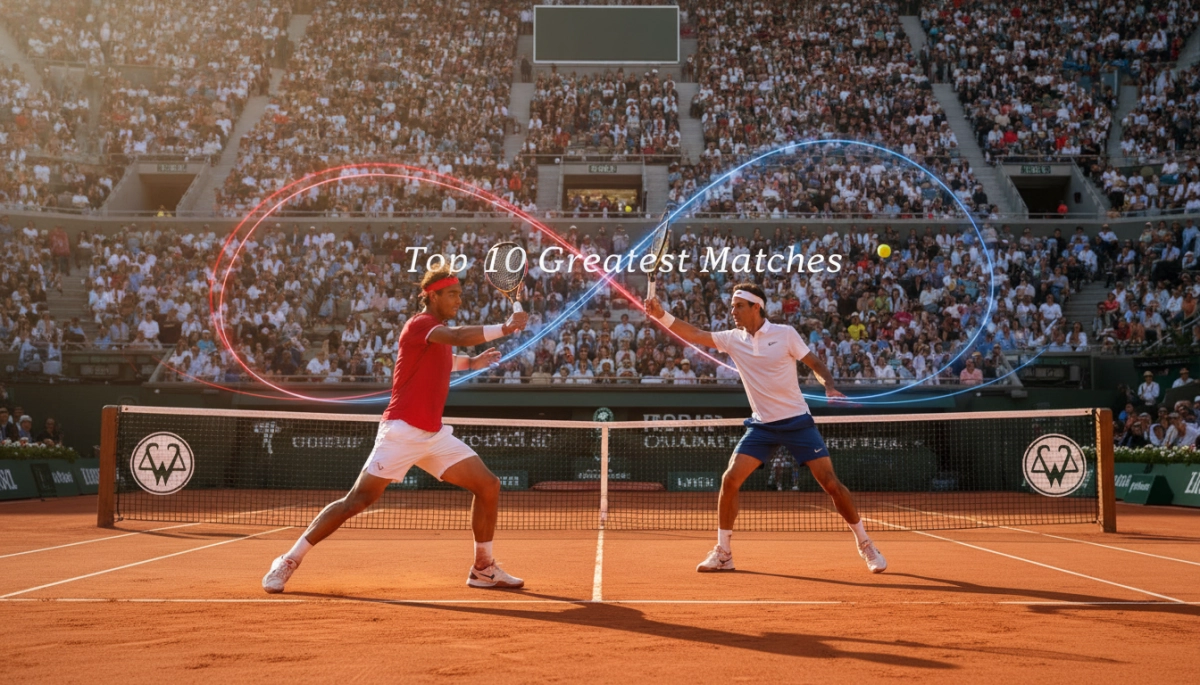
Why the Nadal–Federer Rivalry Changed How You See Tennis
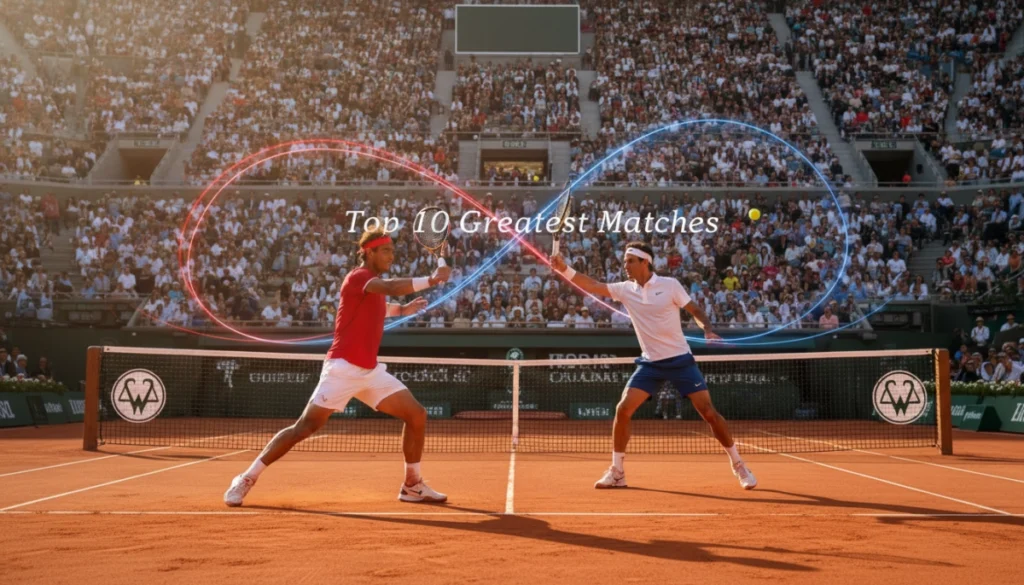
When you first watch Rafael Nadal and Roger Federer face off, you notice contrasts that feel archetypal: Nadal’s relentless topspin and fierce intensity versus Federer’s effortless timing and balletic variety. That contrast isn’t just stylistic — it created a narrative tension that turned routine tournaments into cultural events. You learned to expect more than a scoreline; matches between them became case studies in tactics, psychology, and surface specialization.
From a spectator’s perspective, this rivalry taught you to read the court differently. On clay, Nadal’s heavy left-handed spin pushed players out of position. On grass, Federer’s slice, change of pace, and net play forced opponents into uncomfortable quick exchanges. Beyond shot mechanics, their contrasting temperaments — Nadal’s volcanic competitiveness and Federer’s calming poise — created storylines that helped tennis cross into mainstream conversation.
How their head-to-head significance grew
You can measure the rivalry in titles and headlines, but its true significance lies in moments when one player altered perceptions of the other. Early victories on specific surfaces didn’t just add trophies; they shifted expectations. When Nadal dominated on clay, he didn’t only win matches — he established a psychological edge. When Federer reclaimed glory on grass, he reminded the world that adaptability matters even against a seemingly dominant opponent.
- Rivalry as a mirror: each player forced the other to evolve.
- Surface-driven narratives: clay, grass, and hard courts each wrote different chapters.
- Legacy through matches: individual epic encounters became a larger story about tennis history.
Early Encounters That Set the Tone for the Greatest Matches
To understand the top 10 greatest Nadal–Federer matches, you need to revisit their formative clashes. Early on, Nadal’s breakthrough on clay and Federer’s mastery on grass established a tug-of-war. That tug-of-war created the conditions for later classics: long rallies that tested endurance, tight tiebreakers that tested nerves, and dramatic momentum shifts that kept you guessing until the final point.
Clay beginnings and Federer’s early supremacy
In the mid-2000s, Nadal’s grip on the French Open started to rewrite expectations. When he beat Federer on Roland Garros courts, it wasn’t merely a tournament win — it signaled that Federer’s dominance could be countered by a new, specialized excellence. These early clay battles taught you about the importance of pattern disruption: Nadal used heavy kick serves and angled forehands to pull Federer off his preferred rhythm.
Grass duels and momentum swings
On grass, Federer reminded you why he’s often called the greatest stylist. His speed of thought at the net and ability to shorten points created counter-narratives to Nadal’s attritional style. Early grass finals between them showed that matches could swing dramatically depending on small tactical adjustments and clutch serving under pressure.
These early chapters — the clay confirmations and grass retorts — are where many of the rivalry’s greatest matches take their roots. Next, you’ll move into the countdown itself and examine the ten matches that best encapsulate the tactical drama and emotional stakes of Nadal vs Federer.
10–7: The Early Classics That Cemented the Rivalry
These first rungs of the countdown are where you see their identities collide and clarify. The early classics weren’t always five-set marathons; sometimes the significance lay in what they proved about each player’s limits and adaptability.
Take their initial French Open finals, where Nadal’s mastery of clay first translated into a tactical straitjacket. Those matches taught Federer and the watching world that his backhand and movement could be methodically neutralized by relentless top-spin angles and an uncompromising lefty forehand. For Federer, the lesson was harsh but productive: if he wanted to compete on clay he had to modify court positioning, accept longer exchanges and pick smarter moments to shorten points.
Contrast that with their early grass clashes, where Federer’s net craft and slice reintroduced the idea that points could still be finished quickly. Those encounters were not only about who won a trophy that day, but about style imposing itself on results: Federer insisting on a faster pace, Nadal refusing to surrender the baseline. The tactical adjustments from both players—Nadal flattening out his forehand on occasion, Federer choosing more aggressive backhand returns—started to make every rematch feel like a new chess game.
What ties the matches ranked 10–7 together is the clarity they provided. They weren’t only spectacles; they were pedagogical moments. Fans learned how Nadal built points and how Federer dismantled rhythm. Critics saw how surface and adaptation mattered. Most importantly, each result altered the psychological ledger between them—giving the vanquished new motivation, and the victor a blueprint to be exploited or countered next time.
6–4: Mid-Rivalry Epics That Raised the Stakes
By the middle of the list you enter full-blown epics—matches that changed momentum not just for a tournament, but for entire seasons. These were the encounters that pushed both players into tactical reinvention and made neutral observers pick sides.
Among these, the matches on the biggest stages—major finals and late Grand Slam rounds—stand out for their drama. Here you see Federer at his most inventive, mixing drop shots, slices and sudden net charges to shorten rallies; and Nadal, answering with stamina, angle and an uncanny ability to swing momentum by turning defense into offense. Psychological swings became more dramatic: service games that once seemed safe were suddenly breakable, and a single failed first serve could flip a set.
What makes these mid-rivalry showdowns unforgettable is not merely the length or the scoreboard, but the micro-battles inside them—who won the second-serve duel, who seized the net after a long rally, which player held nerve in the late tiebreak. These matches elevated the rivalry from a series of great contests to a sustained duel that shaped careers. They forced both men to evolve—Federer to find new ways to shorten points at high intensity, Nadal to add more variation and patience to his aggression—and in doing so produced some of the finest tactical tennis the sport has seen.
3–1: The Pinnacle Battles
#3 — 2009 Australian Open Final
This five-set classic pushed both players through extremes of momentum and court geometry. Nadal’s persistence from the baseline met Federer’s tactical variety in a match that reinforced how evenly matched they could be on hard courts. For many viewers, it was the moment Nadal proved he could beat Federer in a major on a surface other than clay, and it showed how endurance and mental recalibration could decide the biggest points.
#2 — 2017 Australian Open Final
More than just a title match, this was a moment of narrative reversal: Federer, approaching his mid‑30s, and Nadal, returning from injury, delivered high-quality offense and clutch serving across five sets. The contest signaled not only personal comebacks but a renewal of competitive intensity late in both careers—an emotional reminder that rivalries can regenerate and surprise even after years of history.
#1 — 2008 Wimbledon Final
Often described as the greatest tennis match ever played, this final combined shifting momentum, sublime shotmaking and a dramatic finish as daylight faded. It transcended a single result to become a cultural touchstone, illustrating how sport can blend artistry and struggle into an unforgettable spectacle. For fans and players alike, it remains the defining encounter of the rivalry.
Legacy and Lasting Influence
The deeds on court—whether epic five‑setters or tightly controlled tactical battles—left a legacy beyond trophies. Those matches influenced coaching philosophies, inspired generations of players to blend power with variety, and taught fans to appreciate the many textures of high-level tennis. If you want to explore the head‑to‑head history and match records for yourself, the official ATP head‑to‑head pages are a good place to start.