
Why the Nadal–Federer rivalry is best understood by surface
You already know Rafael Nadal and Roger Federer as two of the greatest tennis players of their generation, but to really understand why their matches mattered you need to look at the court under their feet. Surface characteristics—bounce, speed, and traction—alter how each player’s strengths translate into results. When you examine their rivalry surface-by-surface, patterns emerge that explain why certain matches became classics and others were predictable in outcome.
In this part you’ll get a clear sense of the forces at play: which elements of their games were amplified by slow courts, which were rewarded by quick grass, and why hard courts produced some of the most evenly contested meetings. That context will help you interpret head-to-head numbers and the tactical shifts you’ll study in the next section.
How playing surfaces favored different styles
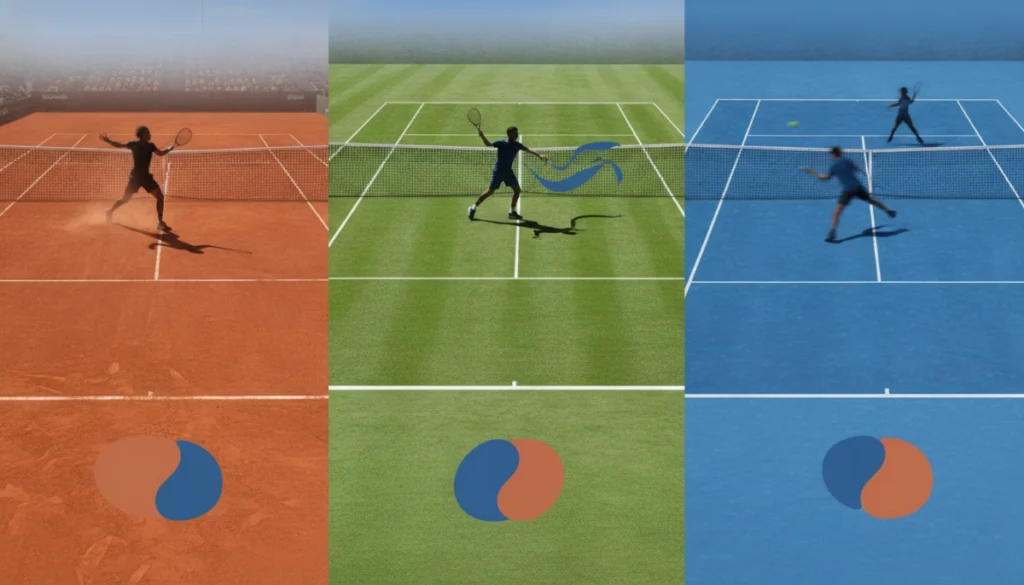
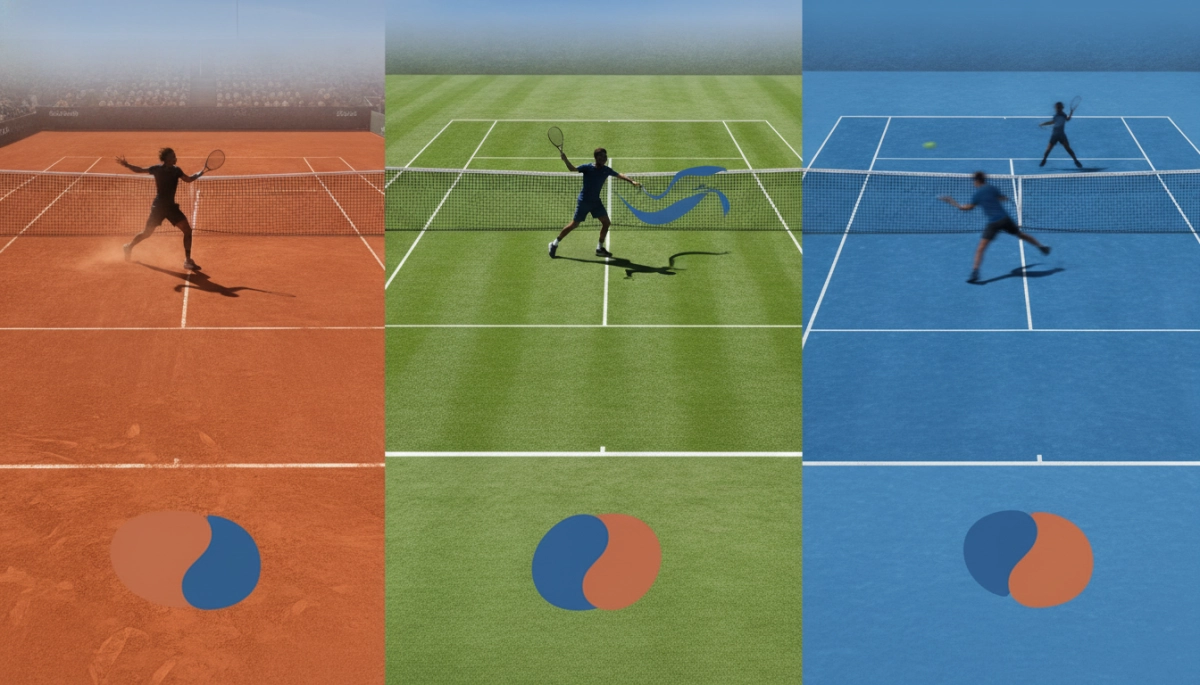
You can break the tactical story into three simple comparisons. Each surface interacts with movement, shot selection, and serve effectiveness differently, and that directly influenced how Nadal and Federer matched up when they met.
Clay courts: higher bounce and longer points
- Why it helps Nadal: The high-bouncing clay gives Nadal time to use heavy topspin and chase balls down; his lefty forehand becomes a consistent weapon that pushes opponents behind the baseline.
- Why it challenges Federer: Clay neutralizes Federer’s flatter, attacking strokes and reduces the immediate payoff on his serve-and-volley or quick-attack tactics.
- Tactical result you’ll notice: Longer rallies, more pattern-based point construction, and a premium on physical endurance and court coverage.
Grass courts: speed and low bounce reward aggression
- Why it helps Federer: Faster surfaces favor Federer’s precise, flat hitting, one-handed backhand, and ability to shorten points with angles and net forays.
- Why it challenges Nadal: Low bounces reduce time to set up his heavy forehand, forcing him to adapt to quicker exchanges and more slice-based tactics.
- Tactical result you’ll notice: Shorter points, serve potency takes on greater importance, and timing is often decisive.
Hard courts: the middle ground that produced close battles
- Why it’s balanced: Hard courts combine elements of speed and predictable bounce, giving both players opportunities to deploy their core strengths.
- Why matches here were tight: Hard courts allowed Federer to use precision and quick offense while letting Nadal grind from the baseline; matches often came down to small tactical choices and momentum swings.
- Tactical result you’ll notice: A mix of aggressive point construction and extended baseline exchanges—conditions that produced many of their most evenly contested encounters.
With that context about how each surface reshaped their strategies, you’re ready to dive into the detailed, match-by-match head-to-head breakdown by surface and the statistics that tell the full story.
Clay court ledger: Nadal’s overwhelming advantage (Nadal leads 14–2)
On clay the head-to-head number—Nadal 14, Federer 2—captures the broad truth quickly: this surface amplified Nadal’s best weapons and consistently blunted Federer’s. Those 14 wins weren’t just volume; many were high-stakes meetings at Roland Garros and major lead-changing matches that established Nadal as the clay-court benchmark of the era.
What the scoreline doesn’t show is how matches played out tactically. Nadal’s heavy lefty topspin pushed Federer deep behind the baseline, creating time and angles to close points even when Federer attempted to shorten rallies. Federer’s occasional clay victories came when he managed to keep points short, exploit a weaker Nadal day on serve, or take the net at precise moments. Still, the rhythm of clay favored relentless retrieval and physical endurance—areas where Nadal held a durable edge.
Key patterns to notice:
– Nadal frequently dictated court position with his forehand, forcing Federer to create offense under duress.
– Breaks of serve were common; long rallies on return games created windows for Nadal to punish short replies.
– Federer’s wins tended to be either tactically daring (more net approaches, aggressive backhand counters) or when Nadal’s level dipped—hence only two exceptions in a run of near-total dominance.
Grass court episodes: Federer’s edge and the Wimbledon trilogy (Federer leads 3–1)
Grass reversed the script. Federer’s 3–1 edge on turf reflects how speed and low bounce favored his shotmaking, timing, and ability to shorten points. The rivalry’s most dramatic and widely remembered moment—the lengthy Wimbledon final that Nadal won—also underlines how thin the surface margin can be: one match swung public memory toward Nadal even though Federer’s overall grass record in the pair remained superior.
Tactically, grass rewarded:
– Federer’s first-strike tennis: serve placement, slices that stayed low, and accurate volleys.
– The importance of a high-percentage serve; a strong service day often tipped the match for Federer.
– Nadal’s adaptations—more use of slice, more direct approach shots—were necessary but occasionally insufficient when Federer executed his quickest patterns.
The small sample (just four clashes) magnifies the impact of any single result. That’s why a single epic match can feel larger than the ledger suggests: grass amplified momentum swings, and a single memorable final can define public perception even when the series on that surface was limited.
Hard courts: the closest and most tactical battleground (Federer leads 11–9)
Hard courts were the middle ground where the pair produced their tightest sequence of matches: Federer leads 11–9. Those twenty meetings included Grand Slam finals, ATP finals, and hard-court Masters clashes, and they display the rivalry’s greatest strategic variety. On hard courts both men could find ways to hurt the other—Federer with flatter, quicker winners; Nadal with depth and angles that dragged Federer out of position.
What mattered most on hard courts:
– Serve quality and return aggressiveness: small edges here often decided sets.
– Tactical flexibility: Federer’s ability to mix aggression and touch versus Nadal’s capacity to extend rallies and flip from defense to offense.
– Mental resilience: numerous matches were decided in tight third sets or by decisive tiebreaks, so points won under pressure defined many results.
Several of their most consequential matches—Grand Slam finals on hard courts—shaped momentum across seasons. The narrow margin in the ledger reflects both players’ capacity to adapt, and it’s on this surface that individual match-ups, form peaks, and in-the-moment tactics mattered most.
Enduring legacy beyond the scoreboard
What makes the Nadal–Federer rivalry feel larger than a sequence of matches is how it changed the way players, coaches, and fans think about surface and strategy. Rather than a single great player prevailing across every context, their contests showed that greatness is often sculpted by conditions: court speed, bounce, and the tactical choices those variables invite. That insight has influenced coaching priorities, equipment choices, and the careers of the next generation, who now prepare with surface-specific plans from an earlier age.
The rivalry also elevated the public’s appreciation for nuance in tennis. Fans learned to value not only winning, but the tactical adaptations that elite players make when the conditions shift—an education that has made subsequent rivalries richer to follow and has helped maintain tennis’s tactical complexity as a central part of its appeal.
Where to explore more
-
For official match records and detailed head-to-head statistics, consult the official ATP head-to-head resource.
-
When watching or coaching, try viewing a match through the surface lens: note how one change in bounce or pace can force entirely different tactical responses from top players.