
When clay turned two greats into a defining rivalry
You may think of Rafa Nadal as the undisputed king of clay and Roger Federer as the maestro of grass and hard courts, but the clay surface forged a rivalry that taught you the true meaning of adaptation and resilience. On slow, dusty courts the usual advantages shift: power becomes patience, your heavy shots become weapons, and endurance often eclipses flash. Their duels on clay didn’t just settle rankings — they rewrote expectations about how two contrasting styles could collide and create modern sporting drama.
As a viewer, you witnessed how Nadal’s relentless topspin and relentless retrieval met Federer’s fluid geometry and tactical invention. Clay elongates rallies and amplifies tactical nuance, so matches turned into chess matches of movement, angles, and weight of shot. Watching their contests on clay, you weren’t just seeing winners and losers — you were watching two philosophies of tennis trying to out-think and outlast each other under the same slow, unforgiving conditions.
How clay reshaped tactics, momentum, and match narratives
If you want to understand why certain Nadal–Federer encounters are considered legendary, start by looking at how clay alters the core components of a match. Here’s what to pay attention to when you watch or rewatch their clay battles:
- Topspin and depth: On clay, Nadal’s heavy forehand becomes a pronounced liability for opponents. You’ll see how depth dictates who is on the offensive and who is pushed into defensive patterns.
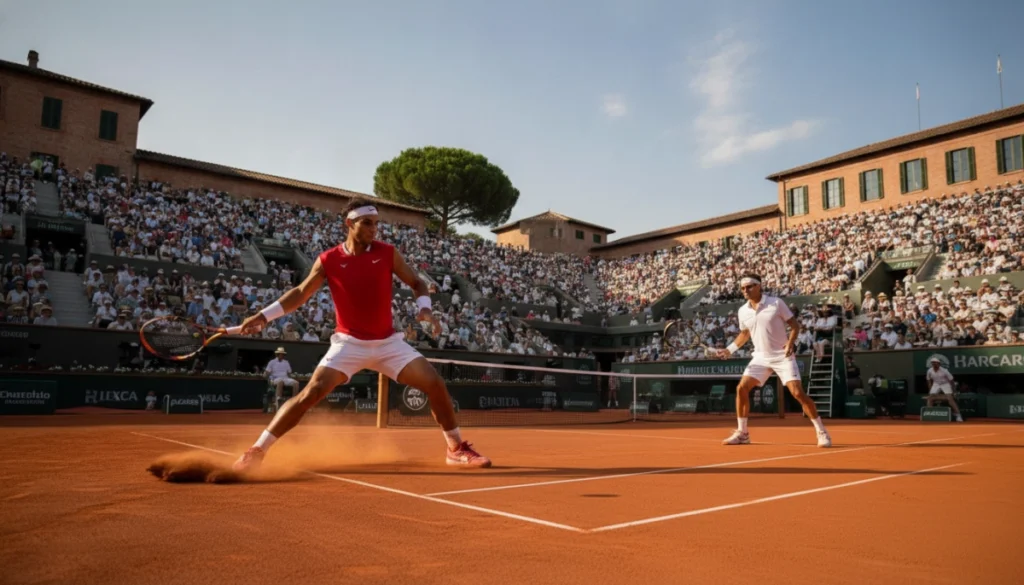
- Slide and court coverage: Clay’s sliding mechanics reward players who read bounce and position early. Federer’s balance and footwork adapted over the years, but Nadal’s native feel on clay often gave him an edge in long exchanges.
- Long rallies and point construction: Expect fewer quick winners and more constructed points. Both players probe for weaknesses, building points through angles, then exploding into offense when a short ball appears.
- Mental swings and momentum: Clay can compress or expand momentum; a single break of serve can translate into a run of games. You’ll notice how each man responds psychologically — one by digging in physically, the other by looking for tactical variations.
- Serve adaptation: Big servers gain less on clay, so serve placement and variety matter more than sheer speed. Study how Federer mixes slices, kick serves, and targeted placement to disrupt rallies while Nadal relies on high-bouncing serves that set up his forehand.
These technical and mental elements combine to make clay matches uniquely compelling. When you watch Nadal and Federer on this surface, you’re watching a study in contrasts: power versus precision, attrition versus artistry, and patience versus timing. The result was a string of encounters that were not only important in terms of titles and rankings, but that also stood out as surgical demonstrations of elite tennis strategy.
Next, you’ll move into a match-by-match exploration where each contest is broken down by turning points, tactical shifts, and dramatic moments — starting with their earliest clay confrontations and moving toward the most iconic clay classics.
Early clay confrontations: the first glimpses of Nadal’s dirt-born supremacy
The initial clay meetings between these two felt less like isolated matches and more like a primer on what clay would demand from both men. Early on you could see Nadal’s natural rhythm on dirt — the way he used extreme topspin to push Federer back behind the baseline, then patiently constructed points until a short ball invited punishment. Federer, still relatively new to sustained duels from the baseline, responded by trying to shorten points: stepping in to take the ball earlier, slicing to change height and pace, and aiming for angles that would prevent Nadal from settling into his groove.
What made those early fights so revealing wasn’t just who won, but what they exposed. Federer’s timing and variety could still produce flashes of brilliance — perfectly angled backhands, sudden serve-and-volley forays, or a low slice that arrested rally rhythm — but clay amplified any tiny inconsistency. A missed step, an ill-judged drop shot, or a single passive rally often snowballed into multiple lost games. Conversely, Nadal’s fitness and court intelligence meant that even when he didn’t hit outright winners, he converted pressure into errors. Those contests set the template: Nadal would test depth and physical resilience; Federer would probe for short points and look to inject surprise. On clay, the balance favored attrition — and early on that favored Nadal.
Clay classics that redefined their chess match: Monte Carlo, Rome, Roland Garros
As the rivalry matured, a few clay encounters became reference points for every young player trying to understand elite baseline warfare. In Monte Carlo you saw the tactical duel at its purest: Federer attempting to wrest control with angled backhands and altered serve patterns, Nadal responding with heavy, high-bouncing forehands that repeatedly reset the point. Matches there were a study in patience — long sequences where one well-placed forehand or a perfectly timed drop shot shifted momentum.
In Rome the fights often tilted tactical: the surface was a touch quicker, so Federer’s attempts to shorten rallies and flatten his strokes created more opportunities. Those matches offer great clips of Federer’s creativity — sudden changes of pace, timely net approaches, and slices that forced Nadal out of his preferred geometry. But Rome also showed Nadal’s adaptability; he would vary spin and depth, step into rallies more aggressively, and take the ball earlier when needed.
Roland Garros, though, crystallized the rivalry on dirt. The pressure of best-of-five clay battles magnified every tactical choice. Turning points in those matches could be as small as one net cord, one double fault at a crucial time, or an extended rally that ended with unforced errors from exhaustion. Watching these classics, pay attention to how momentum swings are engineered: an early break becomes a psychological stranglehold; an ebbing player visibly fights for margins rather than outright winners. These matches didn’t just produce winners — they taught tennis fans how two contrasting philosophies could be stretched, compromised, and sometimes reconciled on the same slow, unforgiving canvas.
Where to relive the dust and drama
If you want to watch the tone and texture of their clay battles for yourself, look for full replays, extended highlights, and official match compilations. The major tournament archives and official channels are the best source for high-quality footage and context—start with the official Roland-Garros archives and the ATP Tour’s match vaults for curated clips and full matches.
- Full-match replays to study point construction and momentum swings.
- Extended highlights to observe tactical adjustments and turning points.
- Player and tournament documentaries for behind-the-scenes perspectives.
Legacy beyond the baseline
Their clay encounters did more than decide trophies — they expanded what tennis could be, showing that surface and style can create new languages of strategy. Those matches left teachers, players, and fans a richer vocabulary for appreciating movement, patience, and the fine margins that separate greatness from legend. Whether you watch for tactics, heart, or pure drama, the duel on clay remains an essential chapter in the sport’s story.